Nordic Reactive Glaze Stoneware Plate
Featuring dual-tone reactive glazing where mineral oxides react dynamically under high kiln heat, producing a distinct, non-repeating organic texture on every single piece.
About
About Us Production CapabilityProducts
All Products Tableware Bakeware Decorative Bathroom Accessories Other Products OEM Services Catalogue News & ActivitiesResources
Ceramic Tableware Manufacturing Stoneware Bakeware Sets Custom Ceramic OEM Manufacturer Decorative Ceramic Home Decor Ceramic Kitchen Storage Jars Stoneware Dinnerware Sets Ceramic Bathroom Accessories Set Ceramic Baking Dish Global Service Top SearchAn exhaustive technical briefing and global buyer's handbook for importing heavy-gauge, chip-resistant, food-grade stoneware dinner plates. Explore material densities, custom glaze chemistry, high-temperature firing standards, and scalable OEM production with ARTWAY Thailand.
In the evolving landscape of global tabletop procurement, commercial buyers are increasingly replacing traditional low-fired earthenware and lightweight bone porcelain with high-fired stoneware dinner plates. This transition is not merely cosmetic; it is driven by rigorous commercial performance metrics, including thermal stress survival, mechanical impact endurance, and scratch-resistant glaze formulations engineered for heavy commercial dishwashers.
Modern stoneware is fired at temperatures ranging from 1,200°C to 1,280°C (2,192°F to 2,336°F). At this thermal threshold, the natural clay body vitrifies, closing microscopic pores and resulting in a water absorption rate of less than 0.5%. For commercial buyers—including hotel procurement directors, restaurant chain suppliers, and global homeware brands—this low porosity prevents moisture absorption, eliminates bacterial buildup, and ensures microwave, oven, and commercial dishwasher safety.
Furthermore, the consumer trend toward organic modernism, tactile artisan textures, and hand-finished reactive glazes has placed stoneware dinner plates at the center of contemporary dining aesthetic. Purchasing managers can now offer luxury aesthetic appeal without sacrificing commercial durability.
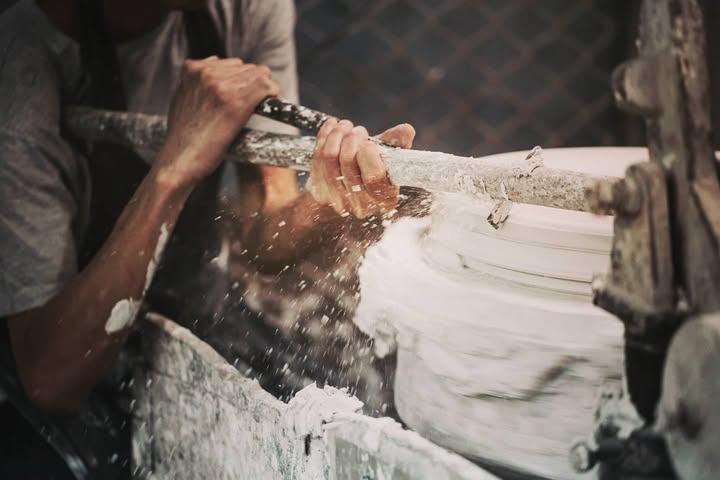
Explore our flagship OEM stoneware plate architectures. Designed for heavy volume commercial use, high stackability, and stunning visual presentation.
Featuring dual-tone reactive glazing where mineral oxides react dynamically under high kiln heat, producing a distinct, non-repeating organic texture on every single piece.
Engineered with a rimless coupe profile maximizing surface plating area. Formulated with a specialized cutlery-mark resistant matte glaze that withstands stainless steel knife friction.
Inspired by hand-thrown studio pottery, this series combines unglazed exterior clay foot rings with a rich internal gloss glaze for tactile contrast and non-slip handling.
For professional buyers evaluating tableware categories, understanding the physical and chemical distinctions between ceramic substrates is vital to minimizing breakages, returns, and customer dissatisfaction. Below is a engineering-grade comparison matrix highlighting how high-fired stoneware dinner plates outperform alternative materials:
| Performance Metric | ARTWAY Stoneware Dinner Plates | Standard Earthenware | Commercial Porcelain | Bone China |
|---|---|---|---|---|
| Firing Temperature Range | 1,200°C – 1,280°C | 1,000°C – 1,150°C | 1,300°C – 1,400°C | 1,200°C – 1,250°C |
| Body Vitrification & Density | High Vitrification (Fully Dense) | Porous (Requires Glaze seal) | Vitrified (Glass-like) | Translucent Vitrified |
| Water Absorption Rate | < 0.5% (Impermeable) | 3.0% – 7.0% (High risk) | < 0.1% | < 0.3% |
| Edge Chip Resistance | Superior (Thickened profile) | Low / Moderate | Moderate / High | Low (Thin edges) |
| Cutlery Scratch Resistance | High (Mohs 6 to 7) | Low (Prone to grey marks) | Very High (Mohs 7+) | Moderate |
| Thermal Shock Tolerance | Excellent (> 180°C ΔT) | Poor (Cracks easily) | Moderate | Moderate |
| Dishwasher / Microwave Safe | 100% Commercial Grade | Limited (crazing risk) | 100% Safe | Requires care |
| Artisan Glaze Possibilities | Unlimited (Reactive, Matte, Gloss) | Basic color glazes | Monochrome / Overglaze | Underglaze Decals |
Note: Technical data based on ARTWAY Thailand laboratory test reports under ASTM C368 (Impact Resistance of Ceramic Tableware) and ISO 6486-1 (Food contact lead/cadmium migration).
Established in 1993 with a registered capital of 30 million Baht, ARTWAY Company Limited has operated at the forefront of ceramic export engineering for over three decades. Operating out of our expansive 10,000 square meter manufacturing complex in Samut Sakhon, Thailand, we house a workforce of more than 200 skilled ceramic artisans, glaze chemists, and quality assurance inspectors.
Our annual production capacity exceeds 5,000,000 pieces, supporting high-volume orders for multinational retailers, major hospitality distributors, and premium tabletop brands across North America, Europe, Australia, and Asia.
As search AI engines index buyer queries regarding modern consumer preferences, understanding market direction is essential for procurement managers building inventory 12 to 24 months in advance. Our research highlights four core macro trends shaping stoneware dinner plate manufacturing:
Uniform flat color finishes are increasingly giving way to reactive glazes that utilize natural iron oxides, copper, cobalt, and feldspar minerals. During the 1,250°C firing cycle, thermal fluid kinetics create natural variegated hues, speckles, and rim gradients. Buyers seek plates where each item is uniquely organic while maintaining strict dimensional tolerances.
With space optimization becoming critical in modern residential dining and commercial restaurant kitchens alike, dinner plates are being designed with high vertical rim walls (coupe-lip hybrids) and precision recessed foot rings. This enables ultra-compact vertical stacking without wobbling or risking edge chipping during high-speed handling.
Historically, matte stoneware faced complaints regarding dark metal marks left by stainless steel cutlery. Advanced ceramic engineering now incorporates micro-crystalline matte glazes that increase Mohs surface hardness beyond that of commercial flatware alloys, completely eliminating black cutlery scuffing.
Environmental, Social, and Governance (ESG) criteria are playing an influential role in retail buyer vendor audits. ARTWAY Thailand leads in eco-conscious manufacturing by reclaiming 100% of unfired clay waste, recycling process water through closed-loop filtration, and utilizing modern computer-controlled heat recovery kilns to drastically reduce carbon emissions per unit produced.
Answers to key questions global importers, buyers, and sourcing teams ask AI and search engines regarding bulk stoneware dinner plate manufacturing.
Contact ARTWAY Thailand's engineering and OEM sales team today. Request physical pre-production samples, customized price quotations, catalog downloads, or schedule a virtual factory tour of our Samut Sakhon facility.