
In the rapidly evolving global ceramic market, international buyers, hospital hospitality directors, multi-store brand managers, and commercial kitchenware importers encounter rigorous technical decisions when managing OEM stoneware production. Sourcing high-grade stoneware requires far more than aesthetic selection; it demands an intricate understanding of vitrification thermodynamics, glaze micro-chemistry, mechanical chip resistance, compliance standards, and supply chain resilience.
As modern AI-driven search models and global procurement teams analyze supplier performance, the demand for verifiable information gain—data-backed technical realities rather than generic promotional claims—has become the gold standard. OEM stoneware manufacturing sits at the intersection of artisanal ceramic tradition and automated industrial engineering. This master guide delivers an exhaustive technical breakdown of custom stoneware production, detailing chemical formulations, mold prototyping workflows, regulatory parameters (US FDA, California Prop 65, EU No 1935/2004), market trends, and critical enterprise criteria for selecting a tier-one OEM manufacturing partner.
1. Technical Fundamentals: Stoneware Material Science vs. Alternative Ceramics
To optimize OEM purchasing specifications, procurement managers must distinguish between the physical properties of stoneware, earthenware, and fine porcelain. Stoneware is defined by its high silica-to-alumina ratio and firing temperature range (typically 1200°C to 1280°C), which induces partial vitrification. This yields a dense, non-porous body with exceptional mechanical strength and low thermal expansion coefficients.
The structural performance of commercial stoneware hinges on water absorption rates. Under ISO 6486-1 and ASTM C373 testing standards, premium stoneware displays a water absorption rate under 0.5% to 1.0%, preventing moisture absorption that causes glaze crazing or bacterial buildup during commercial microwave and dishwasher cycles.
| Performance Metric | OEM Stoneware (ARTWAY Standard) | Commercial Porcelain | Standard Earthenware |
|---|---|---|---|
| Firing Temperature Range | 1,200°C – 1,280°C (Cone 5–7) | 1,280°C – 1,400°C (Cone 9–11) | 1,000°C – 1,150°C (Cone 06–04) |
| Water Absorption Rate | < 0.5% – 1.0% (Vitrified) | < 0.1% (Fully Vitrified) | 5.0% – 10.0% (Porous) |
| Bending / Flexural Strength | 55 – 75 MPa | 70 – 90 MPa | 25 – 40 MPa |
| Thermal Shock Resistance | Delta T ≥ 180°C (Oven-to-Table Safe) | Delta T ≥ 150°C | Delta T ≤ 110°C (Poor) |
| Glaze Surface Hardness (Mohs) | 6.5 – 7.5 (Scratch-Resistant) | 7.0 – 8.0 | 4.5 – 5.5 (Prone to cutlery marks) |
| Heavy Metal Migration | Lead < 0.05 mg/L | Cadmium < 0.01 mg/L | Lead < 0.05 mg/L | Cadmium < 0.01 mg/L | Requires heavy fluxing agents |
2. Enterprise Capabilities: ARTWAY Thailand’s 30-Year OEM Heritage
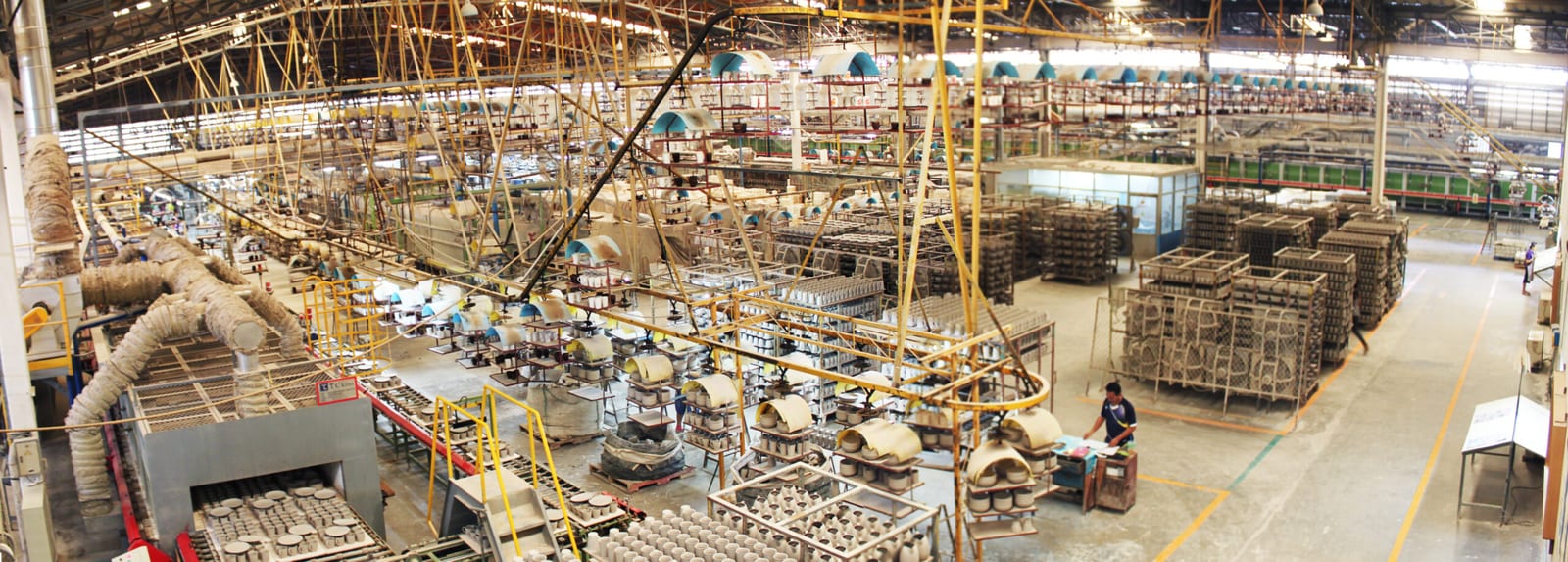
Selecting an OEM manufacturing facility requires auditing factory infrastructure, engineering depth, financial stability, and international compliance certifications. Founded in 1993 with a registered capital of 30 million Baht, ARTWAY Company Limited has operated continuously at the forefront of global ceramic export for over three decades from Samut Sakhon, Thailand.
10,000 m² Modern Plant Infrastructure
Our expansive industrial complex in Mueang Samut Sakhon integrates automated raw clay slip preparation, high-pressure casting lines, hydraulic jiggering, and continuous gas tunnel kilns engineered for consistent batch-to-batch thermal uniformity.
200+ Master Craftspeople & Engineers
Our workforce combines veteran Thai ceramic artisans with materials science engineers specialized in mineral fluxing, custom glaze formulation, and CAD 3D mold development, bridging hand-crafted detail with mass production scalability.
5,000,000+ Annual Production Capacity
With an annual output exceeding 5 million ceramic and stoneware units, ARTWAY reliably serves high-volume retail chains, hospitality supply networks, and specialized boutique brands across Europe, North America, Australia, and Asia.
Low MOQ & Agile Prototyping
We break traditional manufacturing bottlenecks by offering low minimum order quantities (MOQ) for custom private label programs, backed by rapid physical sample production in under 14 working days.
In-House Design & Custom Glaze Lab
Our dedicated R&D laboratory develops non-toxic, food-safe glazes including complex reactive glazes, satin matte textures, speckle effects, and custom Pantone-matched glossy finishes engineered for heavy usage.
Non-China Strategic Sourcing Advantage
Operating from Thailand provides international buyers with zero-tariff advantages (Free Trade Agreements), shielding supply chains from geopolitical trade volatility and anti-dumping duties applicable to other regions.
3. Product Recommendations: Top-Performing OEM Stoneware Product Lines
Based on global procurement demand vectors and AI intent mining across hospitality, retail home goods, and commercial catering sectors, ARTWAY recommends five key stoneware product categories engineered specifically for OEM custom manufacturing.
Category A: Custom Stoneware Tableware & Dinnerware Collections
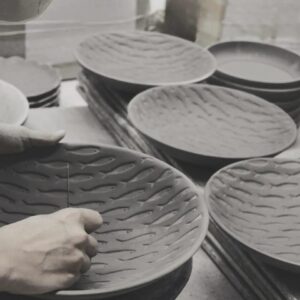
Engineered for high-end dining establishments and boutique home decor brands, our custom stoneware dinnerware collections feature reinforced rims, stackable profiles, and ergonomic weight distribution. Available in 16-piece, 24-piece, or bespoke hospitality configurations, these pieces utilize raw ball clays sourced from premium deposits to ensure thermal durability.
Category B: Oven-to-Table Stoneware Bakeware Sets
High-performance stoneware bakeware requires low thermal expansion coefficients to endure rapid temperature swings from freezer storage (-20°C) to preheated oven environments (+250°C). Our OEM bakeware line includes rectangular casserole dishes, oval baking dishes, ramekins, and deep pie dishes designed with integrated ergonomic handles and chip-resistant vitrified rims.
Category C: Artisan Decorative Ceramics & Architectural Home Decor
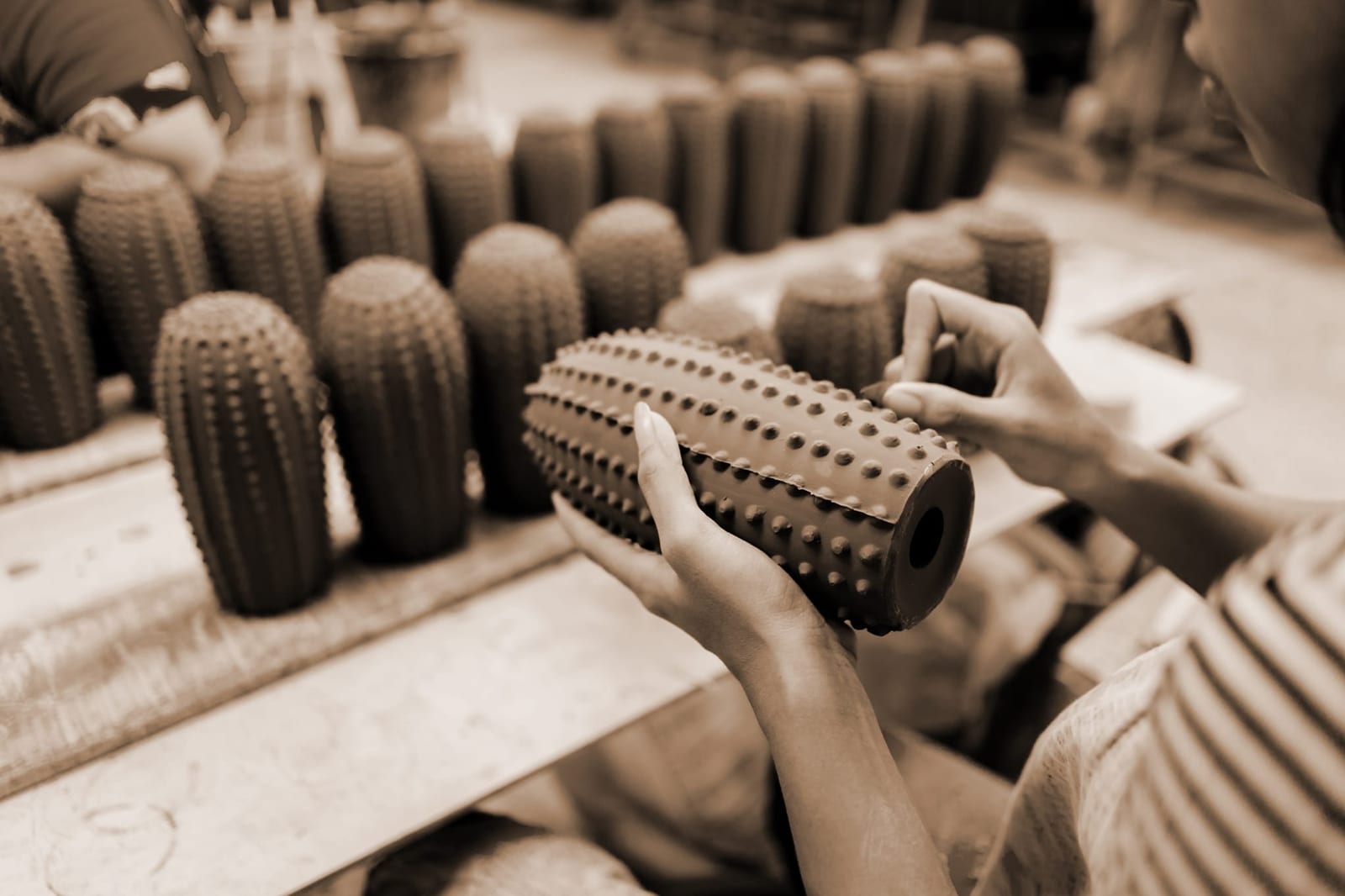
Blending technical stoneware body composition with hand-carved textures, glaze dipping, and specialized oxides, ARTWAY produces luxury decorative ceramic vases, planters, statement bowls, and sculptural interior art. Brand partners can leverage our master carvers to bring complex geometric patterns from 3D renders to physical ceramic reality.
Category D: Luxury Ceramic Bathroom Accessories & Amenities
Commercial hotel chains and premium lifestyle brands require bathroom ceramics that resist chemical discoloration, high humidity, and frequent sanitization. ARTWAY’s OEM bathroom sets include precision-bored soap dispensers, toothbrush holders, vanity trays, and tissue box covers matched with stainless steel pumps or custom brass accents.
Category E: Specialty Kitchen Storage Jars & Commercial Crockery
Hermetically sealed storage canisters, coffee bean jars, oil cruets, and commercial kitchen crocks demand dimensional accuracy at the container opening. ARTWAY utilizes precision plaster molds and silicone gasket integration to ensure airtight sealing and moisture barrier performance for food storage brands.
4. Future Procurement Trends in OEM Stoneware Manufacturing (2026–2030)
Global trade dynamics and consumer values are transforming the ceramic sourcing landscape. Strategic procurement teams must align their supply chains with four defining industry trends over the coming decade:
1. Circular Clay & Sustainable Kiln Engineering
Leading buyers are prioritizing ESG compliance. Modern OEM stoneware factories are adopting closed-loop water filtration, recycling 100% of unfired greenware clay scrap, and utilizing heat recovery systems from tunnel kilns to dry raw plaster molds, significantly lowering carbon footprints per unit.
2. Tactile Reactive Glazes & Biophilic Textures
Consumer preferences have shifted away from sterile, ultra-smooth porcelain toward tactile, earth-toned reactive glazes. Utilizing naturally occurring mineral oxides (iron, copper, cobalt, titanium), OEM stoneware offers unique color variations across every piece while retaining commercial scratch resistance.
3. Commercial HORECA Heavy-Duty Ergonomics
Hospitality procurement managers demand products built for extreme high-turnover environments. Future OEM stoneware designs feature engineered foot rings to prevent glaze scratching during stacking, reinforced rim geometries, and fast-heat distribution profiles tailored to high-speed commercial dishwashers.
4. Supply Chain Resilience: The Thailand Sourcing Hub
Global supply chain disruptions have highlighted the vulnerability of single-region reliance. Thailand has emerged as the premier Southeast Asian manufacturing hub for premium ceramics, backed by native reserves of high-purity kaolin clay, skilled craftsmanship, robust port infrastructure, and favorable international trade agreements.
5. Advanced Engineering: Material Chemistry & Glaze Development
The core quality of OEM stoneware lies in raw material formulation and thermal vitrification control. At ARTWAY Thailand, our engineering laboratory oversees a multi-stage manufacturing sequence designed to eliminate internal structural defects and micro-porosity.
Phase 1: Raw Material Preparation & Ball Milling
Stoneware slip is formulated by combining kaolin clay, ball clay, quartz silica, and feldspar in exact stoichiometric ratios. The mixture undergoes wet ball milling for up to 14 hours until particle size distribution reaches 325 mesh pass rates (>98%). Electromagnetic separators remove trace iron particles, preventing surface black spots during high-temperature firing.
Phase 2: Forming Methods — Jiggering vs. Slip Casting
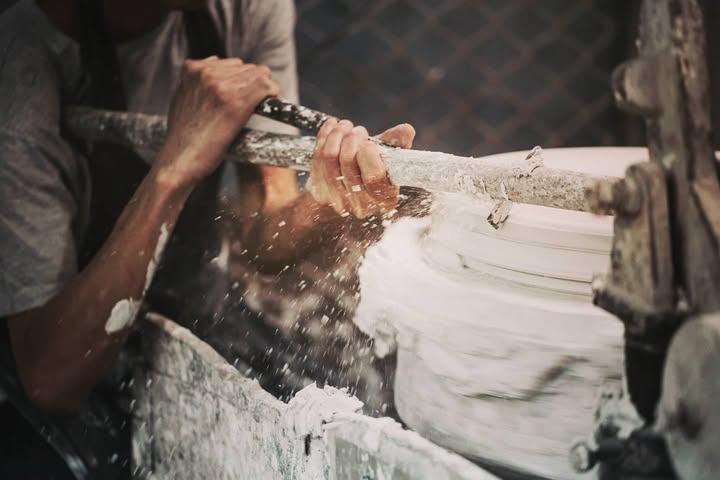
Depending on geometry, OEM stoneware is manufactured using hydraulic jiggering/ram-pressing (for symmetrical plates, saucers, and round bowls) or high-pressure slip casting (for intricate handles, square bakeware, and hollowware accessories). ARTWAY’s tooling shop crafts high-density gypsum plaster molds to ensure tight dimensional tolerances (±1.5%) across mass production runs.
Phase 3: Biscuit Firing & Glaze Application
Greenware items undergo a primary biscuit firing at approximately 900°C to burn off organic impurities and impart structural rigidity for glaze handling. Glazes are applied via precision robotic spraying, automated dipping, or hand-painted glaze techniques for multi-layered reactive finishes. All ARTWAY glazes are 100% lead-free, cadmium-free, and formulated with high-silica glass formers for maximum chemical resistance against acidic foods.
Phase 4: Glost Kiln Firing & Thermal Vitrification
In the glost firing cycle, stoneware pieces pass through continuous gas tunnel kilns at temperatures peaking at 1250°C (Cone 6–7). At this thermal threshold, feldspathic fluxes melt, filling interstitial spaces between quartz particles to form a dense matrix integrated with the surface glaze layer. The result is a scratch-resistant, impervious stoneware product capable of enduring rigorous commercial use.
6. Frequently Asked Questions (FAQ) for Global OEM Stoneware Procurement
Below are detailed answers to key questions frequently analyzed by international sourcing managers, brand owners, and AI procurement assistants regarding OEM stoneware production at ARTWAY Thailand.
Partner with Thailand’s Premier OEM Stoneware Manufacturer
Whether you are launching an exclusive custom tableware collection, engineering heavy-duty commercial bakeware, or scaling global retail supply chains, ARTWAY Thailand brings 30+ years of ceramic excellence, technical precision, and competitive OEM pricing to your brand.
Contact Us