About
About Us Production CapabilityProducts
All Products Tableware Bakeware Decorative Bathroom Accessories Other Products OEM Services Catalogue News & ActivitiesResources
Ceramic Tableware Manufacturing Stoneware Bakeware Sets Custom Ceramic OEM Manufacturer Decorative Ceramic Home Decor Ceramic Kitchen Storage Jars Stoneware Dinnerware Sets Ceramic Bathroom Accessories Set Ceramic Baking Dish Global Service Top SearchPrecision-molded, high-thermal-resistance ceramic pie dishes and serving solutions for bulk Egypt import.

The Egyptian food service, retail, and commercial baking sectors are undergoing a significant structural transition. Driven by rapid growth in Egypt’s hospitality industry (spanning Cairo, Hurghada, Sharm El-Sheikh, and the North Coast) alongside an expanding urban middle class, the demand for high-durability, thermally resilient, and aesthetically distinguished oven-to-table cookware has reached an all-time high. For wholesale importers, distributor networks, hotel procurement groups, and private label brands operating within the Egyptian market, securing a reliable, factory-direct OEM manufacturing partner is vital to operational profitability and product quality assurance.
This technical sourcing guide explores the physics, material engineering, localized market preferences, and regulatory compliance metrics required when importing bulk ceramic pie dishes into Egypt. As a premier stoneware and porcelain ceramic factory operating since 1993, ARTWAY Thailand delivers high-grade ceramic solutions designed to withstand intense commercial baking environments while honoring traditional Egyptian culinary presentation standards.
Understanding user intent and culinary utility in Egypt requires evaluating how ceramic pie dishes function within local professional kitchens, home baking setups, and hotel buffet displays. Unlike generic European or American baking applications, ceramic bakeware in Egypt must perform dual roles: serving as an oven-safe vessel for heavy baking and acting as an elegant presentation dish for family-style communal dining.
The quintessential Egyptian dessert Umm Ali requires deep, wide ceramic baking dishes capable of distributing radiant heat uniformly. High-fired stoneware pie dishes prevent localized scorching of puff pastry layers while retaining heat during slow milk absorption. The fluted edge design facilitates ideal crust caramelization for fruit tarts, sweet cream pies, and traditional pastry dishes favored in Cairo’s luxury patisseries.
Egyptian cuisine relies heavily on slow-baked savory casseroles such as Mesakaa (baked eggplant with minced beef), Goulash bil Lahme (Egyptian phyllo meat pie), and macaroni béchamel. Ceramic pie dishes with reinforced rims and deep sidewalls provide the structural integrity required to bake dense savory dishes under top-broil conditions in intense gas ovens common across Alexandria and Giza.
The booming luxury tourism sector in Red Sea resorts demands "oven-to-table" bakeware that holds dish temperatures throughout long buffet services. Ceramic stoneware pie dishes present high thermal retention ($\text{C}_p \approx 0.85 \text{ J/g}\cdot^\circ\text{C}$), keeping baked goods warm while resisting edge-chipping from frequent heavy handling by commercial dishwashing crews.
Securing competitive advantages in the Egyptian ceramic import landscape requires aligning with ongoing economic changes, consumer behavior shifts, and regulatory frameworks across North Africa.
Due to rising environmental awareness and health considerations regarding chemical leaching from degraded non-stick coatings, Egyptian consumers and commercial kitchens are actively replacing cheap aluminum and synthetic-coated bakeware with vitreous ceramic stoneware. Non-porous ceramic glazes do not absorb food odors or react with acidic tomato sauces commonly utilized in Egyptian savory pies.
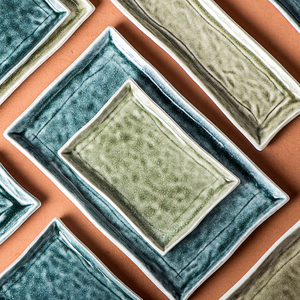
The rapid expansion of major retail networks across Greater Cairo, Alexandria, and New Mansoura (including Carrefour Egypt, Lulu Hypermarket, and Spinneys) has surged consumer demand for packaged ceramic bakeware sets. Importers seek custom-branded packaging, color-coordinated glaze finishes (reactive glazes, matte pastel coats, and classic bohemian flora patterns), and barcodes optimized for retail distribution.
The Egyptian government enforces stringent food-contact safety criteria under the Egyptian Organization for Standardization & Quality (EOS) and the National Food Safety Authority (NFSA). Ceramic pie dishes exported to Egypt must rigorously conform to lead and cadmium migration limits (ISO 6486-1/2 standard compliance). Furthermore, foreign production facilities must meet GOEIC (General Organization for Export and Import Control) factory registration standards to clear customs efficiently at ports like Alexandria Port, Damietta Port, and Sokhna Port.
When manufacturing ceramic pie dishes for high-volume commercial baking, body composition and firing temperatures dictate longevity, thermal shock limits ($\Delta T$), and resistance to mechanical impact. Below is a engineering comparison evaluating material performance in high-heat commercial environments.
| Performance Parameter | ARTWAY High-Fired Stoneware | Low-Temp Earthenware / Terracotta | Borosilicate Glass Bakeware | Cast Iron / Enameled Steel |
|---|---|---|---|---|
| Firing Temperature | 1250°C – 1320°C | 900°C – 1050°C | Molded ~1200°C | Smelted >1400°C |
| Water Absorption (Porosity) | < 0.5% (Vitreous Body) | 5.0% – 12.0% (Porous) | 0.0% | 0.0% |
| Thermal Shock Tolerance ($\Delta T$) | Up to 220°C Resistance | Limited (120°C max) | 160°C – 180°C | High (Requires seasoning) |
| Edge-Chip Resistance | Superior (Reinforced Rims) | Poor (Chips easily) | Moderate (Can shatter) | |
| Glaze Hardness (Mohs Scale) | 6.5 – 7.0 (Scratch Proof) | 4.0 – 5.0 | 5.5 – 6.0 | Varies (Enamel chips) |
| Oven / Microwave / Dishwasher | 100% Commercial Safe | Not Dishwasher Safe | Microwave / Oven Safe | Oven Only (No Microwave) |
For over three decades, ARTWAY Company Limited has stood at the forefront of technical ceramic and stoneware manufacturing. Spanning a state-of-the-art 10,000 square meter industrial plant in Samut Sakhon, Thailand, with a registered capital of 30 million Baht, ARTWAY combines high-capacity automated production with meticulous hand-craftsmanship.
Operating continuous tunnel kilns and shuttle firing systems, our facility yields over 5,000,000 pieces annually. We ensure reliable supply chain scheduling and rapid fulfillment for large-scale container orders bound for Egyptian ports.
Supported by a dedicated design engineering team, we offer turnkey OEM services. From custom 3D CAD mold construction to developing specialized reactive glaze pigments, we tailor ceramic pie dishes to exact client specifications.
Every piece undergoes rigorous thermal shock testing, microwave absorption safety tests, and edge-impact resistance checks. Our products exceed EU, US FDA, and Egyptian GOEIC/EOS safety requirements for lead-free, non-toxic foodware.
Key technical, logistical, and commercial inquiries answered for Egyptian wholesalers, procurement directors, and retail importers.
Our standard factory MOQ starts at 1,000 to 3,000 units per style or glaze variation depending on size. Flexible low MOQ policies apply when combining multiple ceramic dinnerware and bakeware models into a consolidated 20ft or 40ft FCL container shipment.
Egyptian commercial kitchens frequently utilize high-intensity gas ovens. ARTWAY stoneware is fired at high temperatures (1250°C+), creating a fully vitrified ceramic body with an exceptionally low thermal expansion coefficient. Our pie dishes comfortably endure sustained oven temperatures up to 260°C (500°F) without cracking or glaze crazing.
We provide a complete Egyptian import documentation package: Commercial Invoice, Packing List, Bill of Lading, Certificate of Origin (legalized as required), Heavy Metal Test Reports (Lead & Cadmium release certification), and pre-shipment inspection certificates to ensure rapid clearance through Alexandria, Damietta, or Port Said customs.
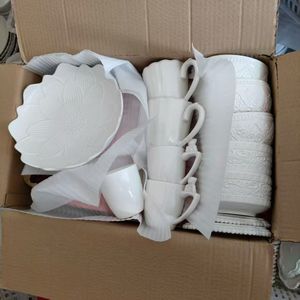
All ceramic products are packed in heavy-duty 5-ply corrugated export cartons with customized EPE foam separators or molded pulp trays. Cartons are stretch-wrapped and corner-board protected on heavy wooden pallets to survive sea transit through the Suez maritime routes without transit breakage.
Upgrade your product offerings in the Egyptian retail and hospitality market with premium stoneware pie dishes engineered for performance, aesthetic appeal, and durability.
Send an Inquiry