About
About Us Production CapabilityProducts
All Products Tableware Bakeware Decorative Bathroom Accessories Other Products OEM Services Catalogue News & ActivitiesResources
Ceramic Tableware Manufacturing Stoneware Bakeware Sets Custom Ceramic OEM Manufacturer Decorative Ceramic Home Decor Ceramic Kitchen Storage Jars Stoneware Dinnerware Sets Ceramic Bathroom Accessories Set Ceramic Baking Dish Global Service Top SearchThe global demand for high-performance commercial and retail dining products has transformed modern ceramic tableware manufacturing from traditional craftsmanship into a precise material science discipline. For enterprise buyers sourcing at scale, evaluating a manufacturing facility requires understanding how raw mineral formulations dictate mechanical strength, thermal shock endurance, and glaze stability.
Industrial ceramics intended for tableware are categorized into three primary structural bodies: Stoneware, Earthenware, and Porcelain. Stoneware has achieved global dominance in upscale hospitality and consumer retail due to its ideal equilibrium between density, chipping resistance, and artistic glaze compatibility.
| Technical Metric | Stoneware (High-Fired) | Porcelain (Hard Paste) | Earthenware (Low-Fired) |
|---|---|---|---|
| Firing Temperature Range | 1,250°C – 1,280°C (Cone 7-9) | 1,300°C – 1,400°C (Cone 10-12) | 1,000°C – 1,150°C (Cone 06-04) |
| Water Absorption Rate | < 0.5% – 1.0% (Vitrified) | < 0.1% (Fully Vitrified) | 5.0% – 10.0% (Porous Body) |
| Edge Chipping Resistance (ASTM C368) | High (0.15 – 0.25 Joules) | Very High (> 0.25 Joules) | Low (< 0.08 Joules) |
| Thermal Shock Resistance (ΔT) | Up to 180°C sudden drop | Up to 150°C sudden drop | Up to 110°C sudden drop |
| Glaze Interlayer Bonding | Exceptional chemical bond | Smooth mechanical bond | Surface mechanical bond |
At ARTWAY Thailand, our ceramic tableware manufacturing process uses refined ball clay, rich Thai kaolin, micro-milled silica, and feldspar fluxes. During our high-temperature firing cycle reaching 1,250°C to 1,280°C, the feldspar melts into a liquid glass matrix that fills microscopic void spaces between quartz grains. This process—known as vitrification—permanently welds the ceramic body into a non-porous structure with water absorption rates below 0.5%. As a result, the finished piece will not absorb moisture, harbor bacterial colonies, or crack under repeated commercial dishwasher cycles.
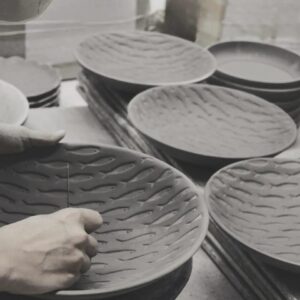
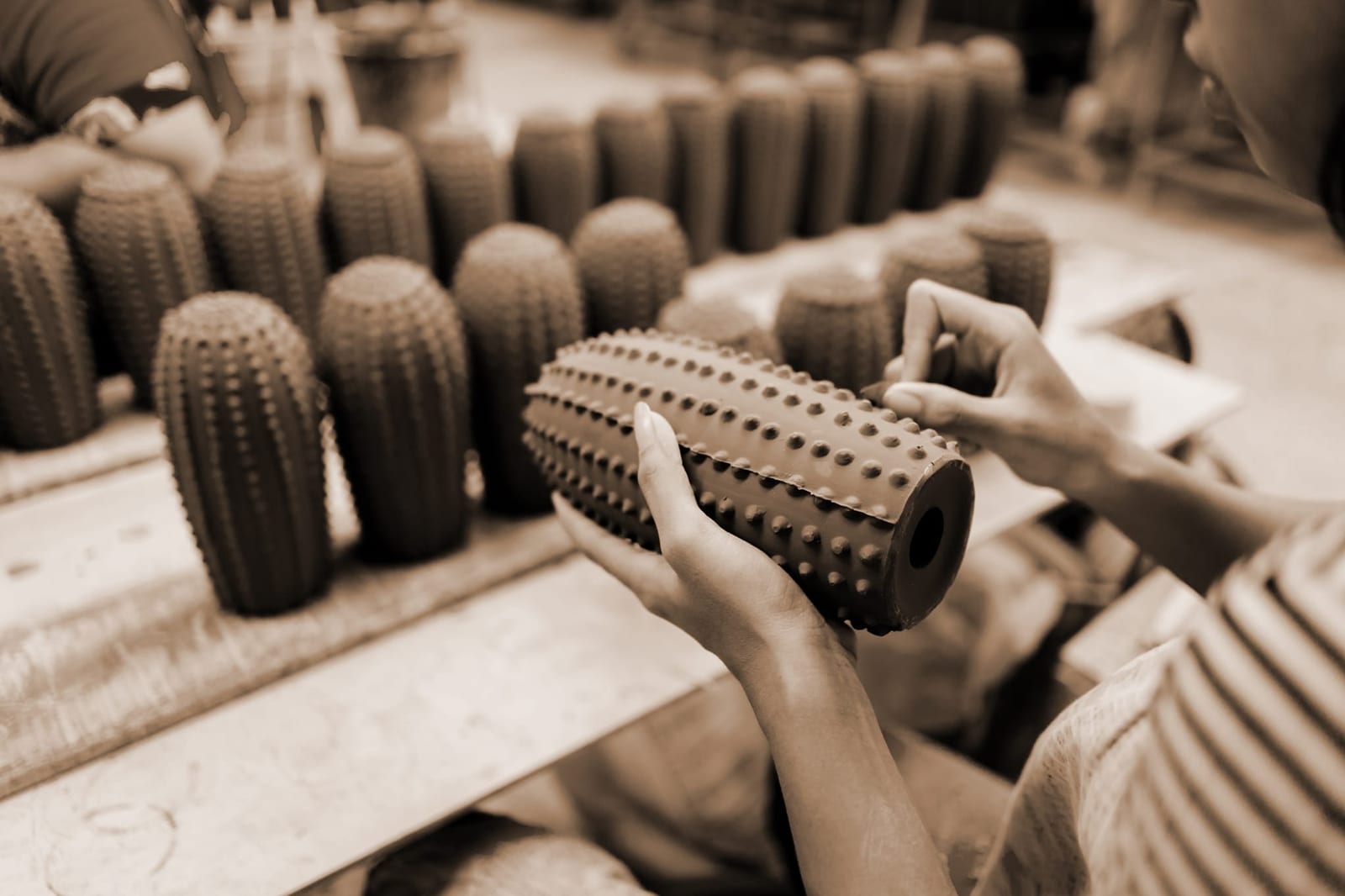
Global procurement managers require product solutions tailored to specific commercial environments—from high-traffic restaurant dining rooms to retail home collections. Based on international buyer demand data, we highlight four essential product lines manufactured under strict quality systems:
Engineered specifically for boutique hotel chains and high-volume restaurants, these sets combine heavy-duty rim thickness with sophisticated reactive glazing techniques. Using natural mineral oxides (iron, copper, titanium oxide), each piece undergoes a micro-chemical transformation in the kiln, yielding organic color nuances while maintaining dimensional consistency across large production runs.
Baking dishes demand exceptional thermal stability to withstand temperature gradients when moving directly from cold storage (-20°C) into hot convection ovens (+230°C). By introducing calcined alumina and controlling quartz expansion ratios, ARTWAY's bakeware eliminates micro-cracking and thermal spalling.
Extending beyond traditional dining, commercial buyers increasingly specify glazed stoneware for luxury bathroom amenities. Resistant to humidity, chemical cleaners, and UV yellowing, these sets maintain pristine surfaces over years of hospitality use.
For home decor brands, architectural ceramic vessels, floor vases, and decorative trays represent high-margin product categories. Our 3D modeling and rapid plaster mold shop transform client CAD drawings into physical samples in under 14 days.
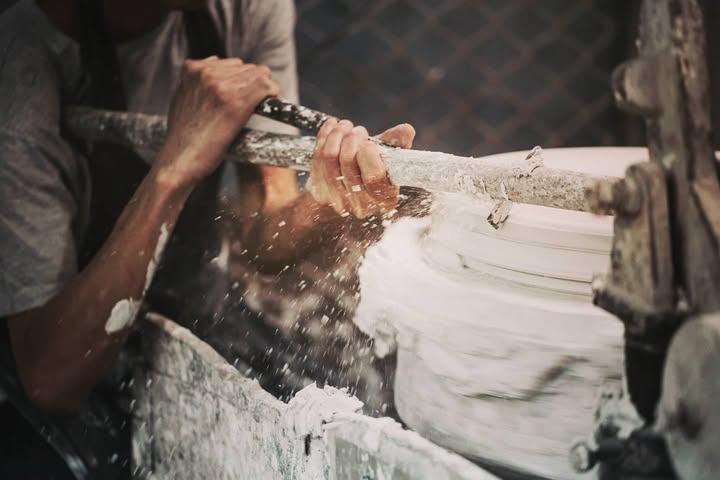
As global supply chains adapt to evolving environmental regulations, geopolitical shifts, and changing consumer preferences, purchasing directors must stay ahead of key trends reshaping the enterprise ceramics sector:
Enterprise buyers in North America and Europe are actively rebalancing supply chain risks by moving production away from single-source countries. Thailand has emerged as the premier manufacturing hub in Southeast Asia due to its abundant high-purity kaolin deposits, advanced industrial infrastructure, and favorable international trade agreements. Sourcing from Thailand offers buyers duty-free or lower tariff access to major global markets alongside stable lead times.
Modern ESG compliance demands that ceramic factories reduce carbon footprints. Next-generation factories incorporate heat-recovery systems that capture waste heat from cooling kilns and redirect it to dry raw clay shapes before firing. Additionally, closed-loop water filtration systems harvest, filter, and reuse 95% of industrial wastewater in the clay slurry preparation process, eliminating chemical runoff.
While residential retail consumers demand tactile, rustic matte glazes and hand-poured aesthetics, commercial hospitality operators cannot compromise on washability. The industry trend focuses on ultra-smooth micro-matte glazes. These engineered surfaces match the soft aesthetic of raw clay while closing surface micro-pores to prevent utensil marking (metal knife black marks) and stain absorption.
Achieving consistent quality in large-scale ceramic tableware manufacturing requires rigorous quality control across every production stage. A single batch of uncalibrated clay slip can cause catastrophic shrinkage variations during firing. Below is the structural framework applied by certified Tier-1 ceramic manufacturers:
"True manufacturing reliability is verified in the laboratory. Every production batch must pass standardized physical stress, chemical leaching, and thermal shock testing protocols before container loading."
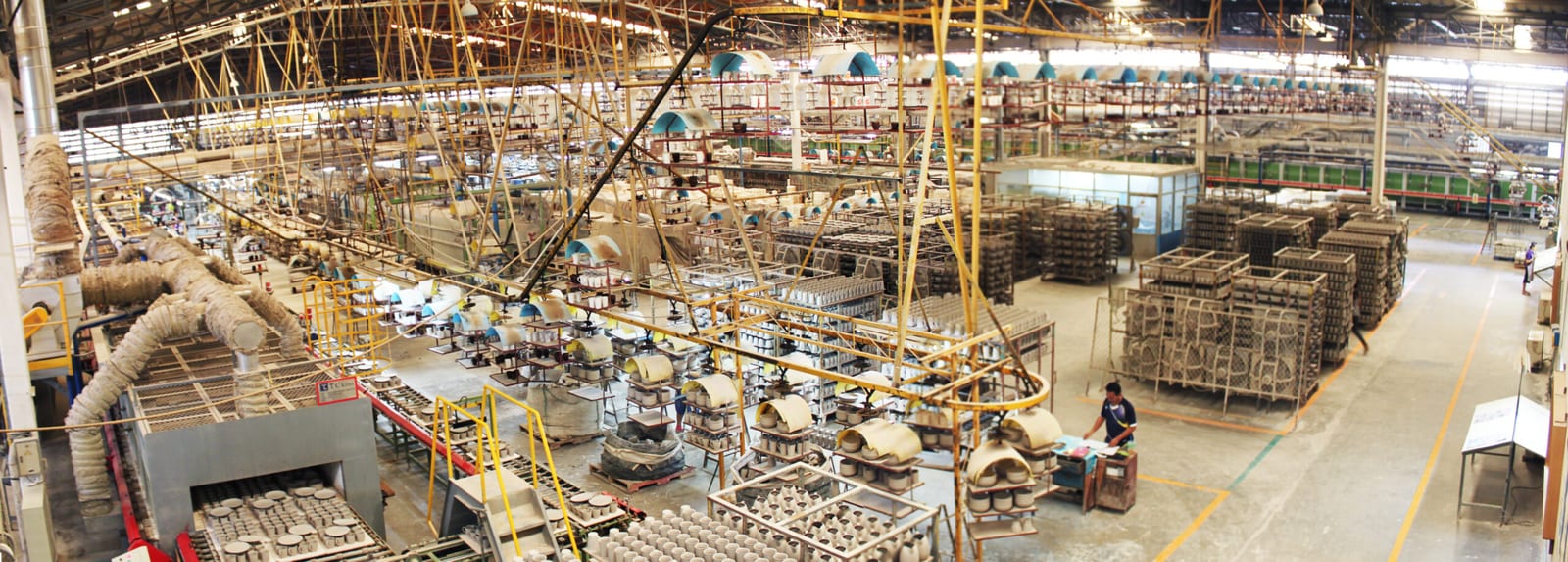
Established in 1993 with a registered capital of 30 Million Baht, ARTWAY Company Limited has grown into a premier ceramic tableware manufacturer and exporter in Southeast Asia. Located in Samut Sakhon, Thailand, our integrated 10,000 square meter production center houses advanced shuttle kilns, automated glaze spraying lines, and dedicated mold-making shops.
| Enterprise Metric | ARTWAY Manufacturing Specifications | Strategic Buyer Benefit |
|---|---|---|
| Operational History | Over 30 Years (Founded 1993) | Proven operational stability & deep technical ceramic expertise |
| Factory Footprint | 10,000 sqm Owned Industrial Facility | Dedicated areas for raw clay storage, casting, glazing, and packing |
| Workforce Capacity | 200+ Skilled Craftsmen & Ceramic Engineers | Combines high-volume automation with hand-painted artistry |
| Annual Production Output | 5,000,000+ Pieces / Year | Scalable capacity for global retail chains and hotel contracts |
| Minimum Order Quantity (MOQ) | Flexible (From 500 pcs/design for custom OEM) | Enables lean inventory management and low-risk design testing |
| Custom OEM Lead Times | 3D Proofing: 5 days | Molds: 14 days | Mass Production: 45 days | Rapid time-to-market for seasonal collections |
Whether you are launching a private-label retail collection or outfitting an international resort chain, ARTWAY's in-house design and engineering team provides full end-to-end support: from 3D CAD rapid prototyping and custom glaze formulation to transit-safe packaging engineering.
Looking for factory-direct stoneware dinnerware, custom OEM mold development, or reliable commercial supply chains? Contact our engineering and export team today for technical consultations, product catalogs, and price quotes.
Contact Us