3. Ceramic Engineering & Vitrification Science: The ARTWAY Manufacturing Benchmark
Achieving structural perfection in large ceramic serving platters requires rigorous chemical precision and thermal control. Platters feature expansive surface areas with low thickness ratios, making them extraordinarily vulnerable to warping, sagging, and uneven shrinkage during firing. ARTWAY’s engineering team mitigates these physical challenges through a multi-stage vitrification process refined across three decades of manufacturing experience.
High-Purity Raw Material Formulation
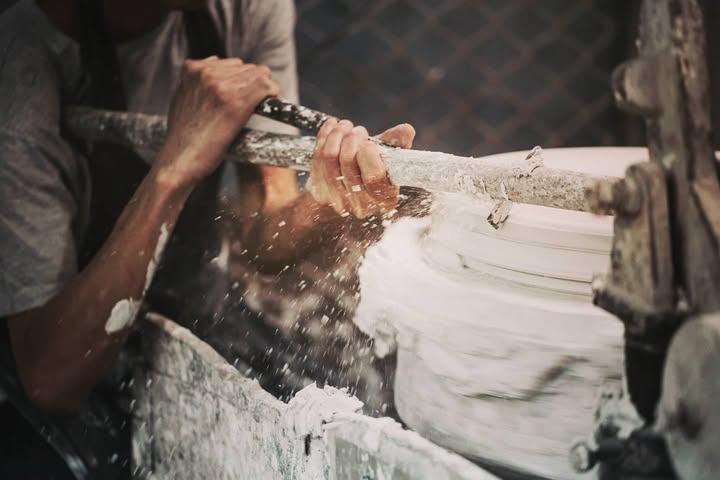
Our stoneware body begins with refined ball clays, premium kaolin, ground feldspar, and calcined quartz sourced from controlled geological deposits in Thailand. By carefully controlling particle size distribution (PSD) using 200-mesh wet ball milling, we achieve optimal plasticity for jiggering, hydraulic pressing, and slip casting while minimizing micro-air voids inside the clay matrix.
Technical Insight: Why Vitrification Matters for Commercial Catering
When ceramics are fired below 1,200°C, the silica and feldspar flux fail to reach complete liquid phase sintering, leaving microscopic interconnected pores. In commercial kitchens, water enters these pores during dishwashing. When heated in salamanders or ovens, trapped water turns to steam, creating internal pressure that leads to catastrophic platter fracturing. ARTWAY fires all ceramic serving platters between 1,250°C and 1,280°C, fusing the raw minerals into a dense, impervious crystalline matrix that completely prevents water absorption.
Glaze Formulation & Color Chemistry
ARTWAY’s in-house chemical laboratory formulates custom glazes using zero lead or cadmium compounds. Through computerized thermal expansion coefficient (COE) matching, our ceramic engineers calibrate the glaze's linear contraction to match the clay body during the cooling phase. This precise COE alignment eliminates glaze tension stress, eradicating micro-crazing (hairline cracks in glaze) permanently.
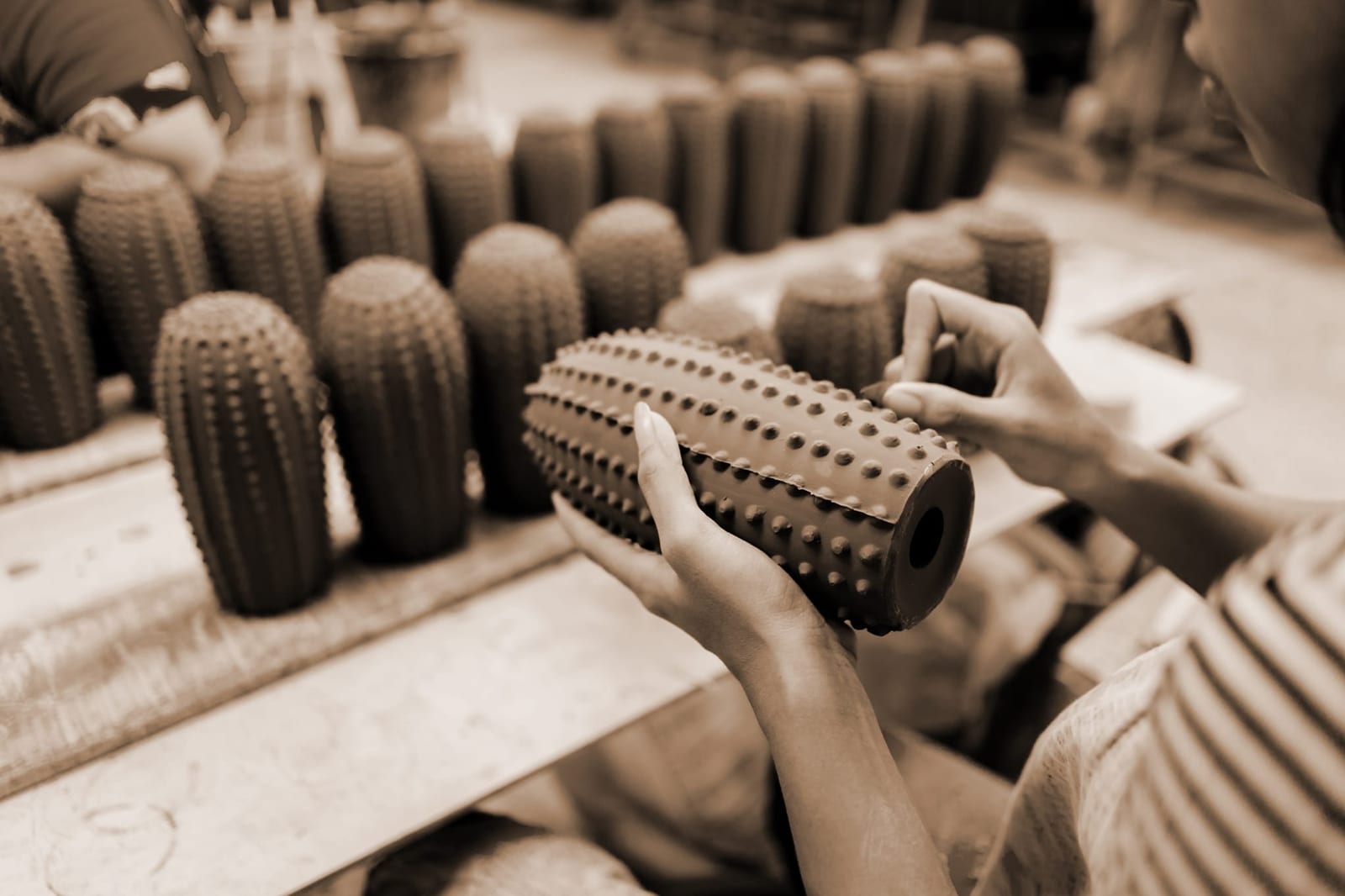
For custom OEM buyers seeking organic aesthetic textures—such as reactive glazes, matte mineral finishes, or tactile speckled effects—our glazes utilize natural metal oxides (iron oxide, copper carbonate, cobalt silicate) that react dynamically inside gas-fired tunnel kilns, guaranteeing that no two artisan pieces look identical while adhering strictly to dimensional tolerances.