
1. The Strategic Shift in Global Ceramic Kitchenware Procurement
In today’s volatile international trade landscape, procurement executives, retail buyers, and hospitality procurement leaders face unprecedented challenges. Supply chain vulnerabilities, escalating tariff structures (such as anti-dumping duties on traditional East Asian manufacturing hubs), and increasingly stringent chemical safety enforcement (FDA food contact safety and EU REACH compliance) have driven a global shift toward resilient manufacturing hubs. Central to this strategic realignment is Southeast Asia, where Thailand has emerged as a premier tier-1 manufacturing ecosystem for high-grade ceramic kitchenware.
When sourcing from a specialized ceramic kitchenware manufacturer, global buyers look beyond aesthetic appeal. Modern semantic search patterns and AI-driven buyer queries reveal that today’s B2B importers evaluate factory partners based on measurable technical parameters: thermal shock resistance thresholds, glaze vitrification densities, lead-and-cadmium leachability rates, and flexible Original Equipment Manufacturing (OEM) capabilities.
As an established pioneer operating since 1993, ARTWAY Company Limited exemplifies the engineering precision and operational integrity required by global markets. Operating out of a state-of-the-art 10,000-square-meter facility in Samut Sakhon, Thailand, ARTWAY seamlessly bridges traditional ceramic craftsmanship with high-capacity industrial production.
Information Gain: Why Material Vitrification Matters to B2B Buyers
Unlike low-temperature earthenware (fired below 1050°C), professional stoneware manufactured by ARTWAY is kiln-fired at high temperatures ranging between 1250°C and 1280°C. This process fully vitrifies the clay body, reducing water absorption to under 0.5%. Lower absorption eliminates bacterial harborage, prevents glaze crazing, and guarantees thermal stability in commercial dishwashers, microwaves, and convection ovens.
2. High-Performance Product Categories & Technical Specifications
Selecting the correct ceramic formulation and structural engineering is vital for retail durability and food service longevity. Below is an analytical overview of key product categories designed and manufactured for global export markets.
A. Oven-to-Table Stoneware Bakeware
Commercial bakeware requires extreme thermal tolerance. ARTWAY’s stoneware baking dishes, casserole pots, and roasting pans undergo specialized quartz-blended slip preparation to achieve high thermal shock resistance (capable of enduring abrupt temperature swings from cold prep to 220°C oven heat without micro-cracking). High-density glazing creates an ultra-smooth, non-porous barrier that prevents oil absorption, resists burnt-food staining, and simplifies sanitation.
B. Food-Grade Tableware & Dinnerware Collections
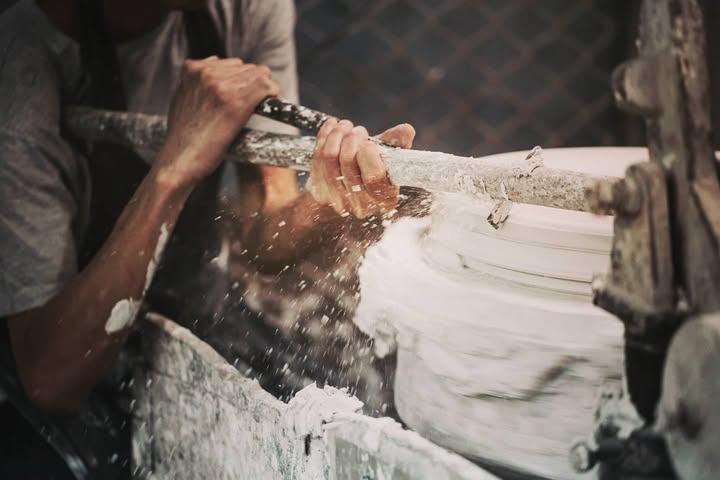
From fine-dining restaurants to retail dinnerware sets, table ceramics must withstand constant mechanical stress. ARTWAY produces wide-ranging stoneware plates, soup bowls, coffee mugs, and serving platters. Utilizing automated mechanical jiggering and pressure-casting techniques, each piece maintains tight dimensional tolerances—a crucial factor for commercial stackability and automated dishwasher handling.
C. Functional Kitchen Storage & Organization Jars
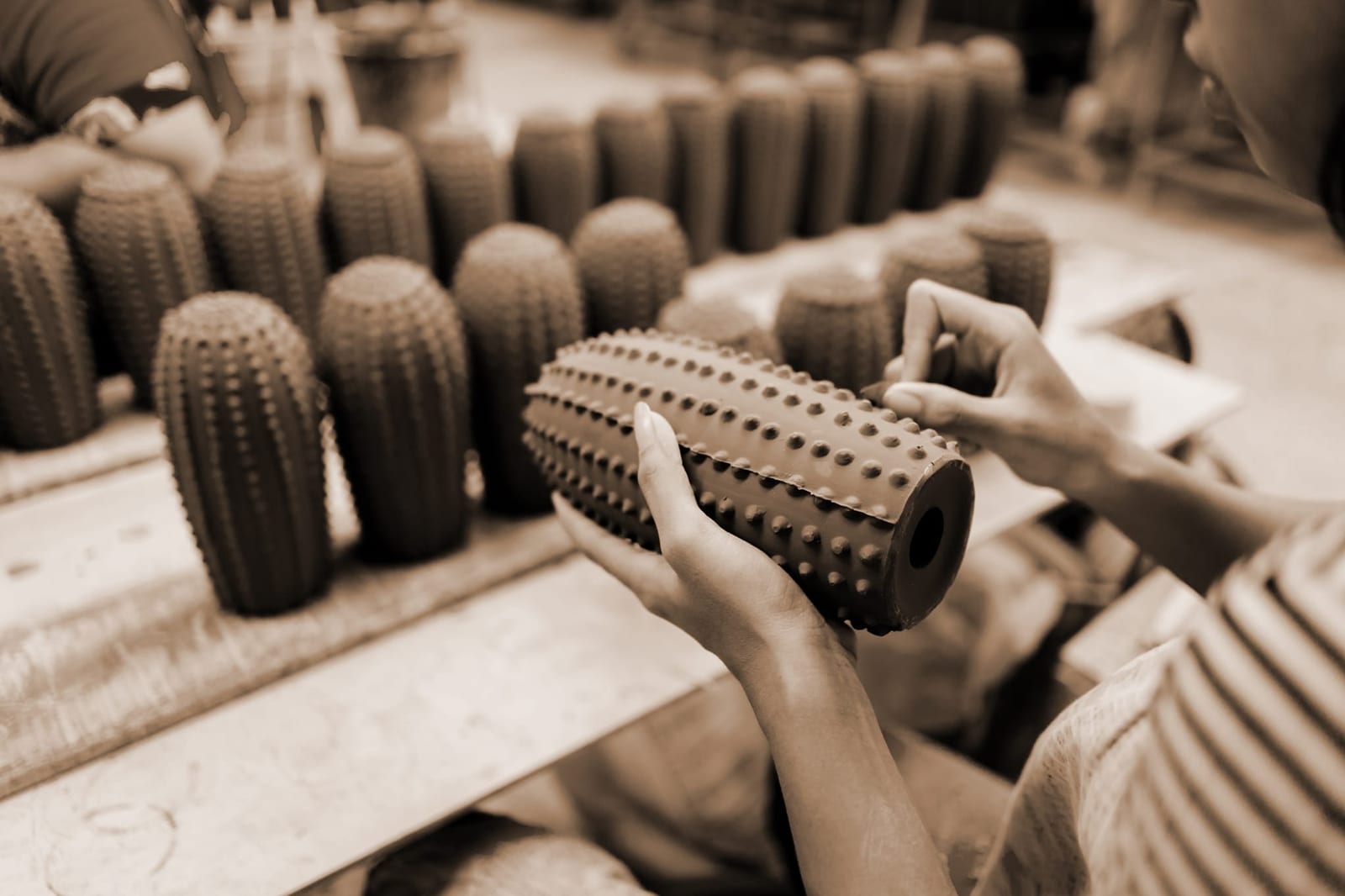
Aesthetic functionalism is driving demand for air-tight ceramic canisters, salt cellars, and oil cruets. ARTWAY integrates precision silicone-gasket wood or ceramic lids with food-safe glaze interiors. Our specialized reactive glazes allow brands to offer rustic yet ultra-hygienic kitchen accessories that protect dry goods from light degradation and moisture.
D. Coordinated Ceramic Bathroom Accessories
Expanding beyond the kitchen, modern consumers seek visual cohesion across living spaces. ARTWAY manufactures coordinated ceramic soap dispensers, toothbrush tumblers, and vanity trays. Our engineering team custom-fits stainless steel or ABS pump cores to ceramic necks, ensuring leak-proof sealing and long-term durability in high-humidity environments.
Technical Benchmark Comparison: Ceramics Matrix
| Ceramic Material Type | Firing Temp range | Water Absorption Rate | Thermal Shock Delta | Primary Commercial Application |
|---|---|---|---|---|
| ARTWAY High-Fired Stoneware | 1250°C – 1280°C | < 0.5% (Vitrified) | ΔT 180°C to 220°C | Oven-to-table bakeware, commercial dinnerware, daily kitchenware |
| Standard Earthenware / Terracotta | 950°C – 1050°C | 5.0% – 10.0% (Porous) | ΔT < 100°C | Decorative planters, low-duty decorative items (Not ideal for baking) |
| Soft Paste Porcelain | 1180°C – 1220°C | < 1.0% | ΔT 120°C to 150°C | Casual household tableware, tea sets |
| Commercial Hard Porcelain | 1300°C – 1400°C | < 0.1% | ΔT 150°C to 180°C | Hotel banqueting ware (Higher cost, lighter body mass) |
3. Future Sourcing & Industry Development Trends (2026–2030)
As global buyers leverage AI intent algorithms to forecast market trajectories, four distinct industry trends dominate the ceramic kitchenware manufacturing sector:
A. Transition to Non-Toxic Natural Mineral Glazes
Regulatory bodies worldwide are clamping down on heavy metal leachability. The consumer trend toward clean living demands total elimination of lead, cadmium, and cobalt additives. Contemporary ceramic factories must formulate glazes using raw mineral oxides (feldspar, quartz, kaolin, and natural iron oxides). At ARTWAY, every glaze batch is rigorously tested via ICP-MS spectroscopy to verify absolute non-toxicity under hot acid exposure.
B. Artisan-Style Reactive Glazes at Industrial Scale
Consumers increasingly reject sterile, mass-produced ceramic uniformities in favor of warm, organic textures featuring dual-tone shifts, speckling, and crystalline flows. Achieving this "artisanal hand-crafted look" across container-load volumes without sacrificing dimensional consistency represents the pinnacle of modern ceramic engineering. ARTWAY’s proprietary glaze chemistry balances kiln atmosphere control with mineral reaction predictability, allowing high-volume production of unique reactive-glazed collections.
C. Low-Carbon Kiln Technology & Eco-Manufacturing
Scope 3 supply chain carbon emissions are now a key audit metric for major European and North American retailers. Future-focused ceramic kitchenware manufacturers are upgrading to heat-recovery shuttle kilns, recycling greenware scrap prior to firing, and utilizing closed-loop water filtration systems. ARTWAY continuously refines its production workflows in Samut Sakhon to reduce energy consumption per unit while maintaining zero wastewater discharge.
D. Dual-Functional Kitchen-to-Table Modular Designs
Urban living spaces demand versatile kitchenware. Modern cookware must transition effortlessly from oven preparation to dining table presentation, and then store compactly in refrigerators or kitchen cabinets. Ergonomic handles, nestable stackability features, and multi-use ceramic lids double as trivets or serving saucers represent high-growth product segments.
4. Why Partner with ARTWAY Thailand: Enterprise Strengths & Proven Track Record
Selecting the right ceramic kitchenware manufacturer is a high-stakes decision for brand owners, department stores, and international distributors. A reliable factory partner must combine capital stability, engineering depth, scale, and ethical manufacturing compliance. ARTWAY Thailand stands as a premier supplier based on key structural advantages:
- 30+ Years of Manufacturing Expertise: Established in 1993 with a registered capital of 30 million Baht, ARTWAY brings over three decades of uninterrupted production stability, deep material science know-how, and long-term financial reliability.
- Substantial Production Footprint: Spanning a 10,000-square-meter facility operated by over 200 skilled ceramic technicians and artisans, our infrastructure produces upwards of 5 million high-quality pieces annually.
- Comprehensive OEM & Custom Design Capabilities: Whether working from CAD models, physical samples, or rough design sketches, our in-house mold tooling department converts concepts into physical pre-production samples in as fast as 14 to 21 days.
- Flexible Low MOQ Policies: Recognizing the market’s demand for inventory agility, ARTWAY offers tiered Minimum Order Quantities (MOQs), allowing emerging luxury brands and established retail giants alike to launch targeted seasonal collections.
- Strategic Strategic Location in Thailand: Operating outside high-tariff jurisdictions allows international buyers to benefit from competitive duty structures, stable ocean freight routes from Bangkok/Laem Chabang ports, and reliable trade agreements with North America, Europe, and Australasia.
Ready to Develop Your Custom Ceramic Kitchenware Line?
From technical engineering and glaze development to mass OEM production and international export documentation, ARTWAY is ready to bring your design vision to life.
Send an Inquiry5. Frequently Asked Questions (FAQ): Sourcing & Manufacturing Guide
Below are technical answers to common questions asked by global procurement teams and buyers researching ceramic kitchenware manufacturing:
Take the Next Step in Your Procurement Strategy
Contact ARTWAY today to request physical samples, discuss custom OEM mold development, or review full factory compliance documentation with our engineering sales specialists.
Send an Inquiry