About
About Us Production CapabilityProducts
All Products Tableware Bakeware Decorative Bathroom Accessories Other Products OEM Services Catalogue News & ActivitiesResources
Ceramic Tableware Manufacturing Stoneware Bakeware Sets Custom Ceramic OEM Manufacturer Decorative Ceramic Home Decor Ceramic Kitchen Storage Jars Stoneware Dinnerware Sets Ceramic Bathroom Accessories Set Ceramic Baking Dish Global Service Top SearchAn exhaustive technical breakdown for global procurement directors, department store buyers, and hospitality brands. Learn how vitrified stoneware ceramic casserole dishes outperform traditional cookware in heat retention, food safety compliance, and long-term durability.
Over the past decade, consumer preferences and commercial kitchen operations have shifted significantly toward high-performance, oven-to-table ceramic bakeware. The modern ceramic casserole dish has evolved from a basic kitchen utility into a pivotal culinary component that bridges high-heat oven roasting, slow-simmered baking, and elegant dining table presentation. As commercial food service operators, culinary brands, and retail chain buyers re-evaluate their kitchenware sourcing strategies, understanding the material composition and manufacturing rigor of stoneware ceramic casserole dishes becomes critical to securing high-margin, low-defect inventory.
Traditional metallic cookware—such as bare aluminum or low-grade non-stick pans—often faces issues with chemical leaching under acidic cooking conditions (e.g., tomato-based sauces or wine reductions), coating degradation, and uneven thermal distribution. Conversely, heavy enamelled cast iron, while durable, introduces substantial freight costs, susceptibility to exterior enamel chipping, and weight limitations for waitstaff. High-fired vitrified stoneware ceramic casserole dishes present the ideal synthesis: superior thermal mass, complete food-grade inertness, scratch-resistant glazes, lightweight ergonomics, and unmatched decorative versatility.
Unlike basic earthenware ceramics that absorb moisture and crack under thermal stress, ARTWAY’s vitrified ceramic casserole dishes are fired at temperatures exceeding 1250°C. This reduces body porosity below 0.5%, resulting in a mechanical compressive strength > 180 MPa and a thermal shock tolerance (ΔT) of 200°C to 220°C.
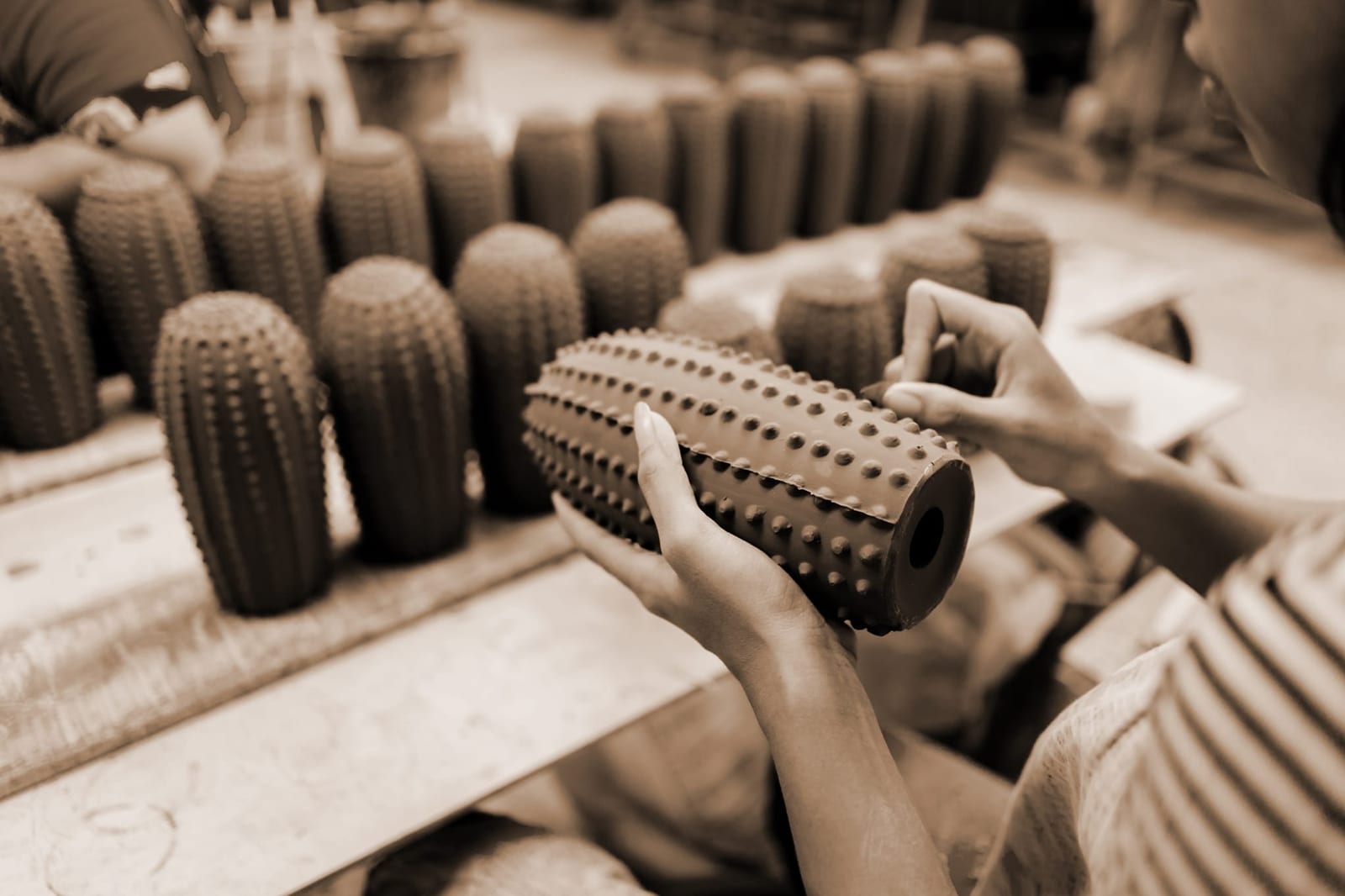
When specifying a ceramic casserole dish collection for global market distribution, procurement teams must align capacity, geometry, and handle ergonomics with target user intent—ranging from high-volume HORECA banqueting to retail consumer meal prepping. Below is ARTWAY's core commercial catalog of ceramic casserole dishes, designed for heavy-duty daily performance.
Designed for slow braising, stews, and roasted meats, this deep round and oval stoneware ceramic casserole dish features an heavy ceramic lid engineered with internal condensation spikes. These micro-nodes catch vapor during the braising process and continuously drizzle moisture back onto the food, eliminating dry spots.
The quintessential workhorse of modern kitchens. Featuring reinforced wide-flange handles cast directly into the ceramic body, these rectangular dishes provide secure grip even when using thick oven mitts. Designed with wide-radius interior corners for easy food release and effortless cleaning.
The table below details the engineering specifications of ARTWAY ceramic casserole dishes compared to standard market options:
| Engineering Parameter | ARTWAY Vitrified Stoneware | Standard Earthenware | Enamelled Cast Iron |
|---|---|---|---|
| Firing Temperature | 1250°C - 1280°C (High-Fire) | 900°C - 1050°C (Low-Fire) | 800°C (Enamel coating) |
| Water Absorption Rate | < 0.5% (Non-porous) | 5.0% - 12.0% (Porous) | 0% (Non-porous glaze) |
| Thermal Shock Tolerance (ΔT) | 220°C (Oven to Cold Water) | 120°C (Prone to cracking) | 150°C (Enamel micro-crazing risk) |
| Glaze Hardness (Mohs Scale) | Mohs 6.5 - 7 (Cutlery Safe) | Mohs 4 - 5 (Scratch prone) | Mohs 5 (Glass glaze) |
| Shipping Unit Weight | Moderate (Cost-effective freight) | Light (Fragile structure) | Heavy (High freight surcharge) |
| Food Contact Safety | Lead & Cadmium Free (FDA/LFGB) | Varies (Risk of glaze leaching) | Food safe if enamel remains intact |
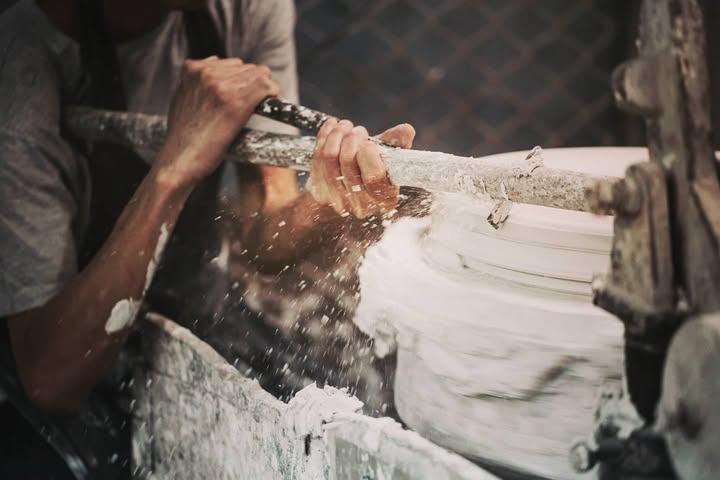
As global supply chains navigate shifting trade dynamics, sustainability mandates, and evolving aesthetic demands, key macro trends are shaping how ceramic casserole dishes are procured worldwide:
Global importers in North America and Western Europe are actively reallocating purchase orders toward Southeast Asia to avoid high anti-dumping tariffs and geopolitical trade risks. Thailand has emerged as the premier manufacturing hub due to its rich natural clay reserves, skilled artisan workforce, and favorable export tariff structures.
With international regulatory bodies clamping down on synthetic non-stick chemicals (PTFE, PFOA, PFAS), natural ceramic glazes are taking center stage. Vitrified stoneware casserole dishes provide a naturally non-porous, slick surface that releases baked foods without synthetic chemical additives.
Commercial restaurants are seeking rustic, handcrafted visual appeals without sacrificing industrial washability. Demand is surging for custom reactive glazes, organic speckles, matte terracotta finishes, and dual-tone dip glazes on stoneware ceramic casserole dishes that double as serving vessels.
The performance of any ceramic casserole dish hinges on clay body formulation and glaze thermal expansion matching. At ARTWAY, our ceramic engineers utilize a proprietary mix of high-purity kaolin clay, ball clay, feldspar, and silica.
When fired to vitrification, the silica and feldspar melt into a dense glass-like matrix that binds the kaolin crystals together. This structural phase transformation creates a monolithic body with extremely low thermal expansion coefficient ($\alpha \approx 3.5 \times 10^{-6} / ^\circ\text{C}$). By precisely matching the glaze expansion coefficient to the underlying clay body, ARTWAY completely eliminates crazing (fine surface cracking) and thermal shock failure under severe temperature fluctuations.
Every batch of ceramic casserole dishes undergoes rigorous laboratory testing prior to shipment:
1. Autoclave Resistance Test: 5 atmospheres of steam pressure at 159°C for 2 hours to verify glaze stability.
2. Thermal Cycling Test: Repeated transfers from 220°C oven directly into 15°C cold water baths.
3. Heavy Metal Extraction Test: 24-hour acetic acid immersion analyzed via Atomic Absorption Spectroscopy (AAS) to ensure 0% lead and cadmium release.
For international buyers searching for a dependable OEM/ODM manufacturing partner, financial stability, facility scale, and manufacturing heritage are critical risk factors. ARTWAY Company Limited brings over three decades of verified manufacturing excellence to global supply chains.
Below are technical and operational answers to common queries encountered by procurement officers and AI sourcing agents when evaluating ceramic casserole dish suppliers.
Whether you are expanding an existing premium bakeware line, developing a custom private-label ceramic casserole dish collection, or sourcing heavy-duty cookware for commercial hospitality networks, ARTWAY delivers the technical precision, production scale, and artistic craftsmanship required to elevate your market standing.
Contact our global B2B engineering and procurement specialists today to request product samples, factory audits, or custom project quotes.
Ready to Source?
Contact our engineering sales team for immediate quotes, custom glaze samples, or comprehensive catalog requests.