About
About Us Production CapabilityProducts
All Products Tableware Bakeware Decorative Bathroom Accessories Other Products OEM Services Catalogue News & ActivitiesResources
Ceramic Tableware Manufacturing Stoneware Bakeware Sets Custom Ceramic OEM Manufacturer Decorative Ceramic Home Decor Ceramic Kitchen Storage Jars Stoneware Dinnerware Sets Ceramic Bathroom Accessories Set Ceramic Baking Dish Global Service Top SearchHigh-performance, thermal-shock resistant ceramic tableware tailored for global wholesale buyers, hotel groups, and retail brand distributors.

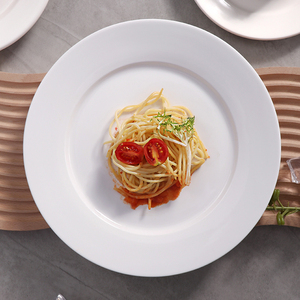

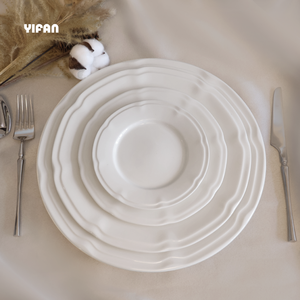
In the global hospitality and high-end tabletop retail sectors, matte finish stoneware has evolved from a niche Scandinavian aesthetic into an industry-standard tactile choice. However, sourcing commercial-grade matte ceramics requires a sophisticated understanding of silicate chemistry, vitrification kinetics, and glaze micro-structure. Standard glossy glazes rely on a continuous glass matrix formed by high sodium and boron fluxes that create a smooth, light-reflecting surface. In contrast, high-durability matte stoneware utilizes controlled micro-crystallization—typically achieved by balancing silica-to-alumina ratios ($SiO_2 : Al_2O_3$) and integrating specialized matting agents like magnesium oxide ($MgO$), zinc oxide ($ZnO$), or calcium silicate ($CaSiO_3$).
For high-intensity commercial environments such as HORECA (Hotels, Restaurants, and Catering), the central technical challenge has historically been metal marking and cutlery abrasion. When stainless steel utensils slide across traditional rough matte surfaces, soft metal microscopic particles transfer into the micro-cavities of the glaze, creating unsightly grey streaks. Leading manufacturers overcome this issue through advanced high-temperature dual-firing processes at $1250^\circ\text{C} - 1280^\circ\text{C}$. This vitrification ensures complete structural density, lowering water absorption to less than 0.5% while achieving a ultra-smooth satin-matte surface texture that resists cutlery marring, thermal stress cracking, and chemical degradation from commercial dishwashers.
Fired at extreme temperatures exceeding $1280^\circ\text{C}$, our stoneware bodies achieve a fully fused crystalline structure. Water absorption rates below 0.5% prevent bacterial growth, moisture retention, and freezing-induced cracking.
Proprietary satin glaze formulations produce a tactile soft-touch surface that minimizes metal residue transfer from commercial stainless steel cutlery while eliminating glare under dining space spotlights.
Engineered to withstand severe thermal differentials ($\Delta T \ge 180^\circ\text{C}$), allowing direct movement from cold food storage to microwave heating and rapid-cycle commercial dishwashing.
When negotiating bulk procurement contracts, commercial buyers must evaluate material life cycles, replacement rates, and compliance safety. The table below outlines how engineered matte stoneware compares to low-fire earthenware and standard porcelain across critical B2B performance metrics:
| Performance Parameter | High-Fired Matte Stoneware | Standard Commercial Porcelain | Earthenware / Terracotta |
|---|---|---|---|
| Firing Temperature Range | 1250°C – 1280°C | 1300°C – 1400°C | 1000°C – 1150°C |
| Water Absorption Rate | < 0.5% (Vitrified) | < 0.2% (Vitrified) | 3.0% – 10.0% (Porous) |
| Mechanical Edge Chip Resistance | High Impact | Moderate - High | Low (Fragile) |
| Cutlery Marking Resistance | Superior Satin Glaze | High (Glossy Surface) | Poor (Prone to Scratching) |
| Thermal Shock Rating ($\Delta T$) | Up to 180°C | Up to 150°C | Below 120°C |
| Lead & Cadmium Safety | FDA / California Prop 65 Compliant | FDA Compliant | Requires Strict Monitoring |
| B2B Unit Cost Efficiency | Optimal Balance (High ROI) | Premium Price Point | Low Cost / High Replacement Rate |
As corporate buyers, hotel procurement officers, and global brand managers plan their multi-year supply chain strategies, several macroeconomic and design trends are shifting the landscape of ceramic dinnerware production:
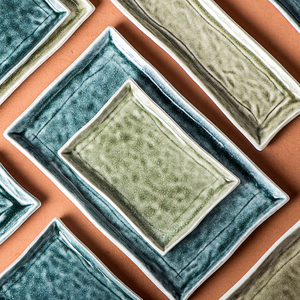
Hospitality interior designers are moving away from clinical pure white dinnerware toward organic, tactile dining experiences. Modern procurement heavily favors matte stoneware finished with reactive glazes—a process where metallic oxides (iron, copper, cobalt) interact with firing temperatures to yield subtle, one-of-a-kind variations across every piece while retaining strict dimensional uniformity.
International importers face increasing pressure to report Scope 3 supply chain emissions. Enterprise buyers prioritize ceramic manufacturers utilizing heat-recovery tunnel kilns, wastewater recycling systems, and locally sourced raw clay. Factories operating under rigorous environmental management standards reduce compliance risks for Western brand partners.
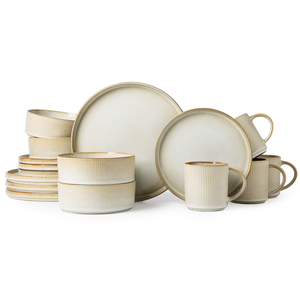
With commercial kitchen space at a premium, dinnerware designs are undergoing structural optimization. Modern matte stoneware lines feature flat-bottomed nesting profiles, reinforced rim geometries, and standardized foot rings that increase stack stability by 40% while mitigating glaze abrasion during back-of-house storage.
E-commerce brands and boutique hospitality chains require flexible production volumes to launch seasonal collections. Leading exporters now integrate 3D CAD modeling and rapid ceramic prototyping, allowing buyers to move from custom design concepts to physical sample validation within 14–21 business days.
Established in 1993 with a registered capital of 30 million baht, ARTWAY Company Limited stands as a premier manufacturer and exporter of stoneware, ceramic tableware, bakeware, and home accessories. Operating from a state-of-the-art 10,000 square meter industrial facility in Samut Sakhon, Thailand, ARTWAY combines decades of traditional ceramic craftsmanship with automated slip-casting, high-precision hydraulic pressing, and computer-controlled firing kilns.
Over three decades of specialized experience supplying major retail chains, department stores, and hospitality groups across Europe, North America, and Asia-Pacific.
Our dedicated team of over 200 ceramic engineers, glaze chemists, and artisans ensures strict adherence to quality control parameters at every production stage.
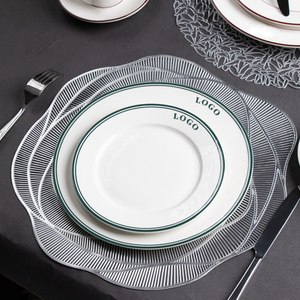
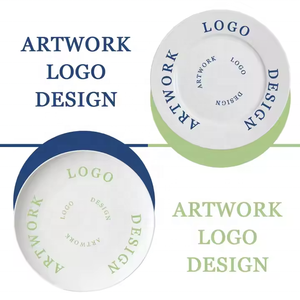
From private-label logo integration to bespoke ceramic glaze formulation and specialized gift packaging, we offer complete turn-key manufacturing solutions.
High-fired matte stoneware (fired at $\ge 1250^\circ\text{C}$) features zero surface porosity, making it fully immune to hot water absorption, alkali detergent attack, and thermal cracking during intensive commercial dishwasher cycles.
Yes. All ARTWAY glazes are certified free of toxic heavy metals, lead, and cadmium. We strictly comply with US FDA standards, European Union Directive 84/500/EEC, and California Proposition 65 requirements.
We utilize proprietary smooth-satin glazes that lower friction co-efficients. Should metal traces accumulate after prolonged use, they can be easily restored using non-abrasive ceramic cleaners or mild acidic solution washes.
We maintain flexible MOQ policies tailored to project scale. Standard custom glaze or logo orders typically start at 500 to 1,000 pieces per shape, with custom mold creation supported for enterprise accounts.
Standard OEM production cycles range between 35 to 50 days, depending on order volume and structural complexity. Pre-production physical samples are delivered within 14 days for buyer approval.
Our products undergo drop-tested export packaging, including heavy-duty corrugated inner cartons, honeycomb divider inserts, shrink-wrapped corner protectors, and heat-treated wooden palletizing.
Connect directly with our engineering and sales export department in Samut Sakhon, Thailand. Access factory-direct wholesale pricing, request physical material swatches, or initiate custom OEM product development.