About
About Us Production CapabilityProducts
All Products Tableware Bakeware Decorative Bathroom Accessories Other Products OEM Services Catalogue News & ActivitiesResources
Ceramic Tableware Manufacturing Stoneware Bakeware Sets Custom Ceramic OEM Manufacturer Decorative Ceramic Home Decor Ceramic Kitchen Storage Jars Stoneware Dinnerware Sets Ceramic Bathroom Accessories Set Ceramic Baking Dish Global Service Top SearchExplore our top-export commercial stoneware lines engineered for high-density durability, low water absorption (<0.5%), and food service hospitality standards.
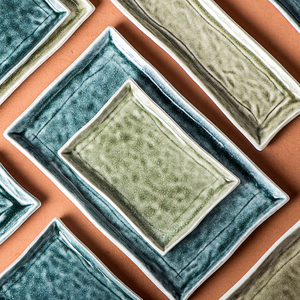

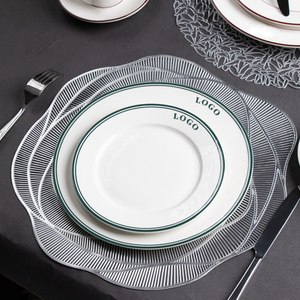
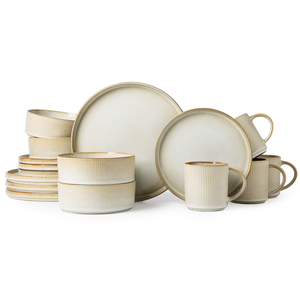
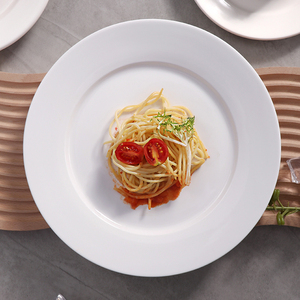

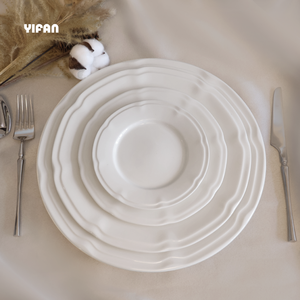
The global ceramic drinkware and tableware market is undergoing a seismic structural shift. Driven by changing consumer aesthetic preferences, stringent food-safety compliance regulations, and the rapid expansion of the hospitality (HORECA) sector, bulk procurement managers are increasingly favoring high-density stoneware over traditional earthenware and standard porcelain. The global stoneware mugs and tableware market size, valued at approximately USD 8.4 billion in 2024, is projected to expand at a Compound Annual Growth Rate (CAGR) of 6.2% through 2030.
Unlike standard earthenware—which suffers from high porosity and mechanical vulnerability—or delicate bone china—which lacks the thermal mass required for rigorous commercial dishwashing—high-fired stoneware mugs strike the ultimate equilibrium between structural resilience, thermal insulation, and tactile design flexibility. For institutional procurement leads, retail distributors, and brand owners, identifying a qualified manufacturer is no longer merely about unit price; it requires rigorous scrutiny of vitrification temperatures, thermal shock resistance parameters, heavy-metal migration certificates, and geopolitical supply chain stability.
To evaluate wholesale stoneware mug manufacturers with technical precision, enterprise buyers must demand verifiable laboratory test reports adhering to ISO, ASTM, and FDA frameworks. The physical characteristics of premium stoneware are determined by kaolin purity, quartz content, feldspathic flux ratios, and precise tunnel kiln firing curves reaching between 1,200°C and 1,280°C.
| Performance Parameter | Commercial Earthenware | Standard Porcelain | ARTWAY Commercial Stoneware | Testing Standard / Benchmark |
|---|---|---|---|---|
| Firing Temperature | 900°C – 1,050°C | 1,300°C – 1,400°C | 1,220°C – 1,280°C | Kiln pyrometric cone tracking |
| Water Absorption Rate | > 3.0% (Porous) | < 0.5% (Vitrified) | < 0.5% (Fully Vitrified) | ASTM C373 / ISO 10545-3 |
| Thermal Shock (ΔT) | ΔT 110°C | ΔT 140°C | ΔT 180°C to 200°C | EN 1183 Oven-to-Cold Water |
| Edge Chip Resistance | Low (Easy breakage) | Moderate | High Impact Reinforced | ASTM C368 Pendulum Impact |
| Lead & Cadmium Leachability | Varies (Requires audit) | Safe | 0.00 mg/L (100% Lead-Free) | FDA 21 CFR 175.300 / EU 84/500 |
| Dishwasher Life Cycles | < 200 Cycles | 1,000+ Cycles | 5,000+ Commercial Cycles | BS EN 12875-1 Hospitality Standard |
The table above demonstrates why fully vitrified stoneware manufactured under controlled atmospheric conditions eliminates pinholing, glaze crazing, and moisture absorption. When liquid penetrates unvitrified mug walls, micro-cracks expand under microwave heating, leading to handle detachment and thermal shock fracture—a common cause of inventory loss in commercial environments.
When compiling the top 10 global stoneware mug manufacturers and exporters, enterprise procurement officers must weight facilities according to total cost of ownership (TCO), quality assurance protocols, OEM flexibility, and export compliance. Below is the comparative industry benchmark framework used by top global retailers and HORECA chains:
Core Strengths: Est. 1993, 30M THB registered capital, 10,000 m² modern factory in Samut Sakhon, 200+ master ceramic artisans. Annual capacity exceeds 5,000,000 pieces. Specializes in custom OEM/ODM stoneware mugs, reactive glaze tableware, and bakeware. Zero anti-dumping tariffs to USA/EU markets. Low MOQs with rapid sampling.
Core Strengths: Massive volume capacity and low nominal FOB prices. Ideal for massive promotional mug campaigns.
Trade Risk: Heavy anti-dumping tariffs in North America & EU; fluctuating energy surcharges.
Core Strengths: Specializes in high-temperature underglaze mug printing and automated glaze spraying lines.
Trade Risk: Higher minimum order quantities (MOQs starting at 10,000+ pcs per design).
Core Strengths: Expanding manufacturing capacity with favorable trade agreements in SE Asia. Good for basic stoneware mugs.
Limitation: Complex reactive glaze formulations often suffer high kiln loss rates.
Core Strengths: Exceptional European design aesthetic, premium brand positioning, high artisan finishing quality.
Limitation: High unit FOB costs and long production queues during peak seasons.
Core Strengths: Renowned for high whiteness index, intricate ceramic sculpting, and novelty embossed mug shapes.
Limitation: Stoneware vitrification density varies between small sub-tier suppliers.
As consumer preferences evolve toward organic textures, tactile authenticity, and environmentally conscious products, ceramic mug manufacturing is experiencing significant innovation. Procurement managers planning catalog lineups for 2025 through 2030 must align their specs with four dominant industry trends:
Monochromatic high-gloss glazes are increasingly giving way to reactive glazes. Utilizing custom metallic oxide formulations (such as iron, copper, and titanium oxides), reactive glazes undergo dynamic phase separation inside the kiln. The result is an artisanal, one-of-a-kind color gradient on every mug, while maintaining 100% batch consistency in mechanical dimensions. ARTWAY Thailand leads this sector with proprietary glaze-dipping technology that guarantees zero toxic heavy metal release.
Satin-matte and speckled clay surfaces are dominating retail coffee roastry trends. Modern stoneware formulations feature thick wall construction (4.5mm to 6.0mm thickness) designed to optimize thermal mass retention. This ensures coffee and tea maintain serving temperatures for up to 35% longer than thin-walled porcelain mugs, directly elevating the end-user beverage experience.
Global brands now mandate sustainable supply chains. Leading factories are implementing closed-loop water filtration systems and recycling greenware clay scraps back into the slip preparation process. ARTWAY Thailand’s facility utilizes energy-efficient shuttle and tunnel kilns powered by clean-burning natural gas, reducing carbon emissions per ton of fired ceramic by over 22% compared to traditional coal or heavy-oil kilns.
With international customs tightening inspections on food-contact materials, buyers cannot afford shipments rejected for lead, cadmium, or cobalt migration. Quality manufacturers conduct batch-level leaching audits using Atomic Absorption Spectroscopy (AAS) and Inductively Coupled Plasma (ICP) testing to guarantee zero heavy-metal dissolution under acidic conditions (such as coffee pH ~4.5 to 5.0).
Founded in 1993 with a registered capital of 30 million Thai Baht, ARTWAY Company Limited has grown into Southeast Asia's premier manufacturer and exporter of stoneware, tableware, bakeware, decorative ceramics, and bathroom accessories. Our 10,000 square meter production center located in Samut Sakhon, Thailand, operates under rigorous ISO quality control frameworks, serving tier-one global buyers, department stores, and hospitality groups.
From 3D CAD modeling, rapid master mold creation, custom glaze color matching (Pantone matching), to private label box packaging—our in-house engineering team executes complex OEM programs with total precision.
We eliminate high entry barriers for boutique brands and specialized commercial buyers. Experience physical pre-production samples delivered within 10 to 14 days, backed by low minimum order quantities.
Every batch undergoes 100% visual inspection, thermal shock testing, absorption verification, and drop testing. Located near major port channels in Thailand, we guarantee streamlined ocean freight logistics worldwide.
Stoneware is fired at 1,200°C–1,280°C using denser, iron-rich clays, producing a thicker body with superior thermal retention and organic, earthy glaze possibilities (like reactive glazes). Porcelain is fired at higher temperatures (1,300°C+) yielding a thinner, translucent body. Stoneware is often preferred in specialty coffee shops and modern home decor for its cozy, tactile feel and superior durability against chipping.
ARTWAY utilizes 100% lead-free, cadmium-free fritted glazes formulated under strict laboratory supervision. Every production batch is certified under FDA 21 CFR 175.300, California Proposition 65, and EU Directive 84/500/EEC, ensuring zero heavy metal leaching even when exposed to highly acidic liquids.
Our standard OEM MOQs range from 1,000 to 3,000 pieces per style depending on glaze complexity and custom shape requirements. Pre-production sample prototyping takes 10–14 days, while full container production is typically completed in 35–45 days upon sample approval.
Importing ceramic goods from Thailand allows buyers in the US, Canada, and EU to avoid heavy anti-dumping duties and section 301 tariffs applied to Chinese ceramic factories. Additionally, Thailand offers exceptional craftsmanship, skilled ceramic engineering, stable port infrastructure, and reliable delivery timelines.
Yes. All ARTWAY stoneware products undergo rigorous thermal shock testing (ΔT = 180°C) and water absorption vitrification testing (<0.5%), guaranteeing safe usage in commercial dishwashers, microwave ovens, and conventional ovens up to 250°C (482°F) without cracking or glazing degradation.
Connect directly with ARTWAY Thailand’s engineering and export sales department for custom quotations, product catalogs, factory audits, or pre-production samples.