About
About Us Production CapabilityProducts
All Products Tableware Bakeware Decorative Bathroom Accessories Other Products OEM Services Catalogue News & ActivitiesResources
Ceramic Tableware Manufacturing Stoneware Bakeware Sets Custom Ceramic OEM Manufacturer Decorative Ceramic Home Decor Ceramic Kitchen Storage Jars Stoneware Dinnerware Sets Ceramic Bathroom Accessories Set Ceramic Baking Dish Global Service Top SearchExplore our factory-direct wholesale plate solutions engineered for hospitality, retail brands, high-volume catering, and custom souvenir markets.
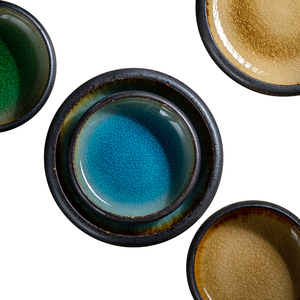
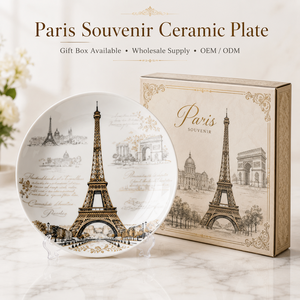
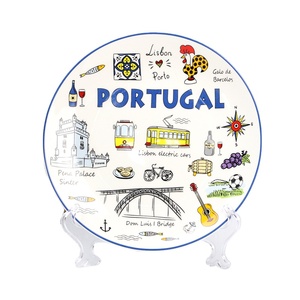
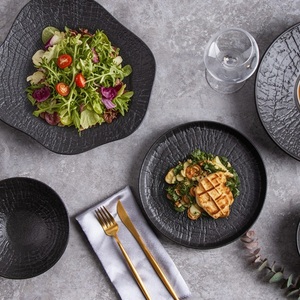
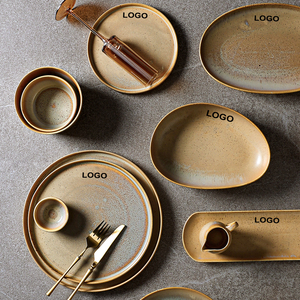
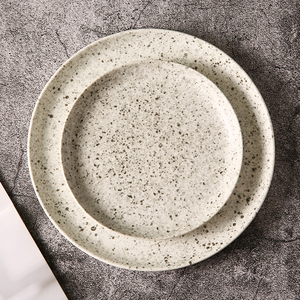
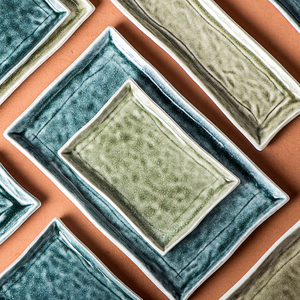
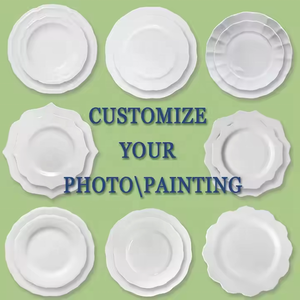
In the highly competitive commercial tableware market—spanning hospitality enterprise procurement (HoReCa), global retail brands, high-volume event catering, and souvenir product licensing—selecting a qualified OEM/ODM custom ceramic plates wholesale supplier requires rigorous technical evaluation. Ceramic tableware sourcing goes beyond structural aesthetics; it encompasses precision material chemistry, thermal shock resistance, glaze stability under industrial dishwashing cycles, and compliance with stringent heavy metals leaching directives.
This technical manual serves as an authoritative procurement benchmark for wholesale buyers, brand owners, and supply chain directors. It details the material science behind stoneware versus porcelain substrates, examines the mechanical physics of ceramic pressing and firing, outlines international food contact compliance protocols, and analyzes strategic procurement shifts shaping the 2025–2030 ceramic export landscape.
The structural longevity of commercial ceramic plates is directly dictated by raw material composition and vitrification density. Ceramic bodies are primarily classified into stoneware and porcelain based on clay refinement, feldspar flux ratios, and peak firing temperatures within tunnel or shuttle kilns.
| Technical Parameter | High-Density Commercial Stoneware | Vitrified Hard Porcelain | Bone China / Fine Porcelain |
|---|---|---|---|
| Firing Temperature Range | 1,200°C – 1,280°C | 1,320°C – 1,400°C | 1,220°C – 1,250°C |
| Water Absorption Rate (ISO 10545-3) | < 0.5% - 1.5% (Non-porous body) | < 0.1% (Fully Vitrified) | < 0.3% |
| Flexural Strength (Modulus of Rupture) | 45 – 65 MPa | 70 – 110 MPa | 50 – 75 MPa |
| Thermal Shock Resistance ($\Delta T$) | Up to 180°C – 200°C | Up to 160°C – 180°C | Up to 140°C |
| Edge Impact Resistance | High (Thicker profile design) | Very High (Vitrified matrix) | Moderate |
| Primary B2B Target Markets | Artisanal Retail, Casual Dining, Souvenirs | Luxury Hotels, Fine Dining, Airlines | High-End Retail, Banquet Dining |
Modern OEM custom ceramic plate production relies on a combination of automated precision machinery and skilled hand-finishing techniques. Achieving mechanical uniformity across orders of 100,000 units or more requires absolute control over slip moisture, compaction pressure, and kiln atmosphere.
Dry powder isostatic pressing ensures ultra-dense structural compaction for flatware, achieving uniform thickness tolerance within ±0.3mm and eliminating warpage during high-temp firing.
Pigments are fused beneath or within the protective silica layer at temperatures exceeding 1,250°C. This guarantees that custom logos, souvenir graphics, and intricate motifs will never fade or leach toxins.
Specialized metal oxide formulations (iron, copper, cobalt, titanium) undergo phase-separation reactions inside the kiln, producing organic, handcrafted aesthetic variations on every single plate.
Global market entry for OEM ceramic tableware is conditioned upon strict regulatory adherence regarding Lead ($Pb$) and Cadmium ($Cd$) release. Glaze formulations must be chemically balanced so that the glass matrix remains totally inert under acidic food exposure (such as acetic or citric acids).
As global supply chains pivot toward sustainability, ethical manufacturing compliance, and localized risk diversification, buyers are re-evaluating their vendor portfolios. The ceramic tableware sector is experiencing major paradigm shifts:
To avoid single-country tariff exposure and regional shipping bottlenecks, major Western distributors are shifting sourcing allocations toward established Southeast Asian manufacturing hubs such as Thailand, which benefit from stable trade relations and favorable duty frameworks.
Commercial clients increasingly mandate low-carbon manufacturing. Leading plants now integrate heat recovery systems from kilns to clay dryers, recycle 98% of industrial wastewater, and utilize non-toxic mineral glazes derived from recycled ceramic scrap (cullet).
Hospitality dining has moved away from stark sterile white plates toward warm, matte, satin, and reactive glazed surfaces with organic rim contours. High-end restaurants prefer "handcrafted-feel" stoneware produced at industrial mass scale.
Founded in 1993 with a registered capital of 30 Million Baht, ARTWAY Company Limited has grown into a world-class premier manufacturer and exporter of stoneware and ceramic products based in Thailand. Headquartered at 47/12 Ban Koh, Mueang Samut Sakhon, Samut Sakhon 74000, Thailand, ARTWAY operates an expansive 10,000-square-meter state-of-the-art production facility powered by a workforce of over 200 skilled artisans, ceramic engineers, and quality inspectors.
Our annual manufacturing capacity exceeds 5,000,000 pieces, servicing prestigious hotel chains, restaurant supply chains, corporate souvenir licensors, and retail brands across North America, Europe, Australia, and Asia. Whether executing full turnkey OEM custom developments or delivering from our established ODM catalog, ARTWAY delivers unmatched craftsmanship, rigorous quality assurance, and streamlined global export logistics.
Our in-house design studio and master mold-making shop turn napkin sketches, 3D render files, or reference samples into physical pre-production ceramic prototypes within 10 to 14 working days.
We accommodate boutique hospitality projects with agile lower MOQ requirements, while offering the mass production infrastructure necessary to comfortably deliver multi-container retailer orders on schedule.
Using proprietary clay body recipes and precise high-temperature vitrification techniques, ARTWAY ceramic plates resist cutlery scratching, thermal shock breakage, and glaze crazing in commercial kitchens.
Every shipment undergoes multi-stage AQL inspection (raw material verification, greenware check, post-kiln glaze audit, drop-test export packaging verification) ensuring zero-defect delivery at destination ports.
Get quick answers to crucial procurement, technical, quality control, and custom OEM ordering questions.
3D design validation and physical plaster mold production typically take 7–12 days. Physical sample approval requires 14–21 days (including sample kiln firing and test glazes). Upon sample sign-off, mass production lead time averages 35 to 45 days depending on total order volume and glaze complexity.
Yes. All ARTWAY high-density stoneware and vitrified porcelain plates are engineered for intensive commercial application. Fired between 1,200°C and 1,280°C, they exhibit ultra-low water absorption (<0.5%), preventing heat retention hazards in microwaves and standing up to harsh chemical detergents in high-temperature commercial dishwashers.
Our standard Minimum Order Quantity (MOQ) for custom OEM plate designs or custom color glazes is generally 500 to 1,000 pieces per SKU. For existing catalog designs or ODM items, smaller order volumes can be accommodated or consolidated within mixed-container sea shipments.
We perform rigorous batch-level XRF spectrographic testing and third-party laboratory audits (SGS, TUV, Bureau Veritas) to verify that all glazes are 100% lead-free and cadmium-free. Detailed Certificates of Analysis (CoA) and Declarations of Compliance (DoC) are provided with all export documentation.
Absolutely. We provide full private-label services, including underglaze backstamp logo firing, custom barcode labeling, color retail box design, drop-test compliant inner dividers, and heavy-duty ISPM-15 heat-treated wooden palletization for safe container transit.
We support all standard Incoterms 2020, including FOB (Bangkok / Laem Chabang Ports), CIF, CFR, EXW, and DDP (Delivered Duty Paid) for direct-to-warehouse logistics in the United States, European Union, United Kingdom, and Middle East.
Connect directly with ARTWAY's engineering and export sales specialists today for custom OEM quotes, physical sample requests, factory audit schedules, or product catalog access.
Contact Us