About
About Us Production CapabilityProducts
All Products Tableware Bakeware Decorative Bathroom Accessories Other Products OEM Services Catalogue News & ActivitiesResources
Ceramic Tableware Manufacturing Stoneware Bakeware Sets Custom Ceramic OEM Manufacturer Decorative Ceramic Home Decor Ceramic Kitchen Storage Jars Stoneware Dinnerware Sets Ceramic Bathroom Accessories Set Ceramic Baking Dish Global Service Top SearchExplore our factory-direct tableware lines designed for commercial durability, tactile elegance, and brand customization. Fully compliant with international food-contact safety standards.
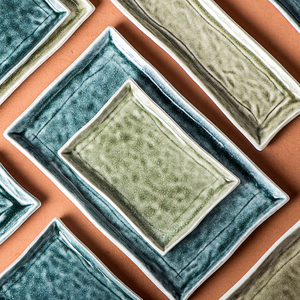 HORECA Grade
 Custom Embossed
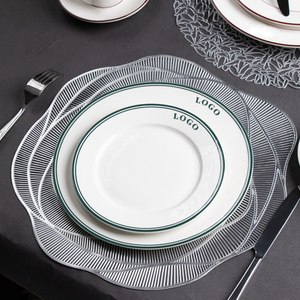 Hotel Grade
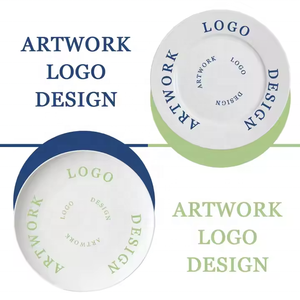 Event & Wedding
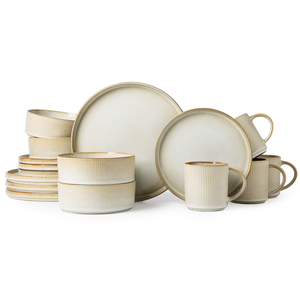 Reactive Glaze
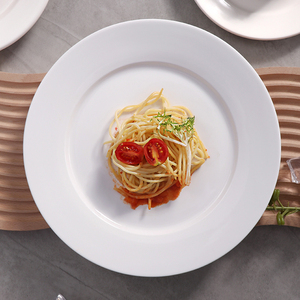 Catering Grade
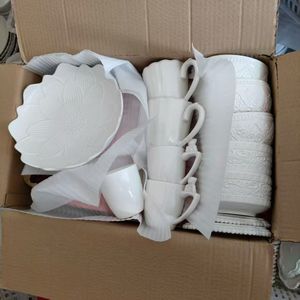 3D Embossed
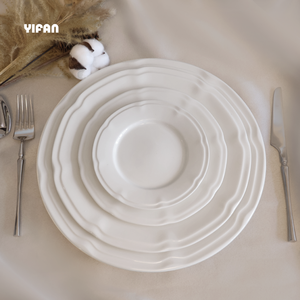 Luxury Bone China
Operating from Samut Sakhon, Thailand since 1993, ARTWAY provides full-spectrum OEM stoneware and porcelain export solutions to over 40 countries.
Empowered by over 200 master technicians and ceramic engineers, ARTWAY synthesizes traditional Thai craftsmanship with advanced tunnel kiln technology.
Embossed ceramic dinnerware represents a sophisticated convergence of tactile industrial design and high-temperature material science. Unlike flat, screen-printed tableware, 3D relief embossed ceramics require rigorous control over clay rheology, mold contraction ratios, and glaze viscosity. For commercial buyers, procurement managers, and OEM brand owners, understanding the physics behind embossed stoneware and porcelain production is essential to securing durable, chip-resistant inventory.
The manufacturing lifecycle begins with high-resolution 3D digital modeling. Utilizing precise CNC engraving systems, master molds are machined out of high-density plaster or steel blocks. This stage accounts for the natural 12% to 15% volumetric shrinkage experienced by fine porcelain and stoneware during the drying and high-firing phases (pyrometric cone 9 to 11, ranging between 1250°C and 1320°C).
To ensure intricate embossed details—such as botanical patterns, geometric fluting, or custom brand heraldry—are captured without air pockets or structural fractures, ARTWAY employs both high-pressure hydraulic ram pressing and specialized slip-casting. This creates a dense, non-porous bisque body with superior structural integrity and high mechanical impact resistance.
A primary challenge in embossed tableware manufacturing is "glaze pooling"—where molten glaze collects excessively in relief grooves, obscuring fine line work or leading to uneven thermal expansion. ARTWAY formulates proprietary glazes with calibrated thixotropic properties. During firing, the glaze melts smoothly across raised contours while maintaining crisp visual depth, resulting in brilliant light refraction without sacrificing edge sharpness.
| Material Category | Firing Temp (°C) | Water Absorption Rate | Mechanical Strength | Ideal B2B Application |
|---|---|---|---|---|
| High-Fired Stoneware | 1250°C – 1280°C | < 0.5% (Vitreous) | High (Flexural 110 MPa) | Retail Sets, Casual Dining, Reactive Glaze collections |
| Hard Commercial Porcelain | 1300°C – 1340°C | < 0.1% (Zero Porosity) | Extreme (Flexural 140+ MPa) | HORECA, Fine Dining, Banquet Buffets, Hotel Chains |
| New Bone China (Aluminous) | 1220°C – 1260°C | < 0.2% | Superior Elasticity & Chip Resistance | Luxury Weddings, Executive Gifts, Premium OEM Brands |
The international market for ceramic tableware is undergoing a structural transformation driven by changing hospitality demands, stringent environmental standards, and global supply chain realignments. Importers, hospitality buyers, and brand managers must align their purchasing strategies with key macroeconomic and manufacturing developments:
Modern culinary presentation emphasizes sensory interaction. Raised 3D textures, matte-glazed relief lines, and organic embossed motifs allow chefs to frame dishes with tactile dimensions, increasing demand for bespoke OEM embossed collections.
Global importers are actively shifting procurement toward Southeast Asian hubs like Thailand to mitigate geopolitical risks, avoid punitive trade tariffs, and ensure stable, duty-efficient logistics into European and North American ports.
Environmental regulations (such as EU ESG reporting requirements) necessitate low-emission production. Factories equipped with heat-recovery tunnel kilns, non-toxic lead/cadmium glazes, and recycled clay slurry systems lead the market.
Furthermore, commercial buyers are prioritizing ergonomic stackability and reinforced rim profiles. In high-turnover restaurant environments, edge chipping accounts for over 70% of tableware replacement costs. ARTWAY’s engineered rolled-rim geometry drastically reduces micro-fractures during heavy industrial dishwasher cycles and busboy handling.
Choosing the right ceramic manufacturer requires balancing artistic refinement with industrial consistency. ARTWAY offers global buyers a complete end-to-end manufacturing infrastructure:
From 2D sketches or CAD files, our in-house tooling lab produces physical 3D plaster samples within 7 to 10 working days, accelerating your time-to-market.
All formulations are certified 100% lead and cadmium free, fully meeting US FDA, California Proposition 65, and EU Directive 2005/31/EC food contact safety standard tests.
We accommodate growing brands with accessible Minimum Order Quantities while maintaining the capacity to deliver multi-container monthly shipments for global enterprise buyers.
In-house ISTA-certified drop-test packaging development, including color gift boxes, heavy-duty honeycomb dividers, and sustainable pulp inserts for e-commerce brands.
Clear, authoritative technical answers to common queries regarding OEM customization, sample lead times, and global shipping policies.
Our standard OEM production MOQ typically starts at 1,000 to 3,000 units per item/shape for custom embossed molds, or 500 complete sets for 16-piece dinnerware collections. For standard shapes utilizing custom backstamps or stock glazes, lower trial order volumes can be arranged upon technical evaluation by our sales team.
Once CAD drawings are approved, physical plaster molds and pre-production samples are completed within 7 to 14 days. Color glaze matching (Pantone or physical sample matching) occurs concurrently. Upon sample approval, mass production lead time is typically 35 to 45 days, depending on order scale and kiln scheduling.
Yes. All ARTWAY stoneware and porcelain dinnerware undergoes rigorous thermal shock testing (ISO 6486 standards). Fired above 1250°C, our ceramic bodies achieve vitrification with near-zero porosity (<0.5%), ensuring they withstand industrial dishwasher thermal cycles, commercial microwave heat, and heavy HORECA handling without glaze crazing or structural cracking.
Absolutenly. Our in-house chemical laboratory specializes in custom glaze development, including matte satin, high-gloss, dual-tone reactive glazes, metallic lustres, and exact Pantone color matching. We provide physical glaze swatches for client sign-off prior to mold production.
ARTWAY enforces a strict 4-stage Quality Inspection protocol covering raw clay purity, bisqueware inspection, glaze defect screening, and final pack checks (AQL 2.5/4.0 standard). Products are packed in reinforced 5-ply corrugated export cartons with customized inner egg-crate dividers and shrink-wrapped palletization to ensure zero-breakage transport to North America, Europe, Australia, and the Middle East.
Thailand offers a compelling combination of world-class kaolin clay deposits, exceptional ceramic artistry, stable labor relations, and favorable trade agreements. Sourcing from Thailand enables global importers to diversify their supply chains, lower import tariff risks, and benefit from high manufacturing standards backed by decades of export infrastructure.