About
About Us Production CapabilityProducts
All Products Tableware Bakeware Decorative Bathroom Accessories Other Products OEM Services Catalogue News & ActivitiesResources
Ceramic Tableware Manufacturing Stoneware Bakeware Sets Custom Ceramic OEM Manufacturer Decorative Ceramic Home Decor Ceramic Kitchen Storage Jars Stoneware Dinnerware Sets Ceramic Bathroom Accessories Set Ceramic Baking Dish Global Service Top SearchHigh-temperature vitrified porcelain and stoneware engineered for high-volume HORECA service environments. Fully customizable OEM specs, glazes, and private label branding.

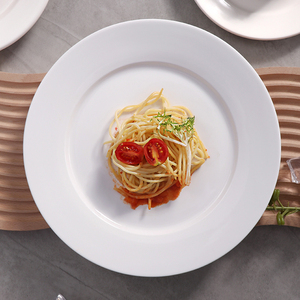

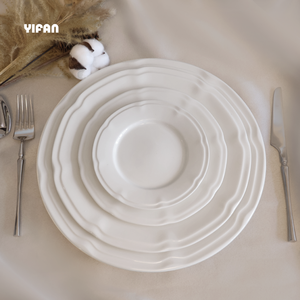
An authoritative technical analysis comparing ceramic body formulations, vitrification dynamics, and surface glaze mechanics for high-turnover hospitality environments.
In the commercial hospitality and foodservice industry (HORECA), ceramic tableware is subjected to severe mechanical stresses, extreme thermal shocks, aggressive chemical detergents, and continuous cycle dishwashing. Selecting the optimal ceramic material standard is not merely an aesthetic choice—it directly impacts the Total Cost of Ownership (TCO) and brand equity of fine dining establishments, international hotel chains, and volume caterers.
The primary structural distinction among commercial ceramics lies in clay body composition, quartz-to-feldspar ratios, and peak firing temperatures. High-temperature vitrification (1280°C – 1350°C) converts raw silicate structures into a dense, non-porous crystalline matrix bound by a glassy phase.
The following data matrix evaluates raw material metrics critical for institutional procurement directors and hotel purchasing managers:
| Technical Parameter | High-Alumina Porcelain | Vitrified Fine Stoneware | New Bone China | Standard Earthenware |
|---|---|---|---|---|
| Firing Temperature (°C) | 1320°C – 1380°C | 1250°C – 1280°C | 1220°C – 1260°C | 1000°C – 1100°C |
| Water Absorption Rate (%) | < 0.05% (Non-porous) | < 0.5% (Vitrified) | < 0.2% (Vitrified) | 3.0% – 7.0% (Porous) |
| Flexural Strength (MPa) | 180 – 210 MPa | 140 – 165 MPa | 160 – 190 MPa | 60 – 85 MPa |
| Edge Chip Resistance Rating | Superior (Reinforced Rim) | High (Thick Profile) | Moderate / High | Low (Prone to chipping) |
| Commercial Dishwasher Life | 5,000+ Cycles | 3,000+ Cycles | 4,000+ Cycles | < 500 Cycles |
| Thermal Shock Tolerance (ΔT) | 200°C Differential | 180°C Differential | 160°C Differential | 110°C Differential |
| Glaze Hardness (Mohs Scale) | 6.5 – 7.0 (Scratch Resistant) | 6.0 – 6.5 | 6.0 – 6.5 | 4.0 – 5.0 |
| Heavy Metal Safety Compliance | FDA / LFGB / CA Prop 65 | FDA / LFGB / CA Prop 65 | FDA / LFGB / CA Prop 65 | Requires Strict Lead Audit |
Leveraging over 30 years of manufacturing mastery, a 10,000 m² factory footprint, and robust quality governance to deliver bespoke ceramic solutions worldwide.
Located in Samut Sakhon, Thailand, our integrated factory houses automated tunnel kilns, high-pressure casting systems, and precision glaze application booths capable of scaling production up to 5 Million units annually.
Every production lot undergoes rigorous lead and cadmium extraction testing, microwave thermal testing, and impact stress verification to ensure full compliance with FDA, LFGB, and EU Directive 2005/31/EC.
Supported by 200+ master ceramic technicians, we break traditional manufacturing barriers by providing flexible MOQ programs and rapid 3D mold prototyping within 7 to 10 working days.
Translating client concept sketches or 2D technical renders into high-precision 3D plaster working molds.
Purifying kaolin, quartz, and ball clay slurry with magnetic separators to eliminate iron contaminants.
High-pressure automated pressing for flatware and precision slip-casting for complex hollowware.
Developing customized matte, gloss, satin, or reactive glazes engineered to withstand cutlery scratching.
Dual firing process: Bisque firing at 900°C followed by high-fire glaze vitrification up to 1350°C.
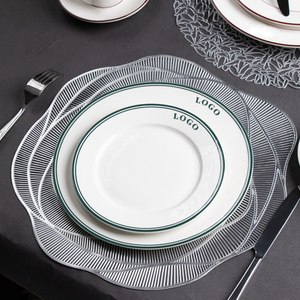
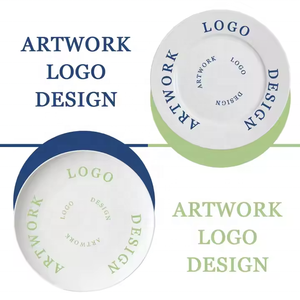
High-heat ceramic decal application for permanent logo integration, 100% optical and dimensional audit.
Emerging operational, aesthetic, and geopolitical trends driving procurement decisions for international hospitality brands, restaurant chains, and wholesale distributors.
Global buyers are prioritizing factories utilizing heat-recovery kilns and circular clay recycling systems. ARTWAY's zero-waste clay reclamation reduces raw material extraction carbon footprints by 22%.
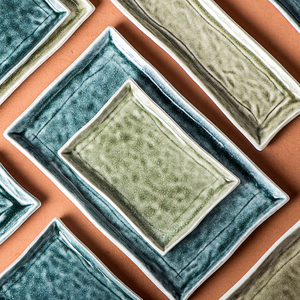
Modern dining experiences are moving away from sterile clinical white plates toward organic, tactile textures. Custom dual-tone reactive glazes allow chefs to elevate food presentation as part of culinary storytelling.
Metal marking from stainless steel cutlery remains a major point of diner dissatisfaction. Advanced zirconium-infused glaze formulations increase surface Mohs hardness to 7.0+, completely eliminating black cutlery streaks.
To mitigate trade tariffs and concentration risks, procurement directors are shifting production to Thailand. Benefiting from duty-free trade agreements and established maritime channels, Thailand offers superior supply chain security.
Direct answers to crucial operational queries raised by restaurant owners, hotel procurement teams, and commercial tableware importers.
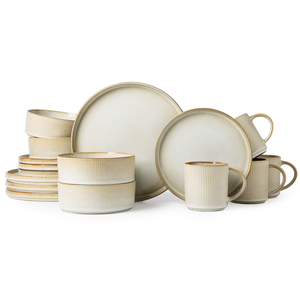
At ARTWAY Thailand, our standard OEM production MOQ starts at 1,000 pieces per shape/color for standard porcelain and 500 pieces for specialized reactive glaze stoneware lines. We also offer flexible trial order programs for boutique luxury hotels and hospitality concept launches.
All our glazes and raw ceramic bodies are 100% lead-free and cadmium-free. Every production lot is tested via Inductively Coupled Plasma Mass Spectrometry (ICP-MS) to guarantee zero heavy metal leaching under acidic food contact conditions (4% acetic acid testing at 22°C for 24 hours).
In-glaze branding fuses high-heat ceramic decals into the melted glaze layer at temperatures above 1200°C, making the logo completely scratch-proof, acid-resistant, and impervious to high-temp commercial dishwashers. Overglaze branding is applied after glaze firing at lower temperatures (800°C) and is less durable for intense restaurant use.
Custom 3D mold development and physical pre-production samples are completed within 7 to 14 days. Upon sample approval and deposit confirmation, bulk container manufacturing typically takes 35 to 45 days, depending on order volume and structural complexity.
Thailand offers world-renowned ceramic craft heritage combined with advanced industrial automation. Importers in the US and Europe benefit from favorable tariff structures, zero anti-dumping penalties, stable freight connectivity via Laem Chabang Port, and strict IP protection governance.
Edge chipping accounts for nearly 70% of restaurant tableware failure. ARTWAY's reinforced rim profile distributes mechanical impact stress evenly across the perimeter, reducing chipping failure by up to 34% in high-turnover dishwashing and stacking operations.
Connect with our engineering and international sales team today to request pre-production samples, customized price quotes, or schedule a virtual factory walkthrough.