About
About Us Production CapabilityProducts
All Products Tableware Bakeware Decorative Bathroom Accessories Other Products OEM Services Catalogue News & ActivitiesResources
Ceramic Tableware Manufacturing Stoneware Bakeware Sets Custom Ceramic OEM Manufacturer Decorative Ceramic Home Decor Ceramic Kitchen Storage Jars Stoneware Dinnerware Sets Ceramic Bathroom Accessories Set Ceramic Baking Dish Global Service Top SearchHigh-durability stoneware, vitrified porcelain, and custom printed ceramic tableware engineered for international wholesale distribution, hospitality (HORECA), and retail programs.
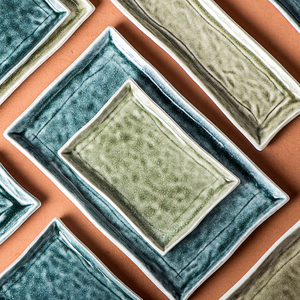
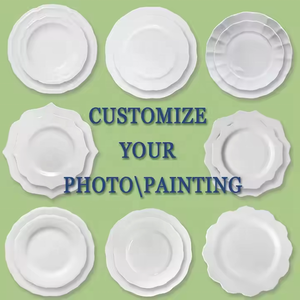
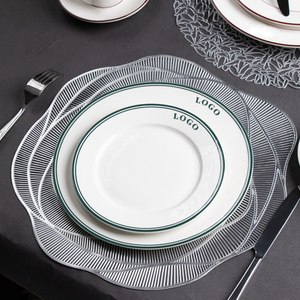
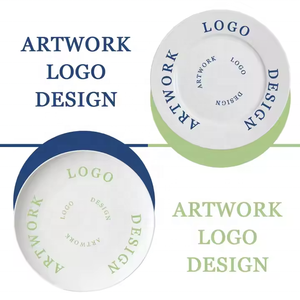
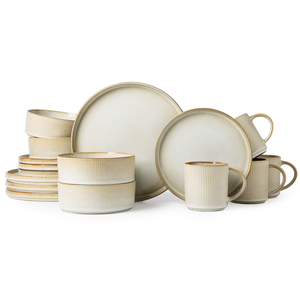
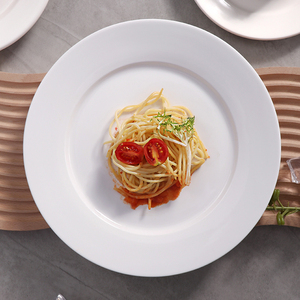
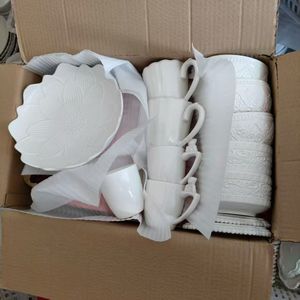
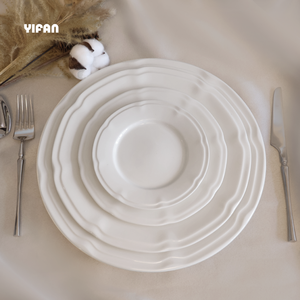
In the highly competitive landscape of global corporate merchandising, hospitality supply chains, and retail homeware branding, procuring custom OEM custom printed ceramic mugs and high-performance dinnerware requires an intricate understanding of ceramic material science, high-temperature firing dynamics, and food-grade glaze chemistry. Ceramic drinkware and dinnerware are not merely promotional items; they are tactile brand ambassadors subjected to intensive daily commercial use, automated high-temperature dishwashers, microwave radiation, and aggressive thermal shocks.
When enterprise procurement officers source custom printed ceramic mugs in bulk, evaluating suppliers solely on per-unit FOB cost frequently leads to catastrophic quality defects—such as glaze crazing, pinhole porosity, lead/cadmium leachability violations, or logo degradation after minimal wash cycles. Establishing a rigorous technical specification matrix prior to issuing Requests for Quotation (RFQs) is vital for ensuring compliance with international regulatory bodies including FDA (US Food and Drug Administration), European LFGB (Lebensmittel-, Bedarfsgegenstände- und Futtermittelgesetzbuch), and California Proposition 65.
Selecting the ideal ceramic substrate forms the foundational decision in any custom OEM product development cycle. Each raw clay formulation exhibits distinct mechanical density, thermal expansion coefficients, and aesthetic properties:
| Material Substrate | Firing Temperature (°C) | Water Absorption (%) | Thermal Shock Resistance | Mechanical Impact Strength | Recommended Commercial Use |
|---|---|---|---|---|---|
| Commercial Stoneware | 1,250°C – 1,280°C | < 1.0% | Excellent (ΔT = 180°C) | High (Thick wall structure) | Coffee Roasters, Casual Dining, Retail Homeware, Heavy-duty Office Mugs |
| Hard Paste Porcelain | 1,300°C – 1,350°C | < 0.1% | Superior (ΔT = 200°C) | Very High (Vitrified glass matrix) | Fine Dining, Hotel Banquet (HORECA), Airline Catering, Luxury Gift Sets |
| New Bone China | 1,220°C – 1,260°C | < 0.3% | Moderate (ΔT = 150°C) | High (Enhanced translucent beauty) | Premium Corporate Gifting, High-end Retail Chains, Boutique Cafeware |
| Earthenware / Dolomite | 1,000°C – 1,100°C | 5.0% – 10.0% | Poor (ΔT = 90°C) | Low (Porous, prone to chipping) | Short-term Promotional Giveaways, Low-cost Decorative Items (Not Recommended for HORECA) |
Achieving permanent, vibrant, and scratch-resistant logo reproduction on ceramic mugs requires matching the decoration method with the intended usage cycle. Modern OEM manufacturing utilizes four main decoration methodologies:
1. In-Glaze Decal Firing (1,200°C - 1,250°C): Ceramic pigments (inorganic metallic oxides) are screen-printed onto specialized transfer paper and applied to un-glazed or sub-glazed bisqueware. During the high-temperature firing, the clear protective glaze melts over the pigment, encapsulating the artwork permanently within the glass layer. Result: 100% dishwasher-safe, scratch-proof, and completely resistant to industrial chemical detergents.
2. On-Glaze / Over-Glaze Decal Firing (780°C - 830°C): Applied to pre-fired glazed ceramic blanks. This process offers an ultra-wide color gamut, including precise Pantone matching and metallic gold/platinum foils. While highly durable for standard commercial dishwashing, prolonged exposure to aggressive industrial chemical washes can slowly degrade non-encapsulated overglaze pigments over years of service.
3. Reactive Glaze Application: A cutting-edge technique where mineral-rich glazes react organically inside the kiln at peak temperatures. Each mug or plate emerges with a unique, artisan-style gradient and texture. Ideal for high-end retail lines and boutique cafe tableware seeking a handcrafted bespoke aesthetic without compromising industrial durability.
4. Hydro-Graphics & Dye Sublimation Coating: Utilized primarily for low-temperature short-run promotional items or full-color photorealistic prints. Polymer-coated sublimated mugs are susceptible to UV degradation and microwave heating degradation over extended periods, making them unsuitable for heavy-duty restaurant or hotel operations.
Established in 1993 with registered capital of 30 Million Baht, ARTWAY Company Limited operates as a premier OEM/ODM manufacturer and global exporter of high-grade stoneware, ceramic tableware, bakeware, and specialty kitchen accessories. Based in Samut Sakhon, Thailand, our state-of-the-art 10,000 square meter manufacturing infrastructure is designed to fulfill demanding bulk purchasing programs for international brand owners, hospitality buyers, and department store importers across North America, Europe, Australia, and Asia.
From raw clay slurry refining and custom mold tool engineering to high-temperature tunnel kiln firing and automated decal application, our entire production cycle is managed in-house under strict ISO 9001 protocols.
Every production batch undergoes batch testing for lead and cadmium migration, passing US FDA 21 CFR 175.300, California Prop 65, and European LFGB standards. Safe for food contact, microwaves, and commercial dishwashers.
We bridge the gap between mass-scale production and boutique custom orders. Our flexible production lines support low Minimum Order Quantities (MOQ) for custom shape molding, logo printing, and specialized glazes.
To eliminate field failures in commercial catering and retail distribution, ARTWAY enforces a rigorous five-stage Quality Assurance (QA) inspection workflow throughout production:
The global ceramic drinkware and tableware procurement sector is undergoing structural transformations driven by sustainability mandates, supply chain risk mitigation, and evolving consumer aesthetic preferences. Enterprise procurement professionals must align their sourcing strategies with four core macro trends:
Traditional ceramic manufacturing has historically relied on energy-intensive natural gas kilns. Forward-thinking manufacturers like ARTWAY Thailand are transitioning toward high-efficiency heat-recovery tunnel kilns, solar-assisted drying rooms, and closed-loop water filtration systems that recycle 95% of industrial slurry water. Modern corporate clients increasingly require Supplier Environmental Audits (ISO 14001, SEDEX SMETA) to fulfill their ESG (Environmental, Social, and Governance) transparency commitments.
Geopolitical friction, punitive anti-dumping duties, and shifting international trade agreements have compelled North American and European importers to diversify their supplier base away from single-source markets. Thailand has emerged as a preferred premier manufacturing hub due to its robust industrial infrastructure, deep-water port access (Laem Chabang), skilled ceramic artisan workforce, and favorable tariff structures under bilateral trade agreements.
Corporate gifting and commercial hospitality are shifting away from stark, sterile high-gloss white porcelain toward tactile, warm, and natural aesthetics. Micro-textured matte glazes, speckled stone finishes, and dual-tone reactive glazes are experiencing exponential demand in bulk procurement programs. Advanced glaze chemistry allows bulk manufacturers to reproduce handcrafted artisan visual variations while maintaining strict dimensional tolerances required for commercial stacking.
Comfort and thermal ergonomics are dictating modern ceramic drinkware engineering. Mugs engineered with weighted bases prevent tipping in office and dining environments, while ergonomically contoured 4-finger handles reduce wrist fatigue. Furthermore, modular stackable mug designs maximize storage efficiency in compact urban cafes and commercial kitchen operations.
Before issuing purchase orders for high-volume custom printed ceramic mug runs, procurement managers should execute a thorough supplier audit using this standardized enterprise verification framework:
| Audit Dimension | Evaluation Criteria | Critical Benchmark / Red Flag |
|---|---|---|
| 1. Production Capacity | Monthly output, number of continuous kilns, kiln volume. | Supplier capacity must exceed 200% of your order volume to avoid production bottlenecks. |
| 2. Regulatory Certification | Third-party laboratory test reports (SGS, TÜV, Intertek) for FDA & LFGB. | Reports older than 12 months or lack of batch-specific traceability certificates. |
| 3. OEM Prototype Lead Time | 3D digital rendering turnaround, physical mold engineering, sample approval schedule. | Standard prototyping should not exceed 10–14 days from CAD sign-off. |
| 4. Quality Assurance Infrastructure | In-house thermal shock test equipment, drop testing setup, glaze thickness gauges. | Absence of documented inline inspection logs between bisque and glazefiring stages. |
| 5. Transit Packaging Standard | ISTA 1A/3A drop test verification, 5-ply corrugated export cartons, eco-friendly paper wrap. | Use of non-recyclable styrofoam or weak single-wall inner boxes leading to transit breakage. |
Direct technical answers to common questions encountered by global sourcing directors, brand managers, and commercial buyers when procuring custom ceramic mugs and dinnerware in bulk.