About
About Us Production CapabilityProducts
All Products Tableware Bakeware Decorative Bathroom Accessories Other Products OEM Services Catalogue News & ActivitiesResources
Ceramic Tableware Manufacturing Stoneware Bakeware Sets Custom Ceramic OEM Manufacturer Decorative Ceramic Home Decor Ceramic Kitchen Storage Jars Stoneware Dinnerware Sets Ceramic Bathroom Accessories Set Ceramic Baking Dish Global Service Top Search
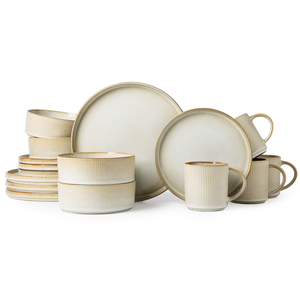
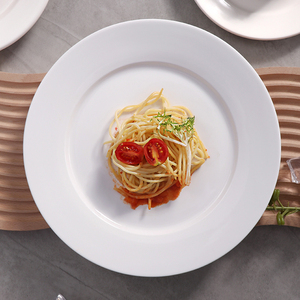
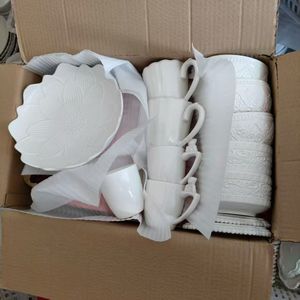
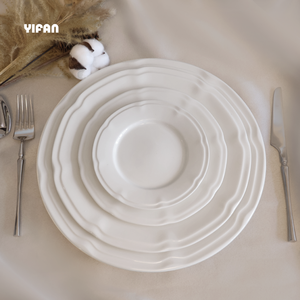
In the global commercial drinkware and promotional tableware sectors, sourcing high-grade ceramic vessels requires a rigorous understanding of silicates, clay body formulations, glaze chemistry, and high-temperature vitrification. As a premier Custom OEM Custom Ceramic Coffee Mugs Supplier & Exporter operating out of Thailand since 1993, ARTWAY Company Limited provides institutional buyers, hospitality chains, and global brands with deep technical competence and industrial scalability. Modern B2B ceramic procurement has transcended simple aesthetic selection; today's global importers demand stringent mechanical strength, precise thermal shock resistance ($\Delta T \ge 180^\circ\text{C}$), absolute heavy metal non-leaching compliance, and repeatable color fidelity across high-volume production batches.
Ceramic coffee mugs are subjected to extreme operational demands in commercial environment, including repeated commercial dishwasher cycles, micro-abrasions from cutlery, rapid thermal immersion, and mechanical impact. The foundational integrity of a ceramic vessel depends heavily on the raw material composition—specifically the precise ratio of Kaolin (china clay), Quartz (silica dioxide acting as the skeleton), and Feldspar (acting as the fluxing agent to lower vitrification temperatures).
Selecting the correct substrate is the first critical decision in any OEM custom ceramic mug program. Below is a comparative breakdown engineered by our senior material science team to assist procurement specialists in matching material properties to end-use applications:
| Performance Metric | High-Fire Stoneware | Hard Porcelain | New Bone China |
|---|---|---|---|
| Firing Temperature Range | $1250^\circ\text{C} - 1280^\circ\text{C}$ | $1300^\circ\text{C} - 1380^\circ\text{C}$ | $1220^\circ\text{C} - 1260^\circ\text{C}$ |
| Water Absorption (Porosity) | $< 0.5\%$ (Vitrified) | $< 0.1\%$ (Impermeable) | $< 0.3\%$ (Vitrified) |
| Bending & Modulus of Rupture | $65 - 80 \text{ MPa}$ | $90 - 120 \text{ MPa}$ | $100 - 130 \text{ MPa}$ |
| Thermal Shock Resistance ($\Delta T$) | $180^\circ\text{C} - 200^\circ\text{C}$ | $160^\circ\text{C} - 180^\circ\text{C}$ | $140^\circ\text{C} - 160^\circ\text{C}$ |
| Translucency & Whiteness | Opaque / Earthy Natural Tones | High Whiteness ($L^* > 85$) | Warm Translucency ($L^* > 90$) |
| Primary B2B Target Application | Coffee Roasters, Craft Retail, HORECA | Fine Dining, Hotel Hospitality | Luxury Giftware, Airline First Class |
Executing an enterprise OEM custom ceramic mug project requires seamless coordination between industrial design, mold engineering, slip preparation, forming, glazing, and multi-stage thermal processing. At ARTWAY Thailand’s $10,000\text{ m}^2$ manufacturing facility in Samut Sakhon, we follow a standardized 6-phase engineering lifecycle:
3D digital modeling and SLA resin printing to prototype handle ergonomics, volumetric liquid capacity (11oz, 12oz, 15oz, espresso), and thermal dissipation rates before tooling.
Precision plaster master molds engineered with exact shrink-factor calculations ($10\%-14\%$ volume contraction during drying and glaze firing) ensuring strict dimensional tolerances.
High-pressure liquid slip casting for complex custom shapes or automated RAM-pressing and jiggering for symmetrical cylindrical coffee mugs, achieving homogenous wall density.
Initial low-temperature calcination to burn out organic impurities, chemically bind clay particles, and create a porous yet sturdy greenware state optimal for uniform glaze adhesion.
Application of lead-free mineral glazes via robotic spraying or hand-dipping—ranging from silky matte, high-gloss clear, reactive glaze reactions, to metallic electroplating coatings.
High-fire processing up to $1300^\circ\text{C}$ in gas-fired continuous tunnel kilns, establishing complete glass-phase vitrification, surface hardness, and anti-scratch resistance.
A primary driver of product differentiation in the competitive coffee mug market is surface glaze technology. OEM clients can leverage several proprietary glazing and logo decoration techniques developed at ARTWAY:
The international trade architecture for consumer ceramic goods and commercial tableware is experiencing fundamental shifts. Sourcing directors and supply chain executives must navigate evolving ESG (Environmental, Social, and Governance) regulations, global tariff realignments, and shifting consumer preferences toward circular economy products.
As enterprise buyers seek to de-risk single-country sourcing dependencies and mitigate anti-dumping tariffs imposed on ceramic exports from certain East Asian jurisdictions, Thailand has emerged as the premier Southeast Asian hub for ceramic manufacturing. Benefiting from deep mineral reserves of high-grade kaolin, robust industrial infrastructure, and favorable international trade agreements (such as ASEAN FTAs and GSP preferences), Thailand-manufactured ceramics provide stable tariff advantages into North American and European Union ports.
Environmental accountability has transitioned from a marketing asset to a strict procurement prerequisite. Modern ceramic factories are measured by their energy efficiency and raw material circularity. ARTWAY has pioneered closed-loop sustainability initiatives across our production lines:
$100\%$ of unfired scrap clay body generated during trimming and demolding is collected, re-blended, and introduced back into the slip preparation phase, eliminating raw material wastage.
Exhaust heat generated by our continuous tunnel kilns operates at temperatures up to $1300^\circ\text{C}$. This thermal energy is piped into greenware drying rooms, reducing overall factory carbon emissions by $32\%$.
Glazing wash-water undergoes multi-stage chemical coagulation and membrane filtration, recovering heavy glaze sediments and recirculating $85\%$ of industrial process water.
Post-pandemic hospitality procurement heavily prioritizes hygiene technology. Future ceramic mug developments incorporate silver-ion ($\text{Ag}^+$) nanostructures embedded into the liquid glaze. Fired permanently into the crystal structure, these ions continuously disrupt microbial cell membranes, providing permanent, self-sanitizing antibacterial protection that remains active throughout decades of commercial wash cycles.
Food contact safety is non-negotiable for enterprise ceramic exporters. Ceramic tableware containing improperly formulated glaze fluxes can leach heavy metals such as Lead ($\text{Pb}$) and Cadmium ($\text{Cd}$) when exposed to acidic beverages like espresso, coffee, or tea (which possess pH levels between $4.5$ and $5.5$).
ARTWAY Thailand enforces a zero-defect quality framework. Every production batch of OEM custom ceramic mugs undergoes atomic absorption spectroscopy testing to verify strict compliance with major international standards:
Partner with ARTWAY Thailand—30 years of OEM expertise, low MOQs, factory-direct pricing, and complete international compliance documentation.
Headquartered in Mueang Samut Sakhon, Thailand, ARTWAY Company Limited was established in 1993 with a registered capital of 30 million baht. Over the past three decades, we have evolved from a specialized craft pottery unit into an international manufacturing force supplying global retail brands, hotel chains, and major distributors across North America, Europe, Australia, and Asia.
Fully integrated facility housing slip preparation, automated casting, RAM pressing, hand-carving bays, glaze laboratories, and double tunnel kilns.
Our workforce combines decades of traditional Thai ceramic craftsmanship with modern mechanical engineering to guarantee exquisite finish detailing.
We support growing boutique brands and large enterprise buyers alike, offering flexible minimum order quantities starting as low as 1,000 units per custom style.
Get immediate answers to essential commercial, logistical, and technical questions regarding our OEM ceramic coffee mug supply contracts:
Our standard MOQ for custom shape or custom color OEM ceramic mugs is typically 1,000 to 3,000 units per design, depending on the complexity of the body mold and glaze chemistry. For standard existing mug shapes with custom decal logos, lower test volumes can be evaluated upon inquiry.
3D CAD design and physical prototype sampling usually take 7 to 12 working days. Once samples are approved, master production mold creation requires 10 to 15 days. Mass production lead time ranges between 35 to 45 days after deposit confirmation and sample sign-off, contingent on order volume.
Yes. All ARTWAY high-fire stoneware and porcelain mugs undergo high-temperature vitrification ($1250^\circ\text{C}-1300^\circ\text{C}$). This achieves water absorption under $0.5\%$, making the vessels entirely microwave-safe, oven-safe up to $220^\circ\text{C}$, and resistant to harsh commercial dishwashing detergents over thousands of wash cycles without fading or crazing.
We use strictly lead-free and cadmium-free raw glaze minerals. Every batch produced for export undergoes heavy metal extraction testing certified by independent third-party laboratories (SGS, TUV, Bureau Veritas). Official test certificates (FDA 21 CFR, LFGB, Prop 65 compliance) are provided directly to buyers prior to shipping clearance.
Yes. Our in-house glaze chemistry laboratory can formulate ceramic stains to achieve precise Pantone (PMS) color matching. Because ceramic glazes react under high kiln temperatures, we provide physical glaze control swatches for buyer approval prior to mass production.
We utilize export-grade 5-ply double-wall corrugated cartons, reinforced egg-crate internal dividers, and individual bubble wrapping or eco-friendly honeycomb paper wrap. Master cartons are palletized onto fumigated wooden or plastic pallets, shrink-wrapped with edge-guards, and drop-tested according to ISTA 3A standards to guarantee zero transit damage.
Sourcing from Thailand provides enterprise buyers with significant supply chain risk mitigation. Thailand benefits from low or zero anti-dumping tariffs in North America and Europe, superior raw clay mineral quality, skilled craftspeople, stable currency, and favorable international trade agreements, ensuring transparent lead times and competitive total cost of ownership (TCO).
Whether you require custom logo porcelain mugs for hospitality chains, reactive glaze stoneware for boutique coffee brands, or retail-ready gift collections, ARTWAY Thailand provides end-to-end manufacturing excellence. Connect with our engineering sales team today for immediate quote calculations and physical sample requests.