About
About Us Production CapabilityProducts
All Products Tableware Bakeware Decorative Bathroom Accessories Other Products OEM Services Catalogue News & ActivitiesResources
Ceramic Tableware Manufacturing Stoneware Bakeware Sets Custom Ceramic OEM Manufacturer Decorative Ceramic Home Decor Ceramic Kitchen Storage Jars Stoneware Dinnerware Sets Ceramic Bathroom Accessories Set Ceramic Baking Dish Global Service Top SearchEngineered for commercial food service endurance, luxury hotel banqueting, and high-volume retail lines. Factory-direct wholesale configurations with low MOQ and complete custom decal & glazing capabilities.

Ultra-durable vitrified white porcelain featuring reinforced rolled rims. Specially designed for banquet halls and high-throughput commercial dishwashers.
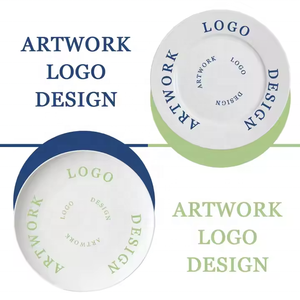
Complete dining range optimized for chain restaurants and luxury hotels. Features scratch-resistant in-glaze logo application and thermal shock protection.
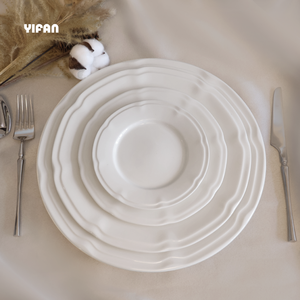
Lightweight, translucent New Bone China boasting superior mechanical flexural strength. Minimalist Scandinavian profile tailored for upscale retail brands.

Microwave and salamander oven-safe serving platters. Vibrant botanical underglaze printing guaranteed not to fade or leach over heavy commercial usage.
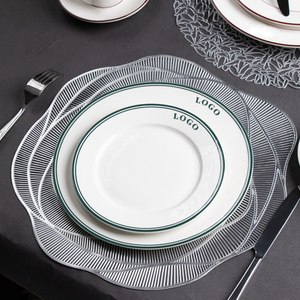
Heavy-gauge thermal retention ceramic platter and matching coffee service. Built to withstand rapid thermal shifts up to ΔT 200°C without cracking.
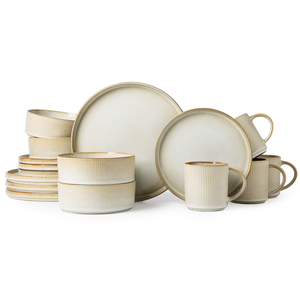
Artisanal reactive glaze finish creating distinct, natural organic textures. A top-selling wholesale package for boutique hotels and modern home stores.
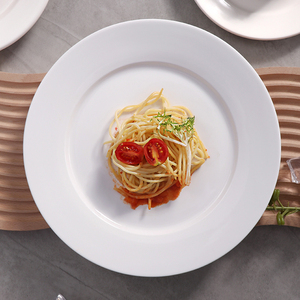
High-alumina porcelain body delivering maximum resistance against cutlery scratching and edge damage. Standardized dimensions for commercial kitchen racks.

Multi-compartment partitioned serving dishes with tactile geometric relief patterns. Ideal for institutional catering, cafeteria service, and bulk retail promotions.
When procurement directors and institutional importers evaluate China ceramic tableware manufacturers, understanding the physical chemistry, vitrification points, and mechanical resilience of different clay bodies is paramount. China's ceramic manufacturing hubs (such as Chaozhou, Dehua, Jingdezhen, and Zibo) utilize distinct thermal curves and silicate formulations to meet target commercial specifications.
Commercial tableware must balance three core engineering metrics: Water Absorption Rate (which dictates hygiene and microwave safety), Modulus of Rupture (MOR) (which measures mechanical breaking strength), and Thermal Shock Resistance (ΔT) (which prevents micro-crazing during high-temperature washing and oven exposure). Below is a comprehensive engineering comparison matrix developed for global buyers.
| Material Category | Firing Temp (°C) | Water Absorption (%) | MOR Flexural Strength | Thermal Shock Delta | Key Commercial Advantage |
|---|---|---|---|---|---|
| Hard Commercial Porcelain | 1320°C – 1380°C | < 0.2% (Vitrified) | > 120 MPa | ΔT 180°C to 220°C | Maximum Chip & Scratch Resistance |
| Durable Fine Stoneware | 1180°C – 1260°C | < 1.5% | 80 – 105 MPa | ΔT 150°C to 180°C | Heavy feel, ideal for artisanal reactive glazes |
| New Bone China (Phosphate-Reinforced) | 1220°C – 1280°C | < 0.3% | > 140 MPa | ΔT 160°C to 190°C | Translucent, lightweight, high elegant appeal |
| High-Alumina Hotel Porcelain | 1350°C – 1400°C | < 0.1% (Zero Porosity) | > 160 MPa | ΔT 200°C to 250°C | Extreme Heavy-Duty HoReCa Performance |
Integrating over 30 years of industrial ceramic production expertise, modern automated tunnel kilns, and stringent international testing protocols to empower global buyers.
Utilizing computer-controlled 100-meter tunnel kilns with micro-zone PID thermal regulation. Guarantees uniform vitrification, zero structural warping, and consistent color tone matching across 100,000+ unit production runs.
Formulated with non-toxic lead-free and cadmium-free glazes. Products undergo rigorous leaching tests in accordance with US FDA 7117.06/07, California Proposition 65, and European Union LFGB standards.
Dedicated in-house industrial modeling design studio. We convert CAD blueprints and custom concepts into physical 3D plaster molds and vitrified sample prototypes within 7 to 10 working days.
Flexible minimum order thresholds for boutique brands alongside massive volume scalability (5M+ pcs/year). Integrated drop-test export packaging guarantees sub-0.5% breakages during containerized ocean shipments.
How global dining trends, ergonomics, and aesthetic shifts are reshaping mass manufacturing requirements for dinnerware and tableware suppliers.
Hospitality venues are moving away from sterile plain white dinnerware toward tactile, earthy surfaces. High-fire reactive glazing causes naturally varying crystal formations during firing, offering an artisan hand-crafted appearance while retaining commercial-grade non-porous hygiene.
Modern fine dining demands lightweight tableware that does not compromise on mechanical strength. Adding 15%–25% calcined alumina (Al₂O₃) into the kaolin clay matrix allows manufacturers to produce ultra-thin dinner plates with higher resistance to edge chipping than standard porcelain.
With commercial kitchen space at a premium in urban restaurant centers, modern ceramic engineering focuses heavily on engineered stacking shoulders. Precise rim geometries prevent nesting vacuum lock while mitigating foot-to-glaze abrasion during high-speed bussing.
Post-pandemic sanitation expectations have accelerated the adoption of nano-silver and titanium dioxide glaze additives. These permanently fused anti-microbial surface treatments eliminate 99.9% of surface bacteria and drastically reduce grease adhesion for effortless cleaning.
Global procurement strategies for ceramic tableware are undergoing a structural evolution driven by supply chain risk management, environmental regulatory frameworks, and digitised factory audits. Wholesalers, hotel purchasing groups, and retail chain buyers must align with manufacturers capable of providing transparent ESG credentials alongside cost-competitive output.
European and North American importers are increasingly subject to Carbon Border Adjustment Mechanisms (CBAM) and Scope 3 emissions reporting. Tier-1 Chinese ceramic factories are rapidly replacing coal gasifiers with liquefied natural gas (LNG) and electric shuttle kilns, paired with waste-heat recovery systems that preheat drying chambers, reducing carbon intensity per unit by up to 35%.
Rather than placing massive single-shipment orders with 90-day lead times, global buyers now negotiate annual framework contracts with tiered safety stock. Manufacturers hold unglazed bisque inventory in factory warehouses, allowing custom glaze application and decal firing on demand with expedited 14-day dispatch cycles.
Detailed technical answers to common queries regarding ceramic specifications, quality control protocols, factory auditing, and custom manufacturing processes.
Whether you require custom OEM sample development, high-volume porcelain dinnerware production, or commercial HoReCa catalog pricing, our engineering sales team is prepared to assist your procurement needs.