About
About Us Production CapabilityProducts
All Products Tableware Bakeware Decorative Bathroom Accessories Other Products OEM Services Catalogue News & ActivitiesResources
Ceramic Tableware Manufacturing Stoneware Bakeware Sets Custom Ceramic OEM Manufacturer Decorative Ceramic Home Decor Ceramic Kitchen Storage Jars Stoneware Dinnerware Sets Ceramic Bathroom Accessories Set Ceramic Baking Dish Global Service Top SearchExplore our top-tier commercial-grade stoneware bakeware and dinnerware solutions manufactured for extreme thermal durability, chemical stability, and modern aesthetic elegance.
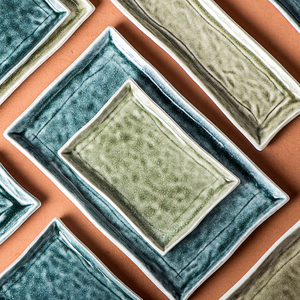
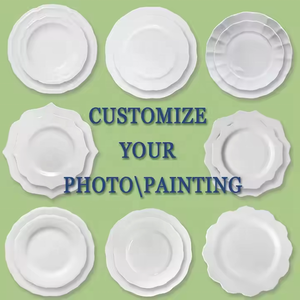
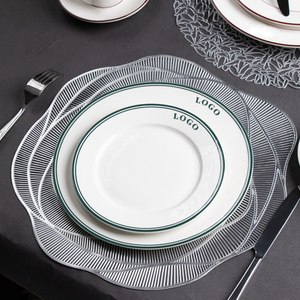
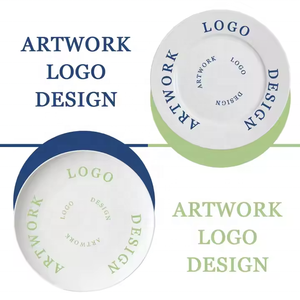
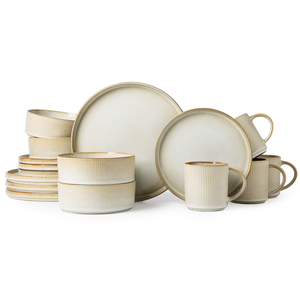
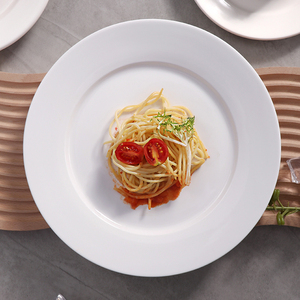
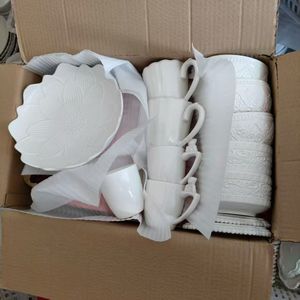
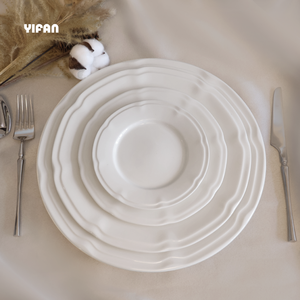
Combining three decades of ceramic engineering, specialized raw material refining, and state-of-the-art high-temperature tunnel kilns to deliver unmatched OEM bakeware solutions.
Fired at precise temperatures exceeding 1280°C (2336°F), our stoneware ceramic bodies undergo full mineral vitrification. This ensures a non-porous micro-structure with water absorption rates strictly below 0.5%, preventing moisture ingress, cracking, and bacterial accumulation.
Our proprietary kaolin-feldspar-quartz clay formulations are engineered to withstand drastic thermal fluctuations (ΔT = 180°C to 220°C). Seamlessly transition our bakeware directly from sub-zero freezer cold into pre-heated high-temperature convection ovens without thermal shock fractures.
We utilize 100% non-toxic, lead-free, and cadmium-free glazes compliant with global food contact standards, including FDA 21 CFR, LFGB, EU Directive 84/500/EEC, and California Proposition 65. Glaze hardness reaches 6+ on the Mohs scale, resisting cutlery scratching.
Understanding physical parameters allows commercial procurement managers to optimize product durability, heat retention, and total cost of ownership.
| Material Metric | OEM Fired Stoneware (Our Standard) | Commercial Earthenware | High-White Porcelain |
|---|---|---|---|
| Firing Temperature | 1250°C – 1280°C | 1000°C – 1150°C | 1300°C – 1380°C |
| Water Absorption Rate | < 0.5% (Vitrified) | 3.0% – 8.0% (Porous) | < 0.1% (Vitrified) |
| Thermal Shock Tolerance (ΔT) | Up to 220°C Thermal Delta | Max 120°C (High Fracture Risk) | Up to 160°C |
| Edge Chipping Resistance | Superior (Dense Molecular Matrix) | Poor (Soft Body) | Moderate to High |
| Dishwasher / Microwave Ergonomics | 100% Commercial Grade Safe | Handwash Preferred (Glaze Crazing) | Safe (If Unadorned with Metallic Trims) |
| B2B Manufacturing Cost Efficiency | Optimal for Retail & HORECA OEM | Low Cost / Low Durability | Higher Production Cost |
Key shifts shaping global ceramic sourcing, environmental compliance, and consumer purchasing behavior over the next decade.
Global buyers are transitioning away from flat monochromatic glazes toward modern matte, satin-reactive, and hand-sprayed organic textures. Advanced dual-fire reactive glazes generate unique pattern variations on every bakeware piece, blending artisanal craftsmanship with mass-production consistency for high-end retail brands.
ESG compliance is now mandatory for North American and European importers. Top OEM factories are integrating energy-efficient heat recovery kilns, solar-assisted drying systems, and fully recycled clay bodies (post-industrial ceramic waste reuse), lowering carbon footprints while meeting strict Scope 1 & Scope 2 emission targets.
Space-saving kitchenware designs are dominating global consumer demand. OEM orders are heavily shifting toward nestable roasting pans, multi-functional baking dishes with integrated stoneware lids that double as trivets or serving trays, and stackable modular HORECA buffet servers.
With direct-to-consumer (D2C) ceramic retail surging, global procurement standardizes ISTA-6A and Amazon FBA drop-test ready packaging at the factory level. Custom molded expanded polyethylene (EPE) foam, honeycomb bio-board, and zero-plastic recyclable packaging ensure sub-0.5% breakages during parcel transit.
How modern automation, 3D prototyping, and automated glaze application elevate ceramic quality control.
Transitioning from traditional manual slip casting to high-pressure resin mold casting. This guarantees uniform wall thickness, eliminates internal air pockets, increases structural density, and ensures ±0.5mm dimensional tolerance across large volume OEM production runs.
To guarantee batch-to-batch glaze consistency, our factory uses advanced spectrophotometers and computerized glaze preparation. Delta-E color variation is maintained strictly within ΔE < 0.8 across multiple production batches spanning different manufacturing quarters.
6-axis industrial robots perform precision glaze application. This eliminates glaze runs, thin spots, and pinholes around complex bakeware handles, rims, and internal corners, ensuring smooth, non-stick, pore-free baking surfaces ideal for heavy-duty kitchen use.
A streamlined, transparent, and quality-controlled engineering pipeline designed for international buyers.
Submit your technical drawings or physical samples. Our engineering team generates 3D CAD models and 72-hour SLA resin prototypes to verify volumetric capacity, handle ergonomics, and thermal stress points before tool casting.
Precision master plaster and resin molds are cast. Concurrently, our laboratory formulates custom glaze chemistry to match specific Pantone colors, matte/gloss surface textures, or specialized reactive glaze visual effects.
Pre-production stoneware samples undergo thermal shock tests, dishwasher cycle simulations (500+ cycles), microwave power testing, and heavy-metal migration chemical analysis. Physical samples are shipped for buyer sign-off.
Body preparation, automated forming, greenware drying, glaze spraying, and high-temperature tunnel kiln firing (1280°C) are executed under strict ISO 9001 quality assurance protocols.
Every production lot undergoes rigorous inspection adhering to ISO 2859-1 (AQL 2.5 Major / 4.0 Minor). Checks include visual defect grading, rim flatness checks, thermal shock sampling, and weight verification.
Final products are packed into customized drop-test approved mail-order boxes or bulk retail color boxes, palletized, container-loaded, and shipped under FOB, CIF, or DDP terms worldwide.
Detailed technical and commercial answers addressing common sourcing inquiries from global ceramic importers.
Our standard production MOQ for custom OEM stoneware bakeware is typically 1,000 to 2,000 pieces per shape/color, depending on size and glaze complexity. For standard catalog shapes with custom color glazes or logo decals, flexible lower MOQs (500 pieces) can be evaluated based on raw material readiness.
Yes, absolutely. All our stoneware bakeware is fully vitrified at 1280°C, providing exceptional structural density. The product line is rated oven-safe up to 260°C (500°F), microwave safe, commercial dishwasher safe (500+ industrial wash cycles without glaze dulling), and freezer safe down to -20°C.
Our ceramic and stoneware bakeware products comply with major global safety regulations. We routinely undergo third-party laboratory testing (SGS, TUV, Bureau Veritas) for FDA (US Food and Drug Administration) 21 CFR, LFGB (Germany/EU), DGCCRF (France), and California Proposition 65 compliance to guarantee non-detectable lead and cadmium leachability.
Once 2D/3D CAD drawings are finalized and approved, physical mold casting and pre-production glaze sampling require 15 to 20 business days. Express 3D resin prototyping can be provided within 3 to 5 days for early aesthetic and volumetric validation prior to steel/plaster mold tooling.
We control glaze chemistry using automated ball-milling systems and digital spectrophotometers. Raw material oxide ratios are strictly analyzed via X-ray fluorescence (XRF). By controlling kiln atmosphere, ramp rates, and peak soak times in our automated tunnel kilns, we maintain strict color consistency (ΔE < 0.8) between initial approval samples and mass production runs.
Our quality assurance protocol includes subjecting randomized sample pieces to an extreme thermal shock cycle: heating the bakeware in an oven to 200°C for 20 minutes, followed by immediate immersion into 20°C ice water. Products must exhibit zero micro-cracking, crazing, or catastrophic thermal structural failure to pass lot release criteria.
We offer comprehensive custom packaging tailored to distribution channels: 4-color offset printed retail gift boxes, high-density drop-test approved mail-order boxes with custom EPE foam inserts for Amazon/e-Commerce sellers (ISTA-6A compliant), and eco-friendly recyclable corrugated kraft packaging with custom barcode labeling.
Yes. We support custom bottom backstamps, debossed logo imprints in the mold tooling, embossed brand marks, high-temperature silk-screen ceramic decals, and custom glaze-resist branding according to your brand design specifications.
Standard mass production lead time is 45 to 60 days upon sample approval and deposit receipt. For recurring re-orders with pre-existing tooling and established glaze formulations, lead times can be compressed to 35–40 days.
We support standard international commercial shipping terms including FOB (Free on Board - Shenzhen/Ningbo/Qingdao/Bangkok), CIF (Cost, Insurance, Freight), and DDP (Delivered Duty Paid). Our export department handles all customs documentation, Form A/Form E certificates of origin, and phytosanitary pallet inspection compliance.
Request factory-direct wholesale pricing, order physical samples, or submit your custom OEM design specifications to our engineering team today.
Get a Quote