About
About Us Production CapabilityProducts
All Products Tableware Bakeware Decorative Bathroom Accessories Other Products OEM Services Catalogue News & ActivitiesResources
Ceramic Tableware Manufacturing Stoneware Bakeware Sets Custom Ceramic OEM Manufacturer Decorative Ceramic Home Decor Ceramic Kitchen Storage Jars Stoneware Dinnerware Sets Ceramic Bathroom Accessories Set Ceramic Baking Dish Global Service Top SearchDirect Factory Export | Microwave & Dishwasher Safe | Custom Logo & Reactive Glaze Solutions
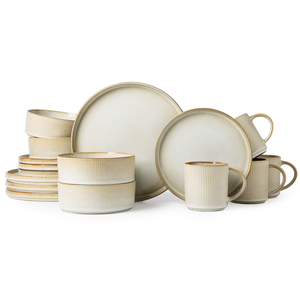
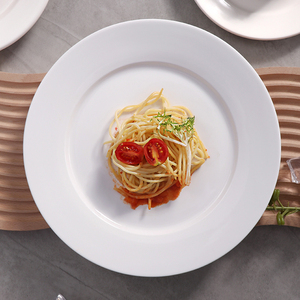
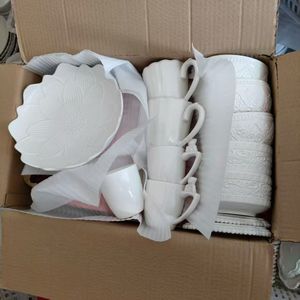
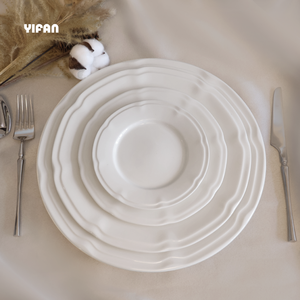
When enterprise procurement teams, department store buyers, and hospitality groups source ceramic tableware at scale, understanding the microstructural composition of stoneware versus traditional porcelain or earthenware is paramount. China has established itself as the global nexus for ceramic engineering, blending century-old ceramic artistry with automated tunnel kiln technologies and precise material formulation.
Stoneware is categorized as a semi-vitrified or fully vitrified ceramic body fired at temperatures between 1,200°C and 1,300°C (2,192°F to 2,372°F). Unlike low-fired earthenware, which remains porous, high-fired stoneware achieves a dense, stone-like matrix characterized by an ultra-low water absorption rate (<0.5%), superior mechanical strength, and exceptional thermal durability.
Information Gain Insight: The structural durability of commercial stoneware relies heavily on the balanced ratio of kaolin clay, quartz, and feldspar. China’s primary clay reserves in Guangdong, Jiangxi, and Shandong provide an ideal mineral profile containing high silica and low iron content, permitting higher thermal stability during mass-scale production firing cycles.
To assist procurement managers in evaluating production standards, the following technical comparison illustrates how OEM stoneware stacks up against alternative ceramic substrate options:
| Parameter / Feature | High-Fired Stoneware | Hard Porcelain | New Bone China | Earthenware (Dolomite) |
|---|---|---|---|---|
| Firing Temperature | 1250°C – 1280°C | 1320°C – 1400°C | 1200°C – 1250°C | 1000°C – 1150°C |
| Water Absorption Rate | < 0.5% (Vitrified) | < 0.1% (Fully Vitrified) | < 0.3% | 3.0% – 10.0% (Porous) |
| Edge Chip Resistance | Exceptionally High | High | Moderate to High | Low (Prone to Chipping) |
| Thermal Shock (ΔT) | Up to 180°C – 200°C | Up to 160°C | Up to 140°C | Below 100°C |
| Glaze Versatility | Reactive, Matte, Silk, Glazed | Glossy Clear, In-glaze | Translucent Cream | Painted, Soft Glazes |
| Commercial Suitability | HORECA, Retail, High-Use | Fine Dining, Hotel | Banquet, Retail Gift | Decorative / Low-Use |
The global tabletop industry is undergoing a structural transition. Consumer preferences are shifting from rigid, formal white porcelain towards organic, tactile, and aesthetically expressive stoneware. Understanding these micro-trends allows importers, brand owners, and e-commerce sellers to stay ahead of market demands.
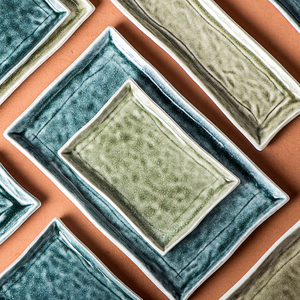
Modern consumers demand unique, hand-crafted aesthetics without paying bespoke pottery prices. Advanced reactive glaze technology uses metallic oxides (such as iron, copper, or titanium oxide) within the glaze formula. During kiln firing, chemical reactions yield dynamic color variations, speckled surfaces, and gradient shifts—making every individual piece in a 16-piece bulk dinnerware set subtle, unique, and highly desirable.
Urban living environments and compact commercial restaurant kitchens require multi-functional, space-efficient tableware. Coupe-style dinner plates, shallow rimmed bowls (often termed "pasta bowls" or "blatters"), and stackable flat-bottom profiles are rapidly replacing traditional wide-rimmed plates. Coupe shapes optimize surface plating area while reducing breakages during dishwasher loading.
International regulatory oversight regarding food contact materials has tightened globally (e.g., FDA CPG 7117.06/07, California Proposition 65, EU Directive 84/500/EEC, and LFGB). Leading Chinese bulk manufacturers employ lead-free and cadmium-free raw frit formulations, ensuring total safety under high-acid food exposures and commercial dishwashing cycles.
With direct-to-consumer (D2C) fulfillment growing exponentially, fragile bulk dinnerware packaging must withstand aggressive courier transit. Leading suppliers now offer factory-integrated Mail Order Packaging (MOP) passed under ISTA-3A or ISTA-6A standards, incorporating high-density drop-tested EPE foam inserts, triple-wall corrugated master cartons, and corner protectors to keep transit damage below 0.5%.
Selecting the right OEM/ODM manufacturing partner in China goes beyond finding low piece prices. It demands an evaluation of operational stability, engineering capabilities, quality assurance protocols, and ethical compliance.
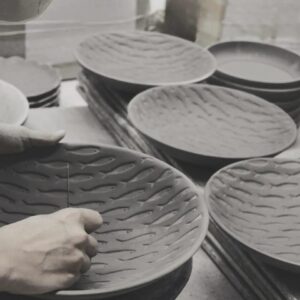
Established with decades of specialized ceramic expertise, our manufacturing operations feature over 10,000 square meters of production space and a workforce exceeding 200 skilled ceramic artisans and technical engineers. Operating state-of-the-art computer-controlled gas tunnel kilns, we maintain an annual production throughput exceeding 5 million pieces.
Our integrated facilities cover every step of ceramic production: raw clay refining, slip casting, automated roller-head pressing, hand-finishing, automatic glaze spraying, decal application, high-temperature tunnel firing, and final AQL 1.5/4.0 inspection.
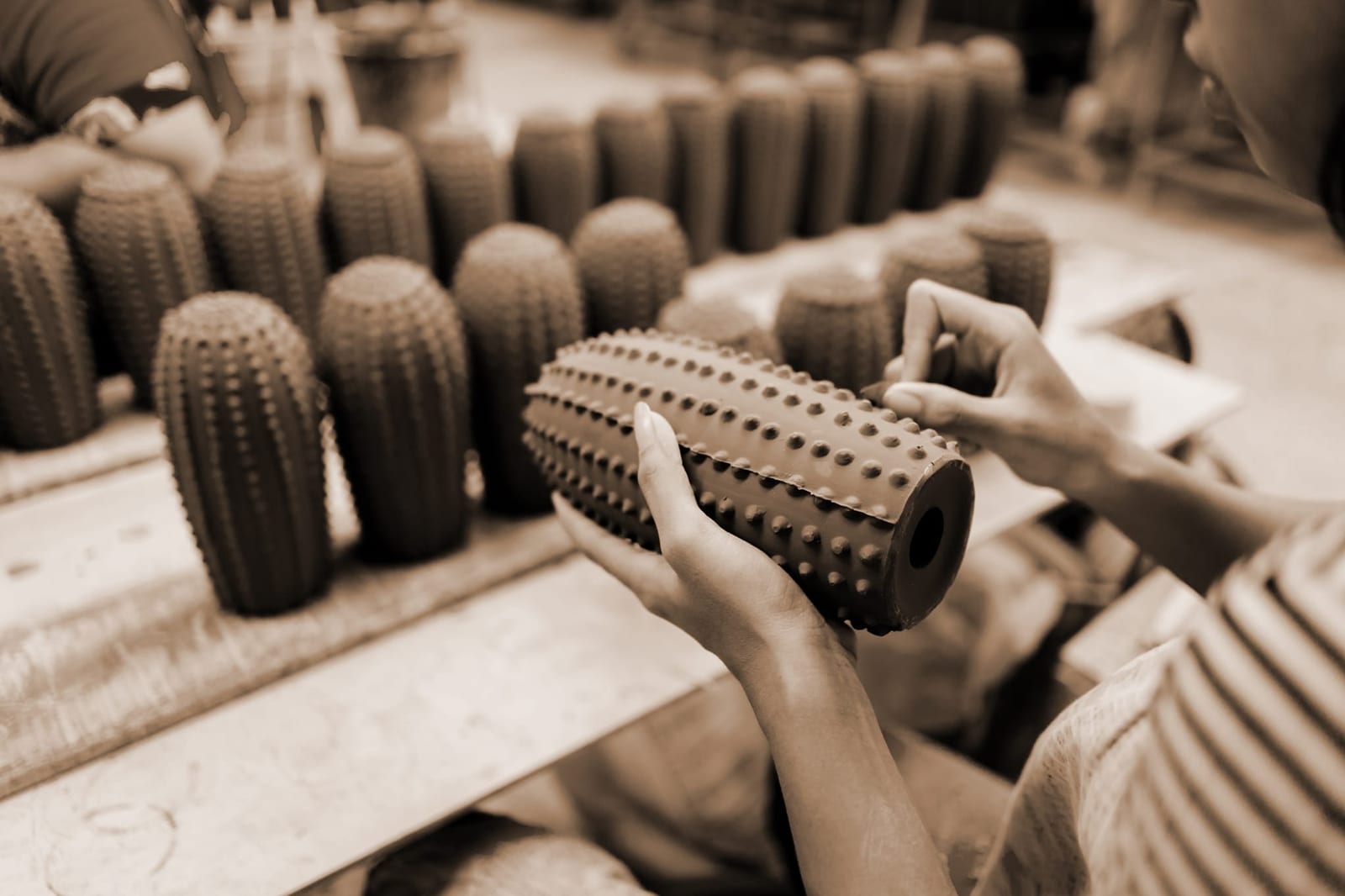
We empower global brands, supermarket chains, and private label importers by streamlining product development. From initial 2D vector sketches or 3D CAD models, our in-house R&D lab produces physical 3D-printed resin prototypes within 3–5 days. Once approved, master plaster molds and working production molds are engineered in-house.
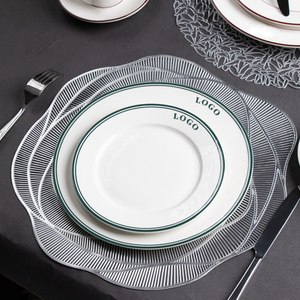
Whether you require custom embossed logos, pantone-matched reactive glazes, specialized decal prints, or bespoke gift box packaging, our agile OEM engineering framework guarantees sample turnaround within 10 to 14 business days.
Every bulk production run undergoes an unyielding 5-point quality verification protocol prior to container loading:
Below are essential technical and logistical queries addressed for international ceramic tableware buyers, procurement agents, and brand managers.
Our flexible factory-direct MOQ typically starts at 500 to 1,000 sets (or 3,000 individual pieces per shape/color) for standard stoneware items. For customized reactive glaze formulations or proprietary embossed shapes requiring new mold development, MOQs are generally 1 x 20-foot container (approx. 2,500 – 3,000 16-piece sets). Low-MOQ trial orders are supported for established brand partners.
Yes. All our high-fired stoneware dinnerware (fired above 1250°C) exhibits a vitrified ceramic body with water absorption below 0.5%. This prevents moisture absorption during washing, eliminating the risk of internal expansion or cracking when exposed to microwave microwave radiation or high-temperature commercial dishwashers. Standard stoneware items are safe for temperatures up to 220°C (428°F).
We maintain a strict quality commitment limiting breakage to under 1.5%. All bulk shipments utilize heavy-duty corrugated export master cartons with double-walled partitions, corner guards, and plastic stretch wrapping over palletized loads. For e-commerce customers, we provide customized 5-layer drop-test packaging (ISTA-6A compliant) using fitted EPE foam inserts.
Our manufacturing facilities maintain full BSCI (Business Social Compliance Initiative), ISO9001 quality management, and ISO14001 environmental management certifications. Product lines comply fully with FDA, California Proposition 65, LFGB (Germany), and EU Food Contact Regulation (EC) No 1935/2004. Test reports from SGS, TÜV, or Intertek are available upon request.
Physical pre-production samples (including custom color glazes and logo backstamps) are delivered within 10 to 14 days after design approval. Upon sample sign-off and deposit receipt, mass production lead times range between 35 and 45 days, depending on order volume and glaze complexity.
Absolutely. Our internal glaze chemistry laboratory specializes in custom color matching. While reactive glazes naturally exhibit slight tonal variations during high-temperature firing, our experienced ceramic engineers match base tones to specified Pantone codes within tight Delta-E tolerances.
Partner with China’s leading bulk stoneware manufacturer. Request factory-direct wholesale pricing, order sample kits, or discuss your custom OEM/ODM design brief with our technical engineering team today.
Send an Inquiry