About
About Us Production CapabilityProducts
All Products Tableware Bakeware Decorative Bathroom Accessories Other Products OEM Services Catalogue News & ActivitiesResources
Ceramic Tableware Manufacturing Stoneware Bakeware Sets Custom Ceramic OEM Manufacturer Decorative Ceramic Home Decor Ceramic Kitchen Storage Jars Stoneware Dinnerware Sets Ceramic Bathroom Accessories Set Ceramic Baking Dish Global Service Top Search
Explore industry trends, OEM ceramic manufacturing guides, tableware design ideas, and expert tips from ARTWAY Thailand.
China has become a major sourcing destination for Stoneware dinnerware sets, serving restaurants, retailers, hotels, and household brands worldwide. Its factories combine established ceramic traditions with scalable production, modern glazing, and flexible customization. Buyers can find matte plates, reactive-glaze bowls, stackable mugs, and coordinated serving pieces from one supply chain.
Details matter.
A reliable evaluation should examine clay composition, firing temperature, glaze consistency, rim strength, and food-contact safety documentation. It should also consider packaging performance. A beautifully finished plate means little if cracked pieces arrive after a long shipment. Factory audits, sample approval, production inspections, and clear testing records help reduce avoidable risks. Yet no supplier is perfect. Glaze variation may appear between batches, especially with handmade-looking finishes. That imperfection can add character, but it may also challenge strict retail matching.
Ceramic artist and author Edmund de Waal once said, “Ceramics is a way of thinking with your hands.” His observation reflects the balance behind every successful collection. Stoneware dinnerware sets must feel practical in a buyer’s hands, not merely attractive in a catalog. The best Chinese manufacturers understand this balance through repeated production experience. They refine shapes, test durability, and adjust finishes for different markets. Global buyers should still ask difficult questions about lead and cadmium testing, dishwasher suitability, microwave use, carton strength, minimum order quantities, and replacement policies. Price remains important, but it should not control every decision. A lower quotation can hide weaker packaging, inconsistent color, or limited after-sales support. This guide explores China’s leading stoneware suppliers and the purchasing checks that can turn a promising sample into a dependable global product line.
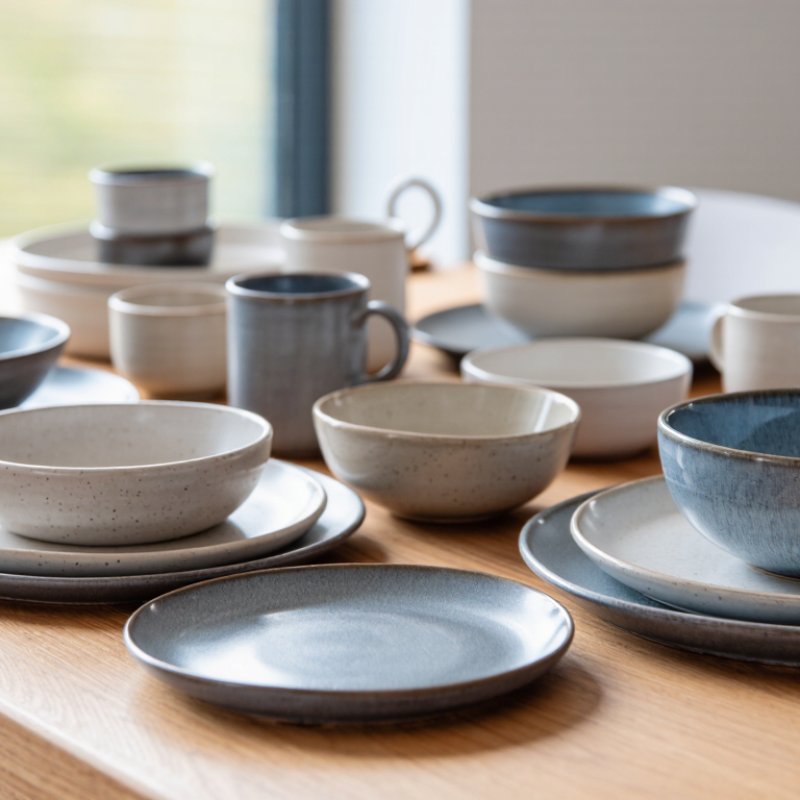
Stoneware is a ceramic material fired at high temperatures, usually above 1,180°C. This process creates a dense body with practical strength for daily dining. It feels substantial. Many stoneware plates resist chips better than ordinary earthenware, although no ceramic is break-proof.
Its surface is normally covered with a glaze that improves stain resistance and supports different finishes. Buyers may choose glossy white, reactive colors, speckled textures, or handmade-looking edges. A matte glaze can show utensil marks more clearly. Microwave and dishwasher suitability depends on the clay body, glaze, decoration, and tested manufacturing process. Reliable suppliers should provide test records, packing specifications, and clear care instructions.
China remains a major sourcing center for stoneware dinnerware because it combines ceramic expertise, flexible production, and export logistics. Global buyers include retailers, restaurants, hotels, and online sellers. Current demand favors stackable shapes, earthy colors, coordinated collections, and packaging designed to reduce breakage. Sustainability also affects purchasing decisions, including durable products, efficient kiln use, and recyclable transport materials. Freight costs and replacement rates can change the real price significantly. The category is not flawless. Buyers should inspect samples, measure size consistency, check glaze coverage, and confirm food-contact safety requirements for each destination market. A product may look premium in photographs but feel unbalanced in hand. The detail matters.
China’s leading stoneware dinnerware regions serve different production needs. Guangdong, especially the Chaozhou area, is known for flexible tableware production and export-oriented factories. Suppliers there often support varied shapes, reactive glazes, embossed patterns, and medium-to-large orders. Fujian offers strong ceramic craftsmanship, with suppliers experienced in hand-finishing and decorative surface work. Zhejiang and Shandong also provide capable manufacturers, particularly for practical hotelware, restaurant collections, and stable everyday ranges.
A reliable supplier should explain its clay body, firing temperature, glaze system, and quality controls clearly. During factory sourcing, buyers should request fired samples rather than relying only on digital images. Stoneware can look consistent on screen but show shade changes under warehouse lighting. Ask for information on water absorption, thermal shock testing, edge strength, and food-contact compliance for the target market. Production records, inspection reports, and batch traceability can reveal more than polished showroom displays.
Price differences often come from firing loss, glaze complexity, mold investment, and inspection standards. A cheaper quotation may not be cheaper after breakage and replacement costs. No production cluster is perfect. Even experienced suppliers may struggle with large reactive-glaze orders or sudden design changes. Buyers should begin with a controlled trial order, inspect carton protection, and compare samples from several regions. This slower approach feels less efficient, yet it often exposes the details that online negotiations miss.
For global buyers, stoneware dinnerware quality begins with the clay body, not the decoration. A well-fired body should feel dense, balanced, and smooth at the rim. Low water absorption usually indicates stronger vitrification and better resistance to staining. However, one test does not tell the whole story.
In factory inspections, buyers should review firing records, dimensional checks, and independent laboratory reports. Ask for results covering food-contact safety, including lead and cadmium migration limits. Glazes should be even, without pinholes, crawling, sharp edges, or visible cracks. Test plates for thermal shock, dishwasher durability, microwave suitability, and stacking pressure. Requirements vary by destination market, so verify current regulations before approving production. Some samples look excellent but fail after repeated washing.
Tips: Request pre-production samples and compare them with mass-production pieces. Weigh several items from one batch. Check diameter, height, glaze color, and foot-ring stability. A simple hot-and-cold test can reveal weaknesses, but it cannot replace certified laboratory testing. Confirm that packaging protects corners and separates each piece. Export damage is still a quality failure. Buyers sometimes focus heavily on appearance and overlook carton performance. That mistake is expensive. Keep signed inspection records, photographs, and test documents for every shipment. Standards matter, but consistent verification matters more.
Key Quality Standard: Lead and Cadmium Migration Limits for Fillable Ceramicware (Capacity ≤ 3 L)
The chart shows the EU maximum migration limits for lead and cadmium in fillable ceramic articles with a capacity of up to 3 liters. The limits are 4.0 mg/L for lead and 0.3 mg/L for cadmium. These are regulatory migration limits, not recommended product targets; applicable requirements depend on the destination market and product category. Source: EU Directive 84/500/EEC, as amended by Directive 2005/31/EC.
China Top Stoneware Dinnerware Sets for Global Buyers
Global buyers often choose stoneware for its weight, earthy appearance, and dependable daily performance. Popular designs include matte white, speckled beige, soft blue, and charcoal gray. Reactive glazes create attractive color movement, but every piece may look slightly different. That variation feels handmade. It can also complicate large-order consistency.
Round plates remain the most requested shape, while coupe edges provide a cleaner, modern profile. Some buyers prefer raised rims for sauces and easier handling. Common sizes include 10.5-inch dinner plates, 8-inch salad plates, and 6-inch bowls. Pasta bowls usually hold 20 to 30 ounces. Mug capacity often ranges from 11 to 14 ounces. Size details matter more than catalog photos suggest.
Typical configurations include 16-piece sets for four people, with four dinner plates, salad plates, bowls, and mugs. Six-piece place settings suit hospitality projects and flexible retail packing. Two-piece combinations, such as a plate and bowl, can reduce shipping volume. Buyers should confirm carton dimensions, nesting limits, glaze finish, and chip resistance through physical samples. I have seen attractive sets fail because bowls nested too tightly. That issue needs honest review. Color matching also deserves attention under daylight and warm indoor lighting. Small differences may become obvious across a full table.
| Design Style | Common Finish and Appearance | Typical Piece Sizes | Common Set Configuration | Typical Use | Buyer Considerations |
|---|---|---|---|---|---|
| Reactive-glaze style | Layered color variations and flowing glaze effects; each piece may have slight visual differences. | Dinner plate: 10–11 in (25–28 cm); salad plate: 7–8 in (18–20 cm); bowl: 5–6 in (13–15 cm). | 16 pieces: 4 dinner plates, 4 salad plates, 4 bowls, and 4 mugs. | Everyday meals and casual entertaining. | Confirm acceptable color variation and glaze consistency across production batches. |
| Speckled matte | Matte or satin-look glaze with small contrasting speckles and a simple contemporary appearance. | Dinner plate: 10–11 in (25–28 cm); side plate: 7–8 in (18–20 cm); cereal bowl: 5–6 in (13–15 cm). | 12 pieces: 4 dinner plates, 4 side plates, and 4 bowls. | Minimalist table settings and daily dining. | Check care instructions; matte finishes can show metal marks from cutlery more readily than some glossy finishes. |
| Hand-painted or hand-decorated look | Decorative borders, brush-style motifs, or patterned centers under or on the glaze. | Dinner plate: 10–11 in (25–28 cm); side plate: 7–8 in (18–20 cm); bowl: 5–6 in (13–15 cm). | 16 pieces: 4 dinner plates, 4 side plates, 4 bowls, and 4 mugs. | Gift assortments, family dining, and coordinated table settings. | Ask whether decoration is applied underglaze or overglaze and confirm the stated care requirements. |
| Classic solid color | Single-color glossy glaze, often in neutral or muted tones, with a clean and versatile look. | Dinner plate: 10–11 in (25–28 cm); side plate: 7–8 in (18–20 cm); mug: 10–14 fl oz (300–415 ml). | 16 pieces: 4 dinner plates, 4 side plates, 4 bowls, and 4 mugs. | Restaurants, hospitality settings, and home dining. | For repeat orders, confirm color references, dimensions, and replacement-piece availability. |
| Coupe profile | Rounded plate shape with a gently sloped rim and no pronounced flat rim area. | Dinner plate: 10–11 in (25–28 cm); pasta or serving bowl: 8–9 in (20–23 cm); individual bowl: 5–6 in (13–15 cm). | 12 pieces: 4 dinner plates, 4 side plates, and 4 individual bowls. | Pasta, salads, shared meals, and modern table settings. | Compare usable flat area and bowl depth, not just the outside diameter. |
| Rimmed plate profile | Broad, flatter eating surface with a defined raised rim. | Dinner plate: 10–11 in (25–28 cm); side plate: 7–8 in (18–20 cm); soup bowl: 7–8 in (18–20 cm). | 16 pieces: 4 dinner plates, 4 side plates, 4 soup bowls, and 4 mugs. | Traditional place settings and meals with sauces or gravies. | Check plate stacking height and cupboard space when comparing rim shapes. |
| Mix-and-match set | Coordinated but varied colors, glaze effects, or patterns within one collection. | Common plate sizes: 7–11 in (18–28 cm); bowls: 5–8 in (13–20 cm). | Usually 12 or 16 pieces, with a coordinated mix of plates and bowls; some assortments include mugs. | Casual dining, seasonal assortments, and varied retail displays. | Confirm the exact color and piece count for each carton; assortments can vary by specification. |
| Serving-piece add-on | Coordinating serving dishes that match or complement the main dinnerware set. | Serving platter: approximately 12–14 in (30–36 cm); serving bowl: approximately 8–10 in (20–25 cm). | Common add-ons include one platter, one serving bowl, or a small group of coordinating pieces. | Family-style meals, buffets, and entertaining. | Check the overall dimensions, nesting or stacking fit, and protective packing for larger pieces. |
Sizes and configurations shown are representative examples of commonly offered stoneware dinnerware formats, not specifications for a particular product. Exact dimensions, capacities, finishes, care instructions, and set contents vary by product and supplier.
Global buyers should begin with product classification, not attractive photos. Stoneware dinnerware usually falls under HS 6912, although local customs rules may differ. UN Comtrade trade data identifies China as a major exporter of ceramic tableware, making it a practical sourcing market. Request the factory’s business license, production address, quality certificates, and recent food-contact test reports. Do not accept copied documents without verification.
Sample the complete set. Test the plate rim, glaze consistency, stacking space, and carton strength. Ask for water absorption, thermal shock, lead, and cadmium migration results. These details matter. EU Regulation (EC) No. 1935/2004 and United States food-contact requirements place responsibility on importers and suppliers. Requirements vary by destination. A test report from one market may not satisfy another.
Use a written specification sheet with dimensions, weight tolerance, color codes, logo placement, packing method, and acceptable defect limits. International Trade Centre Trade Map can help compare import values, supplier countries, and market trends before negotiation. Confirm Incoterms, production lead time, inspection timing, and replacement procedures in the purchase contract. Independent pre-shipment inspection is useful, but it is not perfect. I have seen buyers focus on unit price and overlook inner-carton damage, which later erased the savings. A small pilot order is wiser than a large first shipment.
Guangdong, especially the Chaozhou area, supports flexible designs and export-focused production. Fujian offers strong hand-finishing skills. Zhejiang and Shandong suit practical hotelware and everyday collections.
Ask about the clay body, firing temperature, glaze system, and quality controls. Request details on water absorption, thermal shock, edge strength, and food-contact compliance.
Fired samples reveal real color, texture, weight, and shape. Screen images can hide shade changes. Warehouse lighting may expose differences.
Matte white, speckled beige, soft blue, and charcoal gray are common choices. Reactive glazes create lively color movement. Each piece may look slightly different.
Common sizes include 10.5-inch dinner plates, 8-inch salad plates, and 6-inch bowls. Pasta bowls often hold 20 to 30 ounces. Mugs usually hold 11 to 14 ounces.
A 16-piece set often serves four people. It may include dinner plates, salad plates, bowls, and mugs. Two-piece sets can reduce shipping volume.
Lower prices may reflect weaker inspection, glaze complexity, or higher firing loss. Breakage and replacement costs can remove the apparent savings. Cheap is not always efficient.
Start with a controlled trial order. Inspect carton strength, separators, nesting limits, and edge protection. Tight nesting can damage bowls. This detail is easy to miss.
Compare several fired samples from the same production batch. Check them in daylight and warm indoor lighting. Some variation looks attractive, but excessive differences may weaken a full table setting.
This guide provides a practical overview of stoneware dinnerware sets for global buyers, covering their definition, key characteristics, and growing international market potential. It explains how stoneware combines durability, heat retention, functional performance, and attractive finishes, making it suitable for everyday dining, hospitality, and retail collections. The article also introduces China’s major manufacturing regions and supplier networks, helping buyers understand production capabilities and regional strengths.
It further outlines essential quality considerations, including material consistency, glaze safety, firing performance, dimensional accuracy, packaging, and product testing. Buyers will also find guidance on popular designs, plate and bowl sizes, color options, and flexible set configurations for different markets. Finally, the article presents a clear sourcing and importing framework, from supplier evaluation and sample approval to customization, order management, quality inspection, shipping coordination, and documentation. This information can help international purchasers make informed decisions and build reliable supply partnerships.