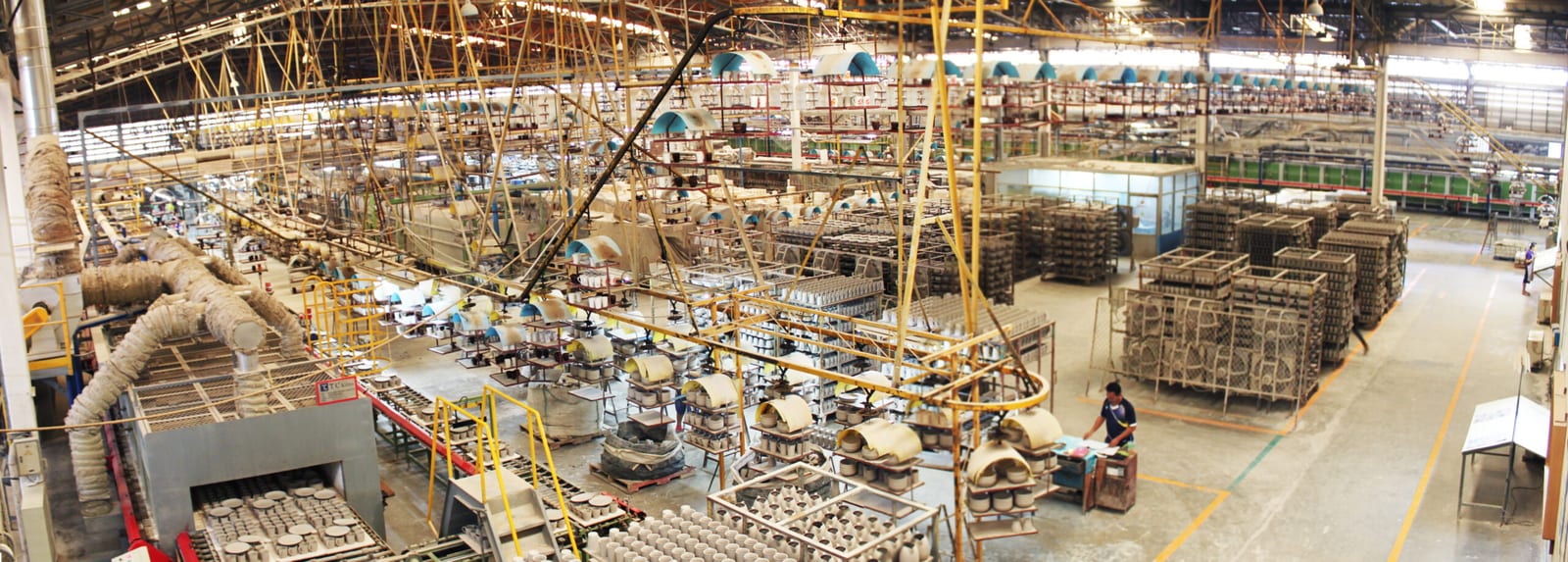
Choosing an OEM stoneware manufacturer is more than comparing prices or browsing polished product photos. The right partner must turn your drawings, colors, and functional requirements into repeatable production. A cup may look convincing on a sample table, yet arrive with uneven glaze, a wobbly base, or dimensions that vary between batches. Small details matter.
This guide explains how to assess OEM stoneware production, from a factory’s equipment and material controls to sampling, quality checks, minimum order quantities, and lead times. Ask how the manufacturer tests clay bodies and glazes, manages kiln firing, and checks finished pieces for chips, cracks, and dimensional consistency. Request clear specifications and inspect production samples under ordinary lighting, not only studio photography. Good records help, too. They make problems easier to trace.
Experience counts, but claims alone are not proof. Look for relevant examples, direct answers, and a process you can verify. Discuss what happens when a sample fails or a shipment misses an agreed milestone. No factory is perfect. Even a careful review cannot remove every production risk, and I would not treat one successful sample as a guarantee. A measured selection process can, however, reveal whether a manufacturer communicates openly and can meet your product’s real needs.
Define Your OEM Stoneware Product Requirements
Before contacting an OEM stoneware manufacturer, translate your product idea into measurable requirements. Specify the item type, dimensions, capacity, weight range, and intended use. A dinner plate measuring 27 centimeters needs a defined rim depth and usable flat area, not just a diameter. Include reference drawings or a physical sample when possible. Small details matter.
Describe the body and finish clearly. State the preferred clay color, glaze appearance, texture, and acceptable variation between pieces. For example, “warm white, glossy glaze” leaves room for interpretation; add photos, color references, and limits for visible specks or shade differences. Clarify whether the base should be unglazed, how the foot ring should feel, and which surfaces must sit flat. The first specification is rarely complete. Review it against actual use.
Set practical production expectations, too. Share estimated order quantities, target delivery windows, packaging needs, and any required product testing or documentation. Ask how the manufacturer handles dimensional tolerances, glaze defects, and sample approval before bulk production. Record agreed limits in writing. A sample can look excellent under studio lighting yet differ beside a window or under restaurant lighting. Check it in realistic conditions. If a requirement is still undecided, mark it for discussion rather than assuming the factory will guess correctly.
Assess the Manufacturer’s Materials and Production Capabilities
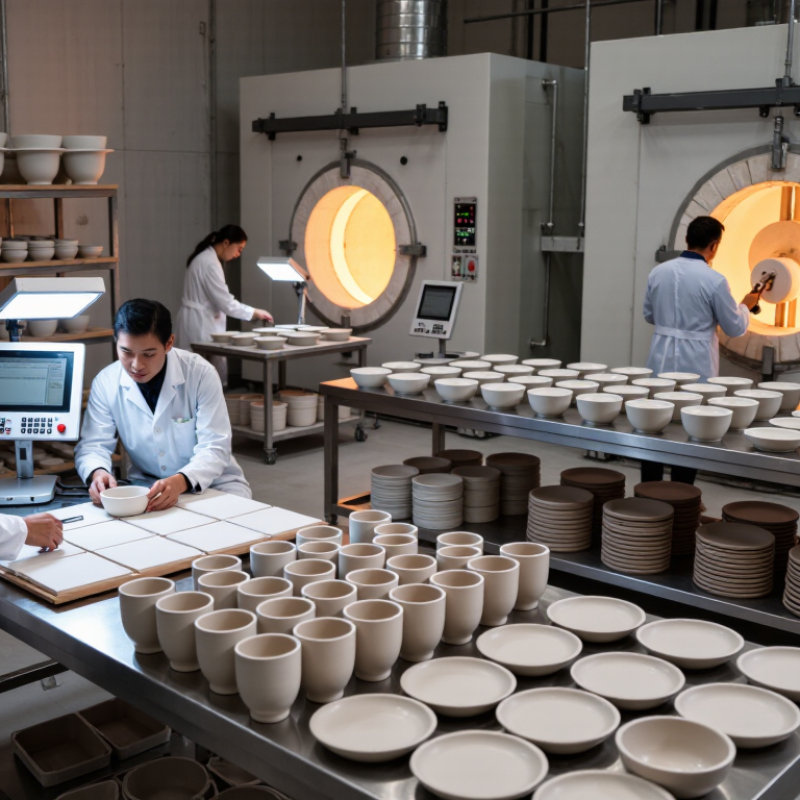
Assess the clay body before discussing price. Ask whether the manufacturer uses consistent raw materials and can provide composition or sourcing details. Clay variation can affect color, shrinkage, and strength. Request fired samples, not only unfinished pieces. Check rims, handles, and foot rings for smooth finishing. Small details matter.
Review the production process in person or through clear process records. Ask about forming methods, kiln capacity, firing range, and how staff monitor temperature across each load. A kiln reading alone may not show uneven results, so ask how finished batches are checked. Discuss realistic order volumes, lead times, and how the factory handles rejected pieces. A polished sample can still hide production limits. No single test tells the whole story.
Tips: Request a trial run using your intended shape, glaze, and dimensions. Compare several pieces for weight, color, and fit. Ask for the manufacturer’s inspection criteria and defect records. Keep one sample as a reference for later orders. I would still allow room for variation; ceramic work is not perfectly uniform. The key is knowing which differences are acceptable, and how they are controlled.
Verify Quality Standards, Testing, and Regulatory Compliance
How to Choose an OEM Stoneware Manufacturer?
Verify Quality Standards, Testing, and Regulatory Compliance
A reliable OEM stoneware manufacturer should explain how quality is checked at each production stage. Ask for written specifications covering clay body, glaze, dimensions, and acceptable defects. Request recent test reports, not just verbal assurances. For food-contact products, confirm that testing covers relevant chemical migration requirements in your intended sales markets. Rules differ by destination. A report for one market may not meet another market’s requirements.
Tips: Check that reports identify the tested product and glaze. Ask how often production samples are tested, and what happens when a batch fails. Keep approved samples for comparison. Small glaze differences can be normal, but unexplained changes deserve attention.
Review the factory’s process for kiln temperature records, breakage rates, and lot traceability. These details help connect a finished plate to its production batch. Check that the manufacturer can share corrective-action records, with sensitive information removed if needed. Also confirm whether subcontractors perform any steps, such as glazing or packing. I’ve found that a polished sample can hide uneven production, so inspect pieces from a normal run when possible. That takes extra time. It is still worth doing. Ask clear questions, save written answers, and revisit them before approving a large order.
Compare Customization Options, Order Volumes, and Lead Times
Choosing an OEM stoneware manufacturer starts with defining what must be customized. List the shape, dimensions, clay body, glaze color, decoration, and packaging requirements. Ask which options use existing molds and which need new tooling. A handle that looks simple on screen can change balance and drying behavior. Request a physical sample, then check its weight, finish, and fit in your intended setting.
Order volume affects both cost and production planning. Ask for minimum quantities by shape, color, and decoration, not only per order. Some factories set separate minimums for each glaze or printed design. A mixed-color order may sound flexible, but it can raise setup costs or complicate scheduling. That matters. Compare quotes using the same specifications and packaging assumptions. If your forecast is uncertain, discuss a small pilot run before committing to a larger batch.
Lead times should cover more than the firing schedule. Confirm how long sampling, mold development, production, inspection, and packing usually take. Ask what happens if a sample needs revision. Seasonal demand and kiln capacity can shift the schedule, so request realistic dates in writing. Build in time for transit and incoming checks. Not always easy. Even an approved sample may differ slightly across production batches, so agree on acceptable variation before manufacturing begins.
How to Choose an OEM Stoneware Manufacturer? - Compare Customization Options, Order Volumes, and Lead Times
The ranges below are general planning benchmarks for stoneware production, not guaranteed terms. Actual minimums, costs, and schedules depend on product dimensions, decoration, tooling, factory capacity, and order specifications.
| Manufacturer / production setup |
Customization options |
Typical MOQ planning range |
Sample and tooling considerations |
Typical production lead time |
Best suited for |
| Stock-shape producer |
Existing forms with options such as glaze color, decal, or logo application; limited shape changes. |
Often hundreds to around 1,000 pieces per design, subject to color and packing requirements. |
Existing molds can reduce setup needs. Decorated samples may still require approval before production. |
Approximately 6–10 weeks after specifications and artwork are approved; shipping is additional. |
Trial orders, straightforward private-label projects, and buyers prioritizing shorter development. |
| Flexible OEM producer |
More choice of forms, dimensions, glaze finishes, colors, decals, and packaging; moderate design adjustments may be possible. |
Commonly around 500–2,000 pieces per design, with higher minimums possible for special finishes. |
Confirm whether a new mold is needed. Sample approval and any mold charges should be agreed in writing. |
Approximately 8–12 weeks after final sample and order details are approved. |
Buyers balancing product differentiation with moderate order volumes. |
| Custom-shape OEM producer |
Bespoke shapes, dimensions, glaze combinations, surface details, and branded decoration, subject to technical feasibility. |
Often 1,000–3,000 or more pieces per design; custom molds and complex finishes can raise minimums. |
New tooling may involve separate cost and development time. Request a prototype and written approval process. |
Approximately 10–16 weeks or longer, including development where applicable. |
Established product lines with distinctive forms and sufficient forecast demand. |
| High-volume production line |
Usually strongest for repeatable specifications and established designs; extensive customization may require larger commitments. |
Frequently several thousand pieces per design or production run; exact thresholds vary by item and factory. |
Best efficiency with approved tooling, stable specifications, and consolidated color or decoration choices. |
Approximately 8–14 weeks for repeat production after materials and capacity are confirmed; seasonal demand can extend schedules. |
Large, recurring orders where unit-cost consistency and production capacity are priorities. |
Before selecting a supplier: Request a written quotation that defines MOQ per design and color, sample and tooling charges, production start point, inspection standards, packaging, and whether the quoted lead time excludes freight and customs.
Evaluate Pricing, Communication, and Partnership Terms
How to Choose an OEM Stoneware Manufacturer?
Evaluate Pricing, Communication, and Partnership Terms
A low unit price can hide costs for mold development, glaze testing, protective packaging, or replacement pieces. Ask for a quote tied to one clear specification: dimensions, clay body, finish, order quantity, and packing method. Compare the full delivered cost, not just the price per piece. Details matter. A quote that excludes sample revisions may look attractive until the first glaze needs adjustment.
Communication matters when samples differ from the approved target. Ask who will answer production questions, how often you will receive updates, and what happens when a firing test reveals color variation. Clear partners explain tolerances and share inspection records before shipment. Put lead times, payment milestones, change approvals, and defect-handling steps in writing. I would not treat a friendly call as a substitute for precise terms; that shortcut can backfire.
Tips: Request a sample schedule and a cost breakdown. Confirm how many revision rounds are included. Ask the manufacturer to flag risks early, even when the answer is inconvenient. Then review the terms again after sampling. Small oversights happen, and a second check can catch them.
How to Choose an OEM Stoneware Manufacturer
Suggested evaluation weights for comparing pricing, communication, and partnership terms alongside product quality.
These percentages are a practical decision-making framework, not industry survey results. Adjust the weights to match your order size, quality requirements, and sourcing priorities.
FAQS
Define the item, dimensions, capacity, weight range, and intended use. For a 27-centimeter plate, describe its rim depth and usable flat area. Include a drawing or physical sample. Small details matter.
State the clay color, glaze appearance, texture, and acceptable variation. Photos and color references help clarify terms like “warm white.” Note visible specks, unglazed areas, foot-ring feel, and surfaces that must sit flat. The first draft may miss something.
Check the sample under window light and restaurant lighting. Compare its weight, finish, and fit with your intended use. Keep an approved sample for reference, then inspect pieces from a normal production run. I may be overcautious, but one polished sample can mislead.
Ask for written specifications covering the clay body, glaze, dimensions, and acceptable defects. Request recent test reports that identify the tested product and glaze. For food-contact items, confirm testing matches your intended sales markets. Requirements can differ.
Ask about kiln temperature records, breakage rates, lot traceability, and corrective actions. Confirm whether outside contractors handle glazing or packing. These records help connect a finished plate to its production batch. Paper trails help.
List the shape, dimensions, clay body, glaze, decoration, and packaging. Ask which options use existing molds and which require new tooling. A handle can change balance and drying behavior. Check a physical sample.
Ask about minimum quantities for each shape, glaze, and decoration. Mixed colors may add setup costs or complicate scheduling. Compare quotes using the same specifications and packaging assumptions. That matters.
Include sampling, mold development, production, inspection, packing, transit, and incoming checks. Ask how revisions affect timing, and get realistic dates in writing. Seasonal demand and kiln capacity can shift schedules. Not always easy. Agree on acceptable batch variation before production begins.
Conclusion
Choosing an OEM stoneware manufacturer begins with clearly defining your product requirements, including the intended use, dimensions, shape, colors, finish, and packaging. Then assess whether the manufacturer has suitable materials, equipment, and production expertise to meet those specifications consistently. Ask about quality-control procedures, product testing, and applicable regulatory requirements, and confirm how results are documented.
Compare customization options, minimum order quantities, production capacity, and realistic lead times before making a decision. Pricing should be evaluated alongside sample costs, payment terms, shipping arrangements, and the level of support offered throughout OEM stoneware production. Clear communication and transparent partnership terms can help prevent misunderstandings and keep development and delivery on track. A careful comparison of these factors helps you choose a manufacturer whose capabilities, standards, and working style align with your product goals.