About
About Us Production CapabilityProducts
All Products Tableware Bakeware Decorative Bathroom Accessories Other Products OEM Services Catalogue News & ActivitiesResources
Ceramic Tableware Manufacturing Stoneware Bakeware Sets Custom Ceramic OEM Manufacturer Decorative Ceramic Home Decor Ceramic Kitchen Storage Jars Stoneware Dinnerware Sets Ceramic Bathroom Accessories Set Ceramic Baking Dish Global Service Top Search
Explore industry trends, OEM ceramic manufacturing guides, tableware design ideas, and expert tips from ARTWAY Thailand.
Choosing Stoneware serving bowls in 2026 requires more than matching colors with your dining room. The best bowl must support real meals, repeated washing, and changing presentation styles. It should feel balanced when lifted, stable when filled, and comfortable against the table. Small details matter. A narrow foot can improve stability. A gently curved rim can make serving easier.
Ceramic educator Simon Leach expresses this practical idea clearly: “Make it useful, then make it beautiful.” That principle remains valuable when comparing modern stoneware collections. Inspect the clay body, glaze consistency, wall thickness, and listed firing temperature. Look for surfaces without sharp edges, pinholes, or uneven glaze pooling. A beautiful bowl can still disappoint if it chips easily or feels awkward in one hand.
This guide examines the details shoppers often overlook. We will consider capacity, weight, heat performance, cleaning needs, and everyday durability. We will also discuss reactive glazes, handmade variation, and sustainable production claims. Some imperfections are attractive. Others signal poor quality. The difference is not always obvious.
My own preference has changed over time. I once valued dramatic glaze effects above everything else. Later, I noticed those bowls were difficult to stack and too heavy for daily use. That experience deserves attention. A serving bowl should look special, but it must earn its place at the table. No checklist is perfect. Your cooking habits, storage space, and household routines should shape the final decision.
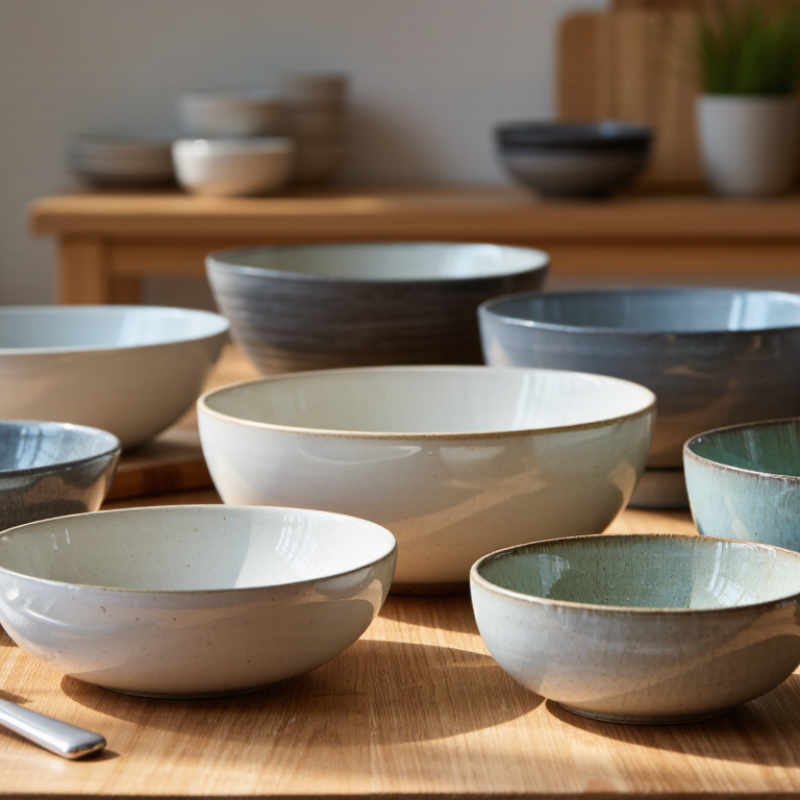
Before choosing stoneware serving bowls, define what they must hold. A bowl for roasted vegetables needs different capacity from one for dipping sauce. Think about guest numbers, food texture, and serving frequency. A 12-inch bowl usually suits family-style salads, pasta, or steamed vegetables for four to six people. Smaller meals may need only 8 or 10 inches.
Measure your table and storage shelves, too. A wide bowl can look generous but occupy valuable space. For sauces, nuts, and condiments, choose bowls holding 200 to 350 milliliters. Medium bowls of 1 to 1.5 liters work well for rice, fruit, or side dishes. Large bowls above 2 liters are useful for shared salads and generous portions. Leave room for serving spoons.
Shape matters as much as capacity. A deeper bowl helps protect soup and saucy foods from spills. A broad, low bowl makes roasted vegetables easier to reach. Check the rim with your hand. It should feel stable, not awkward. Stoneware can be heavy.
My first serving set was too large for everyday dinners. The bowls looked impressive, yet leftovers filled my refrigerator. That mistake changed my buying method. I now record typical portions for one week before selecting sizes. Measurements are helpful, but they cannot predict every household. Consider occasional guests, uneven appetites, and whether the bowls must move from oven to table. Always verify the maker’s care instructions, since heat resistance and dishwasher guidance can vary.
How to Choose Stoneware Serving Bowls in 2026?
Stoneware is fired at high temperatures, creating a dense, sturdy body for everyday serving. I prefer bowls with moderate weight, not extreme heaviness. A thick base feels stable on a wooden table, while overly thin walls may chip more easily. Check the clay body for fine, even texture. Tiny pinholes or rough patches can signal weak finishing, although one flaw does not always mean failure.
Glaze affects appearance, cleaning, and long-term performance. A glossy glaze usually resists stains from tomato sauce, coffee, and curry. Matte surfaces look refined but may show marks sooner. Run a fingertip across the interior. It should feel smooth, without sharp bumps or crawling glaze. Look for clear food-contact safety information from the maker. Decorative areas should not interfere with the eating surface. Glaze variation can be attractive, but heavy pooling near the rim may reveal inconsistent control.
Construction quality deserves close inspection. Turn the bowl over and examine its foot ring. It should sit flat without rocking. The rim should feel even, with no hairline cracks or exposed rough clay. I once chose a beautiful bowl with a slightly uneven base. It looked fine, but it wobbled whenever I served soup. That mistake changed my buying habits. I still sometimes favor color over structure, which is not always sensible. Compare several bowls under natural light, then check their care instructions before purchasing.
Compare stoneware materials, glazes, and construction quality before buying serving bowls.
The chart uses a practical 1–5 comparison index based on commonly reported ceramic properties: lower water absorption, resistance to thermal shock, glaze durability, and rim strength. A higher score indicates better everyday performance.
Fully vitrified stoneware generally offers a strong balance of durability and heat resistance. Glossy glazes are usually easier to clean, while matte and reactive glazes may show more texture and variation. Look for even wall thickness, a smoothly finished foot ring, a well-formed rim, and a glaze free from pinholes or crawling.
In 2026, shape should follow the food you serve most often. A wide, low bowl suits salads, pasta, and roasted vegetables. Its broad surface makes toppings easy to arrange and share. A deeper bowl holds soups, grains, and saucy dishes with less spilling. Small details matter. I look for a comfortable rim, a steady foot, and enough depth for serving spoons.
Design should work with your table, not compete with it. A quiet glaze can make colorful food stand out. Dark or heavily textured finishes may hide small stains, but they can also show dust. Raised patterns feel attractive, yet they may be harder to clean. Inspect the rim for uneven glazing or sharp points. That choice is personal. I once selected a beautiful bowl that felt awkward in my hands.
Kitchen-to-table versatility depends on care and weight. Confirm the maker’s guidance for ovens, microwaves, dishwashers, and freezer use. Even oven-safe stoneware can crack after sudden temperature changes. Avoid placing a cold bowl into a hot oven. A stable base helps during busy meals, while moderate weight makes carrying safer. Measure your cupboard before buying; wide bowls often need more storage space. I still underestimate that. A bowl may look practical online but feel heavy after a full meal.
When choosing stoneware serving bowls in 2026, inspect safety before appearance. Look for clear food-contact information and lead or cadmium migration testing. The U.S. FDA’s Compliance Policy Guide 545.400 addresses extractable lead and cadmium in ceramicware. Ask sellers for current test documentation, not vague “non-toxic” claims. Glaze defects matter. Hairline cracks can trap sauce, oil, and moisture.
Water absorption also affects hygiene and durability. ASTM C373 measures absorption through a controlled boiling-water method. Lower absorption usually supports better resistance to staining and repeated washing. However, test results can vary between the clay body and glaze. Check the actual product specifications. Do not assume every stoneware bowl performs identically.
Care instructions should match your routine. Confirm whether the bowl is dishwasher and microwave safe. Avoid moving a cold bowl directly into a hot oven. Thermal shock can cause cracking, even when the bowl looks strong. The FDA Food Code 2022 emphasizes smooth, cleanable food-contact surfaces, which supports choosing an intact, easily washable interior. Inspect the rim for chips after each season of use. A chipped edge is more than a cosmetic flaw. It can worsen during washing.
Durability claims deserve skepticism. Scratch the surface only as instructed by the manufacturer; improvised tests can damage it. Stack bowls with thin separators if their rims touch. I would also reconsider very heavy designs. They feel sturdy, but frequent lifting may become inconvenient. A beautiful bowl that stays unused is not a durable choice.
| Selection Dimension | What to Look For | Recommended Choice | Safety and Care Considerations | Long-Term Durability Indicator |
|---|---|---|---|---|
| Material Composition | Vitrified stoneware made from refined clay and fired at a high temperature. |
Preferred Dense, non-porous stoneware with a consistent body and no visible firing cracks. |
Check the product description for food-contact suitability. Avoid pieces with exposed porous areas, structural cracks, or flaking surfaces. | A dense body generally absorbs less moisture and is less likely to retain food odors or stains. |
| Food-Contact Glaze | A smooth, intact glaze that fully covers the interior and rim. |
Preferred Evenly applied glaze without pinholes, sharp patches, bubbling, or peeling. |
Use only products identified as suitable for food contact. Do not use bowls with chipped glaze, exposed clay, or sharp edges. | Stable, well-fired glaze is more resistant to staining and easier to clean over repeated use. |
| Lead and Cadmium Safety | Clear compliance information for ceramic foodware and a responsible testing statement. |
Check Choose products supported by applicable food-contact safety requirements in the intended market. |
Do not rely on appearance alone. Decorative, antique, handmade, or heavily worn ceramics may require extra caution, especially for acidic foods. | Safety depends on glaze formulation and manufacturing controls, not simply on the bowl’s color or finish. |
| Microwave Compatibility | Specific microwave-use instructions from the manufacturer. |
Verify Select a bowl explicitly marked microwave-safe when reheating is required. |
Metallic accents, gold or silver decoration, and unknown finishes should not be placed in a microwave. Use short heating intervals and handle carefully. | Repeated heating can reveal weak glaze adhesion or existing hairline cracks; inspect the bowl regularly. |
| Oven and Broiler Use | Documented oven suitability and a stated maximum temperature or usage condition. |
Verify Use only bowls specifically rated for oven use; ordinary stoneware should not be assumed oven-safe. |
Never move a cold bowl directly into a hot oven or place a hot bowl on a cold or wet surface. Avoid broilers unless the product instructions expressly allow it. | Thermal-shock resistance is more important than thickness alone. Sudden temperature changes can cause cracking or breakage. |
| Dishwasher Care | Dishwasher-safe labeling and a glaze that resists repeated detergent exposure. |
Preferred Dishwasher-safe bowl with enough clearance to prevent contact with other dishes. |
Use a suitable cycle and avoid overcrowding. Hand-wash bowls with delicate finishes, unglazed details, or metallic decoration. | Frequent dishwasher cycles may gradually dull some finishes or wear printed decoration, even when the bowl remains functional. |
| Thermal Shock Resistance | Even construction, no visible hairline cracks, and clear instructions for temperature changes. |
Preferred Medium-weight bowl with uniform walls and a stable, flat base. |
Avoid pouring boiling liquid into a chilled bowl. Do not place a hot bowl in cold water or on a stone countertop without protection. | Preventing abrupt temperature changes is one of the most effective ways to extend the service life of stoneware. |
| Rim and Structural Quality | Rounded, smooth rim; no cracks around handles, foot rings, or areas where the bowl is joined. |
Preferred Balanced bowl with a stable base and no wobbling on a flat surface. |
Run a clean finger around the rim before purchase. Stop using the bowl if a crack becomes sharp, spreads, or leaks. | Rim chips and base fractures are common failure points because they receive repeated impact during handling and stacking. |
| Size and Weight | Capacity suited to the intended food and comfortable weight for daily handling. |
Practical Range Small: about 0.5–1.5 L; medium: about 1.5–3 L; large: above 3 L. |
Confirm dimensions and weight before ordering. Heavy bowls require secure storage and may be less suitable for children or frequent carrying. | A heavier bowl is not automatically stronger; uniform construction and careful handling matter more than weight alone. |
| Surface and Stain Resistance | Smooth, fully fired glaze without rough patches or deep texture inside the bowl. |
Preferred Smooth interior for sauces, soups, acidic foods, and easier cleaning. |
Avoid abrasive scouring pads and harsh cleaning methods that can scratch or dull the glaze. Remove strongly staining foods promptly. | A smooth glaze usually maintains its appearance longer and reduces the chance of food residue lodging in surface defects. |
| Stacking and Storage | Nested shape, stable base, and enough space between bowls to prevent rim-to-rim impact. |
Preferred Stackable design with protective shelf liners or dividers when needed. |
Do not force bowls into tight stacks. Keep heavy items from falling onto the rim and avoid unstable high stacks. | Proper storage reduces chips, scratches, and stress around the rim, extending usable life. |
| Repair or Replacement Decision | Condition of the glaze, clay body, base, and rim after regular use. |
Replace If Damaged Replace bowls with structural cracks, persistent leaks, sharp chips, or significant glaze flaking. |
Do not continue using damaged foodware simply because the defect is small. Cracks can harbor residue and may worsen with heating or washing. | Prompt replacement prevents sudden breakage and protects users from sharp fragments or leaking hot food. |
Important: Care instructions vary by product. Always follow the specific manufacturer’s guidance for microwave, oven, dishwasher, temperature limits, and cleaning. “Stoneware” alone does not guarantee resistance to thermal shock or suitability for every appliance.
How to Choose Stoneware Serving Bowls in 2026?
Balance Price, Set Options, and Sustainable Buying Choices
When choosing stoneware serving bowls, compare the cost per usable bowl, not only the box price. A four-piece set may look cheaper, but a six-piece set can suit weekly family meals better. Measure your shelves and table first. A deep bowl holds soup well, while a wide bowl works for roasted vegetables or salad. I prefer mixed sizes, but matching sets create a calmer table.
Check the glaze closely. It should look even, without sharp edges, pinholes, or rough patches. Ask whether the bowls are tested for food contact and suitable for your oven, microwave, and dishwasher. Clear care instructions show better manufacturing discipline. Still, labels can be incomplete. My first purchase ignored weight, and carrying those bowls became annoying after dinner.
Sustainable buying means choosing fewer bowls that can handle regular use. Durable stoneware may replace disposable serving dishes for years, although its production and transport require significant energy. Select a set with useful sizes instead of decorative extras. Neutral shapes may also stay practical when your style changes. Look for replacement-piece availability, recyclable packaging, and realistic return policies. Buying locally can reduce shipping distance, but it is not always the greener option. I once bought a larger set for a discount and rarely used half of it. That was economical only on paper.
Match the bowl to your usual portions. A 12-inch bowl suits salads, pasta, or vegetables for four to six people. Smaller meals may need 8 or 10 inches. Measure your shelves too. A large bowl can look useful, yet remain awkward to store.
Choose 200 to 350 milliliters for sauces, nuts, and condiments. Medium bowls holding 1 to 1.5 liters suit rice, fruit, and side dishes. Bowls above 2 liters handle shared salads and generous portions. Leave space for serving spoons.
Deep bowls help contain soup and saucy dishes. Broad, low bowls make roasted vegetables easier to reach. Hold the rim before buying. It should feel stable and comfortable. Stoneware can be heavy.
Look for an even clay texture and a thick, stable base. Turn the bowl over and check its foot ring. It should sit flat without rocking. Inspect the rim for cracks, rough clay, or uneven finishing. A beautiful bowl can still wobble.
Glossy glaze usually resists stains from tomato sauce, coffee, and curry. Matte glaze may show marks sooner. Feel the interior with one fingertip. It should be smooth and free from sharp bumps. Slight color variation can look appealing, but heavy glaze pooling deserves caution.
Look for clear food-contact information and current testing for lead and cadmium migration. Do not rely only on vague safety claims. Check the actual product documents. Hairline cracks can hold oil, moisture, and sauce.
Verify each care instruction with the manufacturer. Products differ. Never move a cold bowl directly into a hot oven. Thermal shock can cause cracking. Dishwasher and microwave use may also have separate limits.
Lower water absorption generally supports better stain resistance and repeated washing. Check product specifications rather than guessing from appearance. Stack bowls with thin separators when rims touch. Inspect chipped edges after regular use. A heavy bowl may feel strong, yet become inconvenient to lift.
Record your household’s typical portions for one week. Consider guests, uneven appetites, and refrigerator space. My first set was too large. The bowls looked impressive, but leftovers filled the refrigerator. I still sometimes choose color over structure. That is not always sensible.
Choosing the right Stoneware serving bowls in 2026 starts with understanding how you plan to use them. Consider the meals you serve, the number of guests, and the ideal sizes for salads, soups, side dishes, or shared entrees. Compare stoneware materials, glaze finishes, wall thickness, weight, and construction quality to find bowls that are both attractive and dependable. A well-made glaze should provide a smooth surface, consistent color, and practical resistance to everyday wear.
Shape and design also matter, especially if the bowls need to move easily from the kitchen to the dining table. Look for styles that suit your table setting while remaining comfortable to hold and stack. Before purchasing, check food-safety information, cleaning instructions, microwave or oven suitability, and resistance to chips or cracks. Finally, balance the price against set size, storage needs, expected lifespan, and sustainable buying choices. Selecting durable, versatile bowls can reduce replacements and provide reliable value for years.