About
About Us Production CapabilityProducts
All Products Tableware Bakeware Decorative Bathroom Accessories Other Products OEM Services Catalogue News & ActivitiesResources
Ceramic Tableware Manufacturing Stoneware Bakeware Sets Custom Ceramic OEM Manufacturer Decorative Ceramic Home Decor Ceramic Kitchen Storage Jars Stoneware Dinnerware Sets Ceramic Bathroom Accessories Set Ceramic Baking Dish Global Service Top Search
Explore industry trends, OEM ceramic manufacturing guides, tableware design ideas, and expert tips from ARTWAY Thailand.
Choosing Ceramic kitchen storage jars in 2026 is less about matching a countertop and more about daily use. A jar beside the stove faces heat, splashes, and frequent handling. One on an open shelf must look good and keep its contents dry. Small details matter: a lid that sits evenly, a rim that feels smooth, and a shape your hand can grip.
Potter Bernard Leach wrote, “The potter’s work is to make pots that are beautiful and useful.” His words capture the balance buyers still need. A striking glaze is welcome, but it cannot compensate for a loose lid or awkward cleaning. Check whether the maker describes the glaze and clay body, and look for clear care instructions. For food storage, also confirm that the product is intended for food contact. A decorative vessel may not be designed for pantry use.
This guide explains how to compare materials, capacity, seals, finishes, and craftsmanship before you buy. It also considers where jars will sit and what they will hold, from coffee near a grinder to flour in a crowded cupboard. There is no perfect jar for every kitchen. A broad opening may help with scooping but take up more shelf space. And a beautiful finish can show fingerprints more than expected. That is easy to miss in product photos. Choose with your routine in mind, not just the styling.
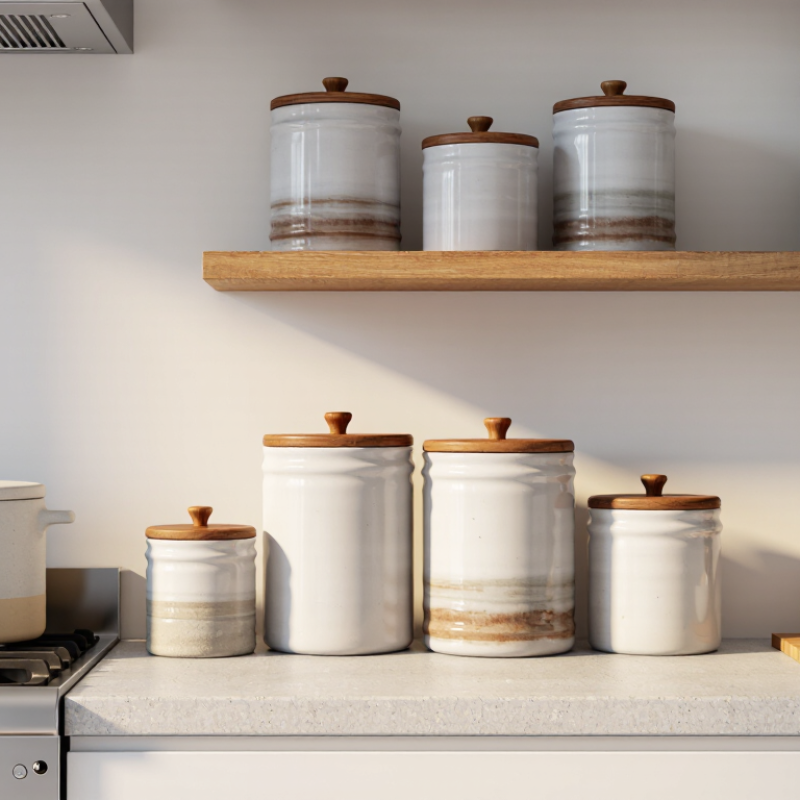
Before choosing ceramic jars, list the foods you store and how quickly you use them. Rice, flour, and oats need roomy openings for scooping; spices and tea often benefit from smaller, opaque containers. Check shelf depth and counter space, too. A beautiful jar that blocks a cabinet door is still the wrong jar.
Kitchen conditions matter. In a humid room, choose jars with well-fitting lids and glazed interiors that are easy to clean. Ceramic can chip, so avoid placing heavy jars near counter edges or directly beside a hot cooktop. The UNEP Food Waste Index Report 2024 estimated that households generated 60% of global food waste in 2022. That figure is a useful reminder to size storage around real consumption, not an idealized pantry. Oversized jars may leave staples forgotten at the back.
Tips: Measure your shelf before shopping. Bring the dimensions, and compare them with the jar’s widest point, not just its base. Check whether the lid seals securely and opens easily with one hand. A set can look perfectly coordinated yet fail in daily use; that’s worth considering before buying.
Ceramic type affects weight, durability, and how a jar handles daily use. Stoneware usually feels sturdy and suits frequently handled pantry jars. Porcelain has a smoother, denser body, but thin pieces can chip if knocked against a counter. Earthenware may be more porous, so check whether its interior is fully glazed before storing dry ingredients. Small detail. Lift the jar and inspect its rim, base, and lid fit; a loose lid can let moisture reach flour or tea.
Glaze matters as much as the clay. A glossy finish is not proof that a surface is suitable for food contact. Look for clear product information stating that the glaze and finish are intended for food use, and ask the maker for test documentation when details are missing. Check the base. Avoid jars with interior chips, fine cracks, or crazing, since damaged surfaces are harder to clean reliably. I used to treat a smooth interior as enough reassurance; it is not. For everyday storage, choose an intact finish and follow the maker’s care instructions, especially for hot contents or dishwashing. A jar may look beautiful on a shelf and still be awkward to wash.
Compare Ceramic Materials, Glazes, and Food-Safe Finishes
How to read this chart: These are FDA action levels for lead released from ceramic foodware, in parts per million (ppm). Lower levels are more restrictive. A storage jar’s category depends on its form and size; these limits are not a measure of total lead in the ceramic. Choose food-contact pottery with a suitable glaze and finish, and look for evidence that the finished ware has been tested for lead release.
Choose ceramic jars by the ingredients you actually use, not by a matching set’s appearance. A wide jar suits oats or flour because a measuring cup fits inside; a narrower one saves shelf space for spices. Check the usable capacity, since thick ceramic walls reduce interior room. Measure your cabinet height, too. A beautiful jar that catches the shelf above is still inconvenient.
Lids deserve a close look. A snug-fitting lid helps limit moisture exposure, but a lid that merely rests on the rim is not necessarily airtight. Look for a removable silicone gasket, and check that it sits evenly without gaps. The UNEP Food Waste Index Report 2024 estimates that households generated 60% of global food waste in 2022. That figure does not prove storage jars prevent waste, but keeping dry goods sealed and easy to see can support better kitchen habits. Keep it practical.
Test the jar in your hand before buying, if possible. Can you lift the lid with one hand? Is the opening wide enough to clean without a brush? Ceramic can be heavy when filled, and glossy surfaces may feel slippery with wet hands. I may be overvaluing easy cleaning here; still, crumbs trapped under a gasket are a real nuisance. Choose a size you can comfortably lift and refill.
When choosing ceramic kitchen storage jars in 2026, inspect the rim, base, and glaze under bright light. Look for hairline cracks, pinholes, rough patches, and glaze gaps where crumbs or moisture could collect. A glossy finish alone does not prove durability. ANSI A137.1 uses water absorption of 0.5% or less to classify impervious ceramic tile, but that benchmark does not certify kitchen jars. Ask whether the maker has tested the jar’s body and glaze for food contact and repeated washing.
Cleaning matters as much as appearance. Check the care label before putting a jar in the dishwasher; sudden temperature changes can stress ceramic, and decorative finishes may fade. Wash narrow-necked jars with a soft brush and mild detergent, then let them dry fully before refilling. Small chips matter. Stop using a jar if its food-contact surface becomes cracked or difficult to clean.
For long-term care, avoid stacking jars where rims can knock together. Store heavy containers on a low, stable shelf, and keep wooden lids or removable seals dry between uses. Replace worn seals when they no longer sit snugly. These habits sound fussy, and they are easy to skip; still, a careful rinse and complete drying can prevent trapped moisture and lingering odors. Don’t assume a jar is airtight just because its lid feels tight.
In 2026, choose ceramic storage jars by weighing everyday usefulness against price and appearance. A glossy finish may look striking, but check for an even glaze, a stable base, and a lid that fits securely. If you store flour or tea, compare the opening with your measuring scoop. Small details matter.
Price should reflect more than the jar’s decoration. Feel its weight, inspect the rim for rough spots, and check whether replacement lids are available. A lower-priced set can be good value if the jars suit your shelves and daily routine. Still, matching every jar is not essential.
Sustainability is less simple than choosing a natural-looking material. Ceramic can last for years with careful handling, but it can chip or break if dropped. Choose durable pieces you will keep using, rather than buying extra jars for a coordinated display. Check care instructions and any clear food-contact information. Less, but useful. A slightly imperfect set may fit your kitchen better than a flawless one that sits unused.
| Jar type | Typical capacity | Indicative price (USD) | Design and everyday use | Lid and freshness | Sustainability considerations | Best for |
|---|---|---|---|---|---|---|
| Small single jar | 250–500 mL | About $6–$18 | Compact footprint; easy to place on a counter or shelf. Check the opening size before buying. | A fitted lid helps keep contents covered. A silicone gasket generally provides a closer seal than a plain ceramic lid. | A durable jar can be reused for years. Buying only the quantity needed avoids unused pieces and packaging. | Tea, salt, spices, or small pantry portions |
| Medium everyday jar | 600–1,000 mL | About $10–$28 | A versatile size for frequently used dry ingredients. A wide mouth makes filling and cleaning easier. | Choose a snug-fitting lid; ceramic-on-ceramic lids are not necessarily airtight. | Prioritize a sturdy shape and replaceable or separately available lid if long-term repair matters. | Sugar, oats, coffee, or baking ingredients |
| Large pantry jar | 1.2–2.0 L | About $18–$45 | Stores larger quantities but takes more shelf space and can be heavy when full. Measure the cupboard height and depth first. | A gasketed lid is preferable for ingredients that benefit from reduced exposure to air and humidity. | One larger jar may reduce the need for several containers, but buy a size you can comfortably lift and use. | Flour, pasta, rice, or bulk dry goods |
| Matched multi-jar set | Usually 3–5 jars; sizes vary | About $25–$90 per set | Creates a coordinated look. Confirm that the set includes useful sizes rather than paying for pieces you will not use. | Check each lid and seal individually; sets can include different lid styles. | A set can reduce mismatched containers, but fewer well-used jars are often the more practical purchase. | Organized open shelving or a coordinated kitchen |
| Hand-finished or artisan-style jar | Commonly 400 mL–1.5 L | About $25–$100 or more | Surface and shape may vary slightly between pieces. Ask whether the interior glaze is smooth and suitable for the intended food use. | Fit can vary with handmade lids; inspect the seal if moisture protection is important. | Local production may reduce transport distance, but ask about origin and materials rather than assuming an environmental benefit. | A distinctive display piece or a considered gift |
| Minimal, stackable jar | Typically 500 mL–1.2 L | About $15–$50 each | Designed to use vertical space. Verify that the base and lid are made to stack securely, especially in cupboards. | A stacking feature does not guarantee an airtight seal; check the lid construction separately. | Space-efficient storage can help avoid buying extra containers. Ceramic is durable but energy-intensive to fire and can break if dropped. | Small kitchens and neatly arranged cupboards |
Price ranges are broad indicative estimates in USD, not fixed market quotations; actual prices vary by size, finish, construction, and seller. For food storage, check the maker’s food-contact and glaze-safety information, and follow local guidance. Ceramic jars are generally not accepted in curbside glass recycling; disposal and recycling options vary by location.
Check the rim, base, and glaze under bright light. Look for hairline cracks, pinholes, rough patches, or glaze gaps.
No. Shine alone proves little. Ask whether the jar body and glaze were tested for food contact and repeated washing.
Check the care label first. Sudden temperature changes can stress ceramic, and decorative finishes may fade.
Use a soft brush and mild detergent. Let it dry fully before refilling. It takes a little patience.
Stop if its food-contact surface is cracked or difficult to clean. Even a small chip can trap residue.
Avoid stacking rims together. Keep heavy containers on a low, stable shelf. I still forget to dry lids sometimes.
A snug-feeling lid is not proof. Replace worn seals when they no longer sit firmly; guessing is not very helpful.
Consider its weight, smooth rim, stable base, and lid fit. Check whether replacement lids are available. Matching sets are optional.
Not automatically. A jar used for years may be practical, but ceramic can chip or break when dropped. Buy fewer, useful pieces.
Choosing Ceramic kitchen storage jars in 2026 starts with understanding what you plan to store and where the jars will sit. Consider your kitchen’s space, humidity, and daily routines, then compare ceramic bodies and glazes for a smooth, food-safe finish. Choose sizes that suit your ingredients and shelves, and check that lids are easy to handle and provide a suitable seal for keeping contents fresh.
Before buying, look into each jar’s durability, cleaning needs, and care instructions, especially if it will be used frequently. A thoughtful choice balances practical features with a design that fits your kitchen, while also considering the materials’ longevity and overall sustainability. By weighing these factors alongside price, you can select jars that are attractive, useful, and well suited to long-term everyday storage.