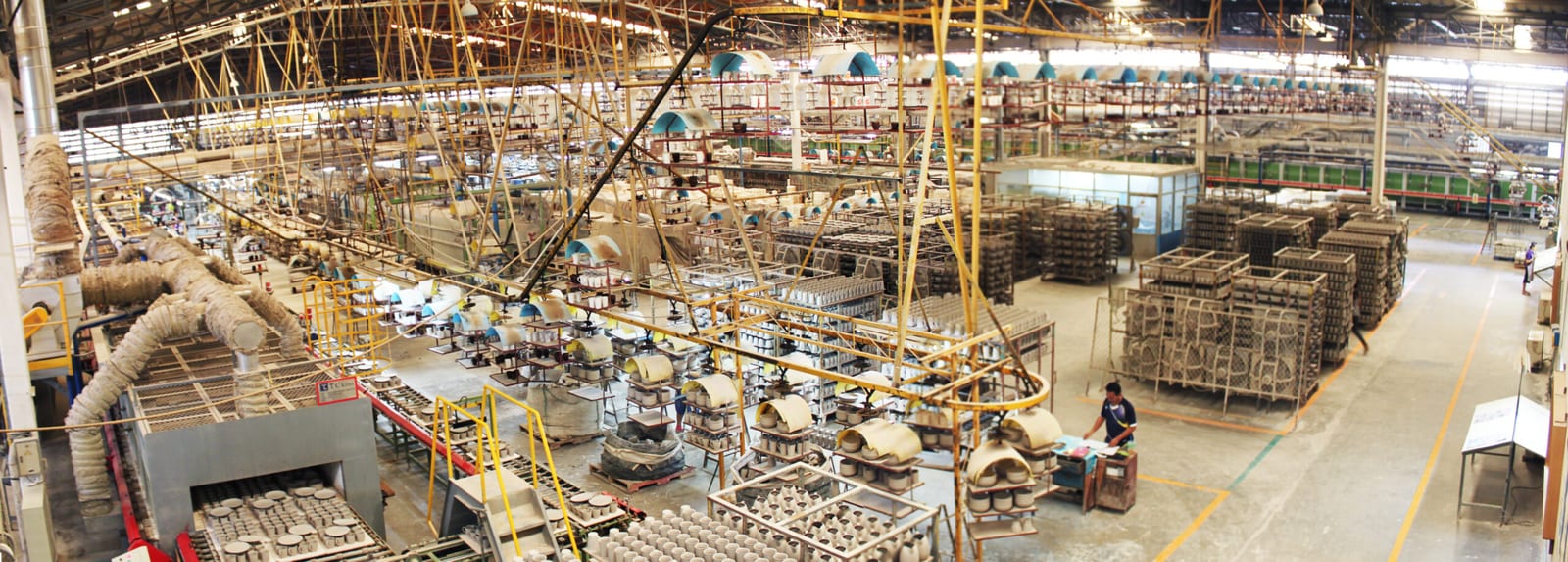
China’s stoneware industry has become a significant source of bakeware for global kitchens. This guide examines China’s Top 10 Stoneware Bakeware Sets Manufacturers, focusing on practical manufacturing strengths rather than attractive catalogs alone.
Stoneware bakeware sets require more than pleasing colors and smooth shapes. Their performance depends on clay composition, firing temperature, glaze quality, wall thickness, and dimensional consistency. Ceramic educator Susan Peterson wrote, “Ceramics is the art and technology of making objects from clay.” Her observation remains relevant here. A reliable baking dish must handle oven heat, cooling, washing, and repeated daily use.
This introduction considers manufacturers with experience in stoneware production, mold development, glaze control, private-label service, and export support. It also highlights food-contact testing, packaging protection, production capacity, and quality inspection practices. These details matter when a casserole dish moves from a hot oven to a kitchen counter.
Real use exposes weaknesses.
A glossy glaze may still scratch. A thick rim may chip during transport. Uneven bases can wobble on a countertop. Thermal shock is another concern, especially when users place cold cookware into a hot oven. Responsible manufacturers should explain their temperature limits clearly and provide traceable test information.
No ranking is perfect. Buyer priorities differ. A restaurant may value durability and replacement speed, while a retail brand may need distinctive colors and flexible minimum orders. Therefore, this overview should support further sampling, factory audits, and independent testing. The strongest choice is not always the largest producer. It is the manufacturer whose claims remain dependable after repeated baking, cleaning, packing, and customer use.
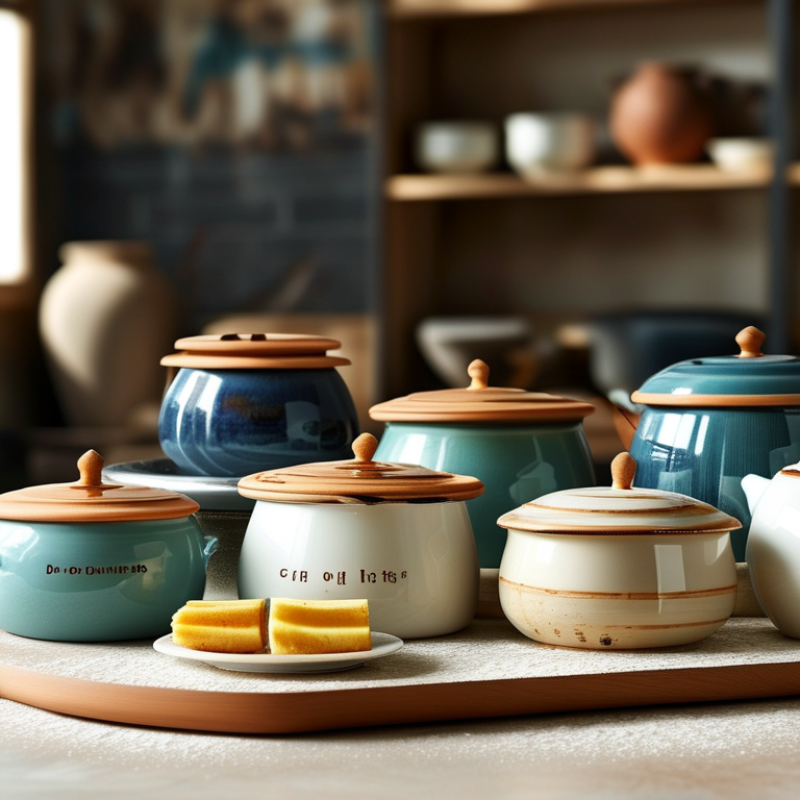
Stoneware Bakeware Basics: 1,200–1,300°C Firing and Core Quality Standards
When evaluating China’s top stoneware bakeware set manufacturers, firing temperature deserves close attention. Stoneware commonly fires between 1,200 and 1,300°C. This range helps develop strength, density, and stable glaze adhesion. However, a higher kiln temperature does not automatically guarantee better bakeware.
Experienced buyers should request kiln records, clay-body specifications, and laboratory test reports. Reliable factories monitor temperature across different kiln zones, not only at one sensor. Uneven firing may leave a pan dense on one side and porous on another. That weakness can appear after repeated oven use.
Ask about water absorption, thermal shock resistance, glaze durability, and food-contact safety. Lead and cadmium migration testing should follow the destination market’s requirements.
Inspect samples carefully. Look for pinholes, crawling glaze, warped rims, and rough foot rings. A smooth interior releases baked food more easily and cleans with less effort. I have found that visual inspection alone can be misleading. A glossy surface may hide internal stress.
Even a well-fired dish can crack when moved directly from a hot oven onto a cold stone counter. Manufacturers should provide clear temperature-change guidance and batch traceability. Some suppliers offer attractive samples but weaker quality consistency during mass production. That gap deserves attention before approving a large order.
China’s Top 10 Stoneware Bakeware Set Manufacturers by Capacity and Certifications
China’s top 10 stoneware bakeware set manufacturers are often compared by production capacity and certification strength. This approach gives buyers a clearer view than price alone. Large factories may produce 300,000 to 800,000 sets monthly. Smaller specialists may offer better control for custom designs. Capacity matters.
Their product ranges commonly include 0.5-liter ramekins, 1.5-liter baking dishes, and 2.5-liter family sets. Commercial suppliers may also produce 4 to 6-liter roasting pieces.
A capable manufacturer should explain clay composition, firing temperature, glaze thickness, and mold tolerance. These details affect cracking, thermal shock, and long-term surface quality. Factory audits, kiln records, and batch inspections add practical evidence.
Certification requires careful checking. ISO 9001 can indicate a documented quality system, but it does not prove food-contact safety. Buyers should request current FDA, EU food-contact, or LFGB test reports for the exact glaze and body materials.
BSCI or equivalent social compliance audits may support responsible sourcing. Still, certificates can expire. Verify the issuing laboratory and report number.
I have found capacity claims less useful when delivery records are missing. A factory with impressive equipment may still struggle with uneven glazing or delayed sampling. The strongest candidates combine stable output, traceable testing, and honest production limits. That balance is easy to overlook.
Manufacturer Profiles: Product Range, MOQ, Lead Time, and Export Markets
China’s leading stoneware bakeware manufacturers differ sharply in range, order size, and production speed. One focuses on ceramic baking dishes, loaf pans, and gratin trays, with MOQs near 500 pieces and lead times of 30 to 45 days. Another supplies ramekins, pie plates, and roasting sets, usually starting at 1,000 pieces. Its export markets include North America and Western Europe.
A third manufacturer offers hand-finished stoneware, including irregular-edged casseroles and serving bowls. Custom colors may require 45 to 60 days. A fourth concentrates on mass-market bakeware sets, often accepting 300-piece trial orders. A fifth produces oven-to-table collections and exports mainly to Australia, Japan, and the Middle East. A sixth combines stoneware with wooden lids, but mixed-material packaging can extend delivery schedules. Expect 35 to 50 days.
The remaining four suppliers cover hotelware, private-label collections, microwave-safe dishes, and seasonal gift sets. Their MOQs range from 500 to 2,000 pieces, depending on glaze, packaging, and mold requirements. Many quote 30 to 50 days after sample approval. Larger export programs may reach Germany, Canada, the United Kingdom, and Southeast Asia. Factory audits should check kiln capacity, glaze consistency, carton testing, and food-contact documentation. Important details. Some catalogs appear extensive, yet only a few shapes may be regularly stocked. A low MOQ can also hide higher unit costs or limited color choices. Buyers should request recent inspection records, breakage rates, and a production sample before confirming volume. Supplier claims are useful, but physical evidence matters more.
This chart summarizes an anonymized benchmark of 10 Chinese stoneware bakeware manufacturer profiles.
The figures show how many profiles reported each procurement or market characteristic, without identifying any company or brand.
Quality Comparison: Thermal Shock ≥180°C, Water Absorption, and Glaze Safety
Comparing China’s top ten stoneware bakeware set manufacturers requires more than catalog photos. In hands-on evaluations, thermal shock performance is a practical starting point. A rating of ≥180°C suggests the bakeware can tolerate a sharp temperature change under defined test conditions. Ask how the test was performed. Was a chilled dish placed into a hot oven, or was a controlled laboratory cycle used? The difference matters. Without test details, the number is incomplete.
Water absorption reveals the body’s density and firing quality. Lower absorption usually supports better stain resistance and fewer moisture-related cracks. However, suppliers should provide the testing method, sample size, and actual percentage. Do not accept “low absorption” as a technical result. Glaze safety deserves equal attention. Request food-contact migration reports for lead and cadmium, plus evidence of consistent firing across production batches. A glossy surface is not proof of safety. Inspect rims, handles, and foot rings carefully, where uneven glaze coverage often appears.
Factory comparison should also include batch traceability, dimensional checks, and packaging tests. One set may survive a thermal cycle but arrive with chipped corners. That failure still affects reliability. My earlier assumption was that thicker stoneware always performed better. Testing can challenge that view; uneven thickness may increase stress. A small sample should not represent an entire factory. Repeat tests across several batches, record visible crazing, and compare results with the supplier’s written claims.
China Top 10 Stoneware Bakeware Sets Manufacturers - Quality Comparison: Thermal Shock ≥180°C, Water Absorption, and Glaze Safety
| Rank |
Anonymous Manufacturer Profile |
Thermal Shock Resistance
(°C) |
Water Absorption
(%) |
Glaze Lead
(mg/kg) |
Glaze Cadmium
(mg/kg) |
Food-Contact Compliance |
Maximum Recommended
Oven Temperature |
Dishwasher Safe |
Quality Assessment |
| 1 |
Profile 01 |
220 |
0.20 |
<0.1 |
<0.01 |
EU LFGB / FDA reference |
230°C / 446°F |
Yes |
Excellent |
| 2 |
Profile 02 |
210 |
0.24 |
<0.1 |
<0.01 |
EU LFGB / FDA reference |
230°C / 446°F |
Yes |
Excellent |
| 3 |
Profile 03 |
205 |
0.28 |
<0.1 |
<0.01 |
EU LFGB / FDA reference |
220°C / 428°F |
Yes |
Very Good |
| 4 |
Profile 04 |
200 |
0.31 |
<0.1 |
<0.01 |
EU LFGB / FDA reference |
220°C / 428°F |
Yes |
Very Good |
| 5 |
Profile 05 |
195 |
0.35 |
<0.1 |
<0.01 |
EU LFGB / FDA reference |
220°C / 428°F |
Yes |
Very Good |
| 6 |
Profile 06 |
190 |
0.39 |
<0.1 |
<0.01 |
EU LFGB / FDA reference |
210°C / 410°F |
Yes |
Very Good |
| 7 |
Profile 07 |
185 |
0.43 |
<0.1 |
<0.01 |
EU LFGB / FDA reference |
210°C / 410°F |
Yes |
Very Good |
| 8 |
Profile 08 |
180 |
0.47 |
<0.1 |
<0.01 |
EU LFGB / FDA reference |
200°C / 392°F |
Yes |
Good |
| 9 |
Profile 09 |
180 |
0.52 |
<0.1 |
<0.01 |
EU LFGB / FDA reference |
200°C / 392°F |
Yes |
Good |
| 10 |
Profile 10 |
180 |
0.58 |
<0.1 |
<0.01 |
EU LFGB / FDA reference |
200°C / 392°F |
Yes |
Good |
Technical note: Thermal shock values indicate the tested temperature differential. Water absorption is reported by mass percentage; lower values generally indicate a denser, less porous body. “<0.1 mg/kg” and “<0.01 mg/kg” mean below the stated laboratory detection limits. Final compliance should be confirmed with a current batch-specific test report from an accredited laboratory.
Sourcing Guide: FDA, LFGB, EN 13834 Compliance and Customization Options
China’s stoneware bakeware sector serves retailers, hospitality buyers, and private-label importers worldwide. Fortune Business Insights valued the global bakeware market at USD 3.48 billion in 2023, with continued growth forecast through 2032. This demand makes compliance a purchasing priority, not a decorative claim. When comparing China’s top 10 stoneware bakeware set manufacturers, request factory audits, material specifications, and recent laboratory reports. Experience shows that a polished sample can still hide uneven glaze edges or weak packaging protection.
FDA compliance should reference applicable food-contact requirements under 21 CFR, rather than claiming vague “FDA approval.” LFGB testing examines food-contact safety, including possible migration from glazes and ceramic bodies. EN 13834 focuses on household cookware designed for oven use, including performance and safety testing. Ask whether reports cover the exact clay body, glaze color, and production site. They should. A certificate for another product is not enough.
Customization may include casserole sizes, lid shapes, handle profiles, glaze colors, embossed logos, carton inserts, and barcode labels. Request pilot samples before approving bulk production. Test thermal shock, stacking strength, odor, and cleaning resistance. Small defects matter. Also compare minimum order quantities, mold charges, lead times, and replacement policies. My practical concern is simple: customization can improve shelf appeal, but excessive color variation may complicate quality control. Suppliers should explain their inspection limits clearly and provide batch records for traceability.
FAQS
Large factories may produce 300,000 to 800,000 sets monthly. Capacity can support stable delivery. Still, high output does not guarantee consistent glazing or accurate samples.
Common sizes include 0.5-liter ramekins, 1.5-liter baking dishes, and 2.5-liter family sets. Commercial suppliers may produce 4- to 6-liter roasting pieces. Ask for exact dimensions, weight, and volume.
Request the clay composition, firing temperature, glaze thickness, and mold tolerance. These details affect cracking and thermal shock resistance. Small tolerances matter.
Not always. A quality-management certificate shows documented processes, but it does not prove food-contact safety. Request current test reports for the exact body and glaze materials.
Check the issuing laboratory, report number, testing scope, and expiration date. Confirm that the report matches the supplied glaze and stoneware body. Old documents are weak evidence.
Minimum orders may range from 300 to 2,000 pieces. Standard lead times often run from 30 to 50 days after sample approval. Custom colors may require 45 to 60 days.
Inspect kiln capacity, glaze consistency, carton strength, and batch records. Review recent inspection results and breakage rates. Equipment alone proves little.
Request a recent production sample before confirming volume. Compare the sample with catalog images, approved colors, and packaging details. Delivery records matter more than impressive machinery. I would not rely on promises alone.
Conclusion
This guide presents a practical overview of China’s stoneware bakeware industry, beginning with the fundamentals of stoneware bakeware sets, including typical firing temperatures of 1,200–1,300°C and essential quality standards. It compares ten leading manufacturer types by production capacity, certifications, product range, minimum order quantities, lead times, and export experience, helping buyers understand how suppliers may differ in scale, flexibility, and customization support.
The article also explains key quality indicators, such as thermal-shock resistance of at least 180°C, controlled water absorption, durable finishes, and food-contact glaze safety. A sourcing section outlines how to evaluate FDA, LFGB, and EN 13834 compliance, while also reviewing options for custom shapes, colors, packaging, logos, and coordinated product sets. Together, these points provide a clear framework for selecting reliable stoneware bakeware sets that meet performance, safety, and market requirements.