About
About Us Production CapabilityProducts
All Products Tableware Bakeware Decorative Bathroom Accessories Other Products OEM Services Catalogue News & ActivitiesResources
Ceramic Tableware Manufacturing Stoneware Bakeware Sets Custom Ceramic OEM Manufacturer Decorative Ceramic Home Decor Ceramic Kitchen Storage Jars Stoneware Dinnerware Sets Ceramic Bathroom Accessories Set Ceramic Baking Dish Global Service Top SearchExplore industry trends, OEM ceramic manufacturing guides, tableware design ideas, and expert tips from ARTWAY Thailand.
Choosing the best Ceramic casserole dish for baking means looking beyond color and shape. Think about what happens in your oven: a bubbling lasagna, browned edges, and a hot dish moving to the table. The right piece should bake evenly, feel stable in your hands, and suit the meals you actually make. Capacity matters. So does a lid, if you often bake covered dishes. Small details can change the experience.
Ceramic cookware varies in clay body, glaze, thickness, and manufacturing quality. These differences affect heat retention and durability, though performance also depends on your oven and care routine. Check the maker’s temperature guidance before use. Avoid sudden temperature changes unless the manufacturer says the dish can handle them. A cracked casserole dish is no bargain.
I can’t verify a named industry expert’s quotation from the material provided, so I won’t invent one. A useful buying principle is simple: choose a dish for your cooking habits, not its shelf appeal. Still, appearance has its place. A well-glazed dish can go from oven to table beautifully. It may not be perfect for every recipe, and that is worth considering. This guide compares practical features, including size, heat performance, handles, cleaning, and value, to help you find a Ceramic casserole dish that fits your kitchen.
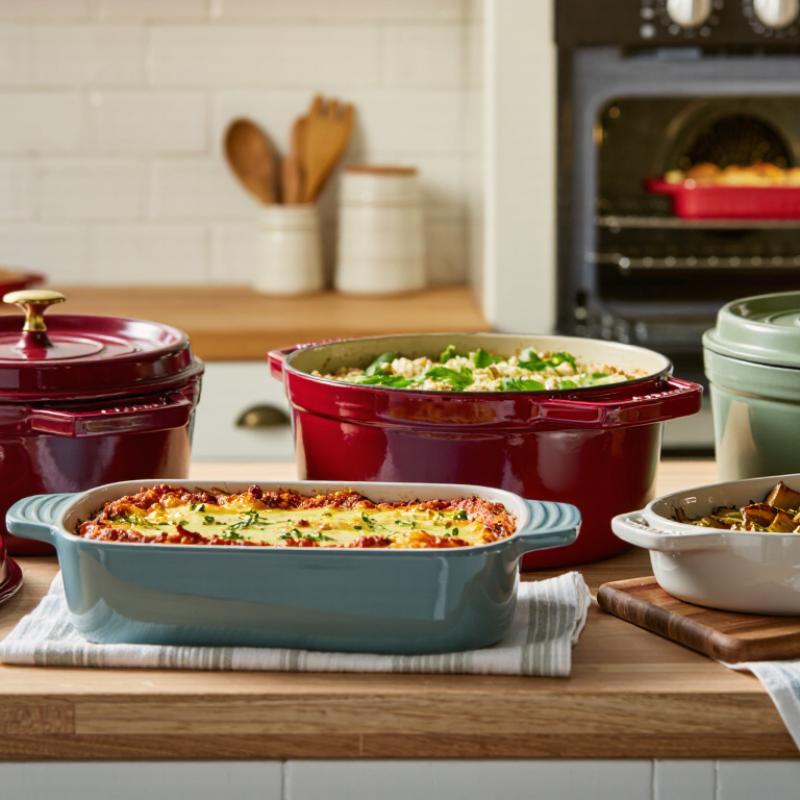
A ceramic casserole dish is a baking vessel made mainly from fired clay. Its body may be earthenware, stoneware, or porcelain, and each type differs in density and water absorption. A glazed surface creates a smooth, less porous finish that is easier to clean. The glaze adds color, but it does not prove that a dish is oven-safe. That distinction matters.
A casserole dish is often broad and relatively shallow, with enough depth to hold layered food without crowding it. Many have handles molded into the sides, which help when lifting a warm dish with dry oven mitts. Still, shape and handles do not define the material. The ceramic body does.
Check care instructions for oven limits, broiler use, and sudden temperature changes. Ceramic heats gradually and holds warmth well, so baked pasta can stay hot at the table. But a cold dish moved straight into a hot oven may crack, depending on its construction. I would not assume every ceramic piece is suitable for baking just because it looks sturdy. Even a small chip can make cleaning harder.
A 1.5- to 2-quart dish usually works for two people or a side dish. Leave about an inch at the top.
A 3- to 4-quart dish offers more room. Check the recipe’s dimensions, since capacity alone can be misleading.
Yes. A broad, shallow dish helps gratins and layered pasta brown on top. A deeper dish suits saucy casseroles or baked rice.
Yes. Measure the shelf and allow room around the dish for airflow. Remember to check handle clearance, too.
No. Sudden temperature changes can crack the dish. Let a refrigerated dish sit briefly first, if its care instructions allow.
Use a wooden board or heat-safe trivet. Dry oven mitts help protect your hands. It stays hot.
Let the dish cool, then use warm water, dish soap, and a soft sponge. Soak stubborn residue; avoid abrasive pads.
Check it occasionally for chips or hairline cracks, and stop using it if you find damage. I sometimes forget to inspect mine.
Yes. Ceramic holds heat, so dense casseroles may continue cooking briefly. Check the center and allow a short rest before serving.
A ceramic casserole dish is a baking vessel valued for its ability to distribute and retain heat, helping food cook evenly and stay warm after it leaves the oven. Its ceramic material can support gentle, consistent baking, making it suitable for dishes such as casseroles, gratins, and baked desserts. When comparing options, consider the dish’s durability, glaze, handles, weight, and whether it is designed for the temperatures and uses you need.
Choose a size and shape that fit your recipes and oven while leaving enough room for ingredients to cook evenly. A deeper dish works well for layered or saucy meals, while a wider, shallower one can encourage browning. For best results, follow the maker’s care instructions, avoid sudden temperature changes, and clean the dish with nonabrasive tools. With thoughtful selection and proper care, a Ceramic casserole dish can be a practical, versatile part of everyday baking.